
Richard III (play) — Shakespeare’s history drama and its legacy
Overview of Shakespeare's Richard III: background, plot and characters, historical sources and accuracy, performance history, themes, and notable adaptations.
Overview
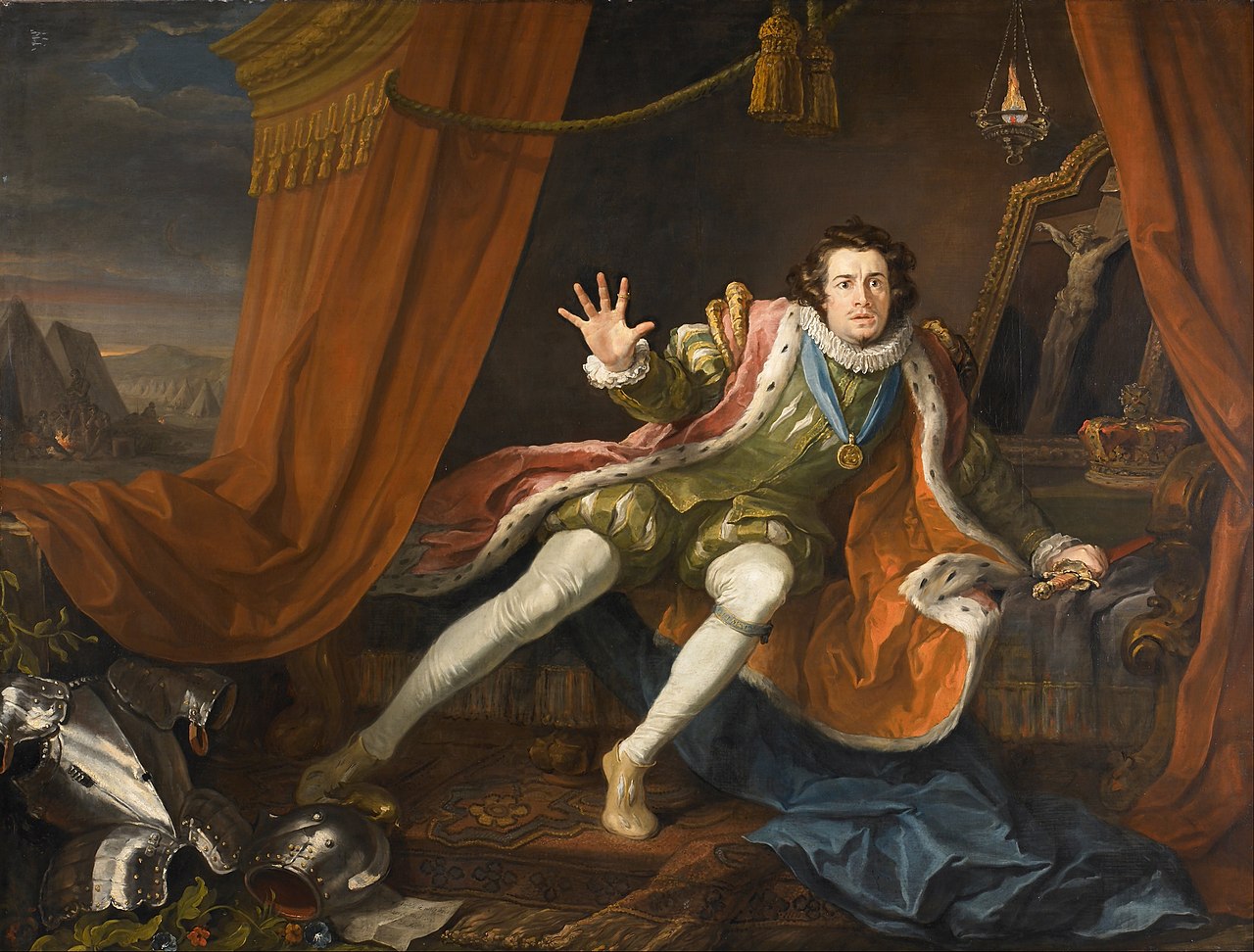
Richard III is a history play by William Shakespeare that dramatizes the rise and fall of King Richard III of England. Written in the mid-1590s and first printed near the end of that decade, the play combines political intrigue, psychological portraiture and dark humour to tell the story of a ruler who uses manipulation and violence to seize power. Shakespeare’s work belongs to his sequence of English history plays and has been one of his most frequently performed and debated dramas.
Image gallery
10 Images




Plot and principal characters
The action follows Richard, Duke of Gloucester, who schemes to remove rivals and advance to the throne. In the play he eliminates obstacles by deceit and murder, including members of the royal family and other nobles, and ultimately faces rebellion. His defeat at the Battle of Bosworth Field signals the end of the Plantagenet line and the accession of Henry Tudor as King Henry VII. The drama centers on Richard’s ruthless ambition and the effects of his rule on England’s nobility and common people.
Sources and historical context
Shakespeare drew on chronicles and histories available in his time for names, events and chronology. Those earlier sources—compiled by chroniclers and political writers—were written under Tudor rule and often presented Richard in a negative light. Modern historians and critics note the biases in those accounts and discuss where Shakespeare adapted, condensed or altered facts to suit dramatic purposes. The play also reflects Elizabethan ideas about monarchy, succession and public order, and was produced in a culture that regulated theatrical content.
Themes and dramatic features
Unlike many protagonists in Shakespeare’s plays, Richard functions as an antihero and central villain whose intelligence, rhetorical skill and self-awareness make him compelling to audiences. The play uses stark contrasts between public image and private intent, frequent soliloquies that reveal motive, and moments of bitter comedy when Richard boasts of virtue while committing crimes. Critics highlight the work’s exploration of power, legitimacy, conscience and the political consequences of tyranny.
Performance history and adaptations
Richard III has been staged continuously since the early modern period, with performers and directors finding new angles on the title role—from monstrous tyrant to complex, charismatic schemer. Notable screen adaptations include the mid-20th-century film directed by and starring Laurence Olivier, and many subsequent television and film versions that reinterpret setting, costume and emphasis. The play remains a staple of Shakespeare repertory, often used to explore leadership, propaganda and rehabilitation of historical reputations.
Further reading and resources
- Text and editions of the play — collections and scholarly editions offer modernized and original-spelling texts.
- William Shakespeare — author biography and overview.
- Estimated composition date and early performance context.
- Publication history — early quartos and later folios that preserved the text.
- Historical Richard III — the king whose life and reign inspired the drama.
- The English monarchy in the late 15th century: politics and succession.
- 1483 — the year Richard became king in traditional chronologies.
- 1485 — the year of Bosworth and the end of Richard’s reign.
- Historiographical debates about bias in early sources and later revisionism.
- Villainous protagonists in drama and how Richard fits that category.
- Hero and antihero distinctions — contrasting Richard with more sympathetic leads in other plays.
- Depictions of tyranny and moral judgment in Shakespeare’s histories.
- Henry VII — the victor at Bosworth and founder of the Tudor dynasty.
- The Tudor dynasty and its influence on historical memory.
- Black comedy and irony in the play’s tone and dialogue.
- Censorship and expression in Elizabethan England, which shaped theatrical content.
- Regulation of the theatre and official oversight of printed and staged works.
- Elizabeth I — her reign and its cultural politics.
- Late Tudor politics — how succession and dynasty were discussed in the period.
- Laurence Olivier’s 1955 film — a landmark screen adaptation that brought the play to a wide audience.
Readers interested in deeper study can consult scholarly introductions, annotated editions, and production histories to trace how interpretations of Richard III have changed over time. The play’s adaptability—its capacity to be staged in different eras and political climates—helps explain its continuing presence in theatre and film repertoires.
Related articles
Author
AlegsaOnline.com Richard III (play) — Shakespeare’s history drama and its legacy Leandro Alegsa
URL: https://en.alegsaonline.com/art/82687