
Roman theatre: architecture, history, and notable examples
Ancient Roman theatres were purpose-built venues for drama and public spectacle. This article explains their design, history, uses and highlights examples such as the Roman Theatre of Cartagena.
Overview
Roman theatres were purpose-built structures for staged performance in ancient Rome and its provinces. Distinct from amphitheatres used for gladiatorial games, these buildings focused on dramatic presentations, musical displays and public ceremonies. They became a common civic feature in Roman cities across the Mediterranean and beyond.
Image gallery
10 Images




Design and principal parts
The typical Roman theatre combined engineering with urban planning to create clear sightlines and good acoustics. Key components included:
- Cavea: the tiered seating area for spectators, often divided into social sections.
- Orchestra: a semicircular space at the foot of the seating, used by performers and officials.
- Scaenae frons: the decorated permanent stage backdrop with doors and columns.
- Vomitoria: passageways that allowed rapid entry and exit of the audience.
Origins and architectural development
Roman theatre design evolved from Greek models but introduced innovations that suited urban Roman life. Where Greek theatres were commonly built into hillsides, many Roman examples were freestanding, supported by vaulted substructures. From the late Republic into the Imperial era, refinements in stone and concrete construction allowed larger, more elaborate façades and more complex stage machinery.
Uses, repertoire and social role
Performances ranged from tragedies and comedies to mime, pantomime and musical entertainments. Theatres served not only artistic purposes but also civic and political functions: they staged public festivals, imperial ceremonies and other events that reinforced communal identity. Attendance and seating reflected social hierarchy.
Notable example: the Roman Theatre of Cartagena
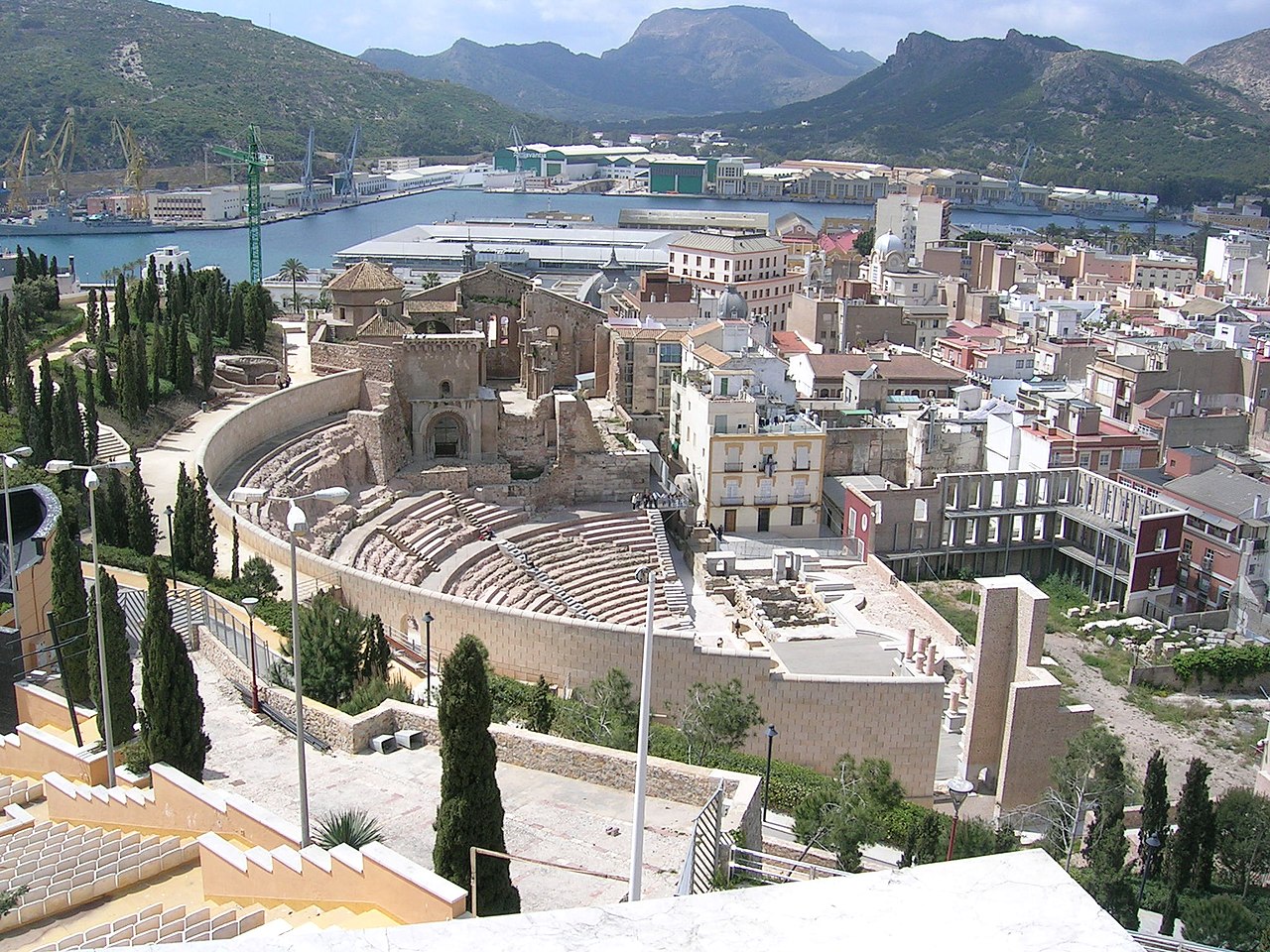
One well-known provincial example is the Roman Theatre of Cartagena in Spain. Constructed between 5 BC and 1 BC, it illustrates the spread of Roman building types into the provinces. Archaeological work and restoration have exposed its cavea, orchestra and stage area, offering insight into how such sites were organized and used in antiquity. For further site-specific details see Roman Theatre of Cartagena.
Preservation and significance
Many Roman theatres survive in various states of ruin and restoration; some are still used for performances today. They are valuable sources for the study of Roman urbanism, engineering and social life. For broader surveys and comparative studies consult specialized publications and databases here.
Related articles
Author
AlegsaOnline.com Roman theatre: architecture, history, and notable examples Leandro Alegsa
URL: https://en.alegsaonline.com/art/83871