
Sadler's Wells Theatre, London
Major London performing-arts theatre founded in 1683, renowned for dance. Home to two stages, rehearsal facilities, and a long history of companies that evolved into the Royal Ballet and English National Opera.
Overview
Sadler's Wells Theatre is a prominent performing-arts venue in central London. Located on Rosebery Avenue in the Clerkenwell area of the London Borough of Islington, it is widely regarded as one of the United Kingdom's leading theatres for dance and contemporary performance. The present building is the sixth theatre on the site since the original foundation in 1683 and was purpose-built to serve a wide range of modern productions and touring companies. For institutional information and season listings see the theatre's pages at official Sadler's Wells.
Image gallery
10 Images


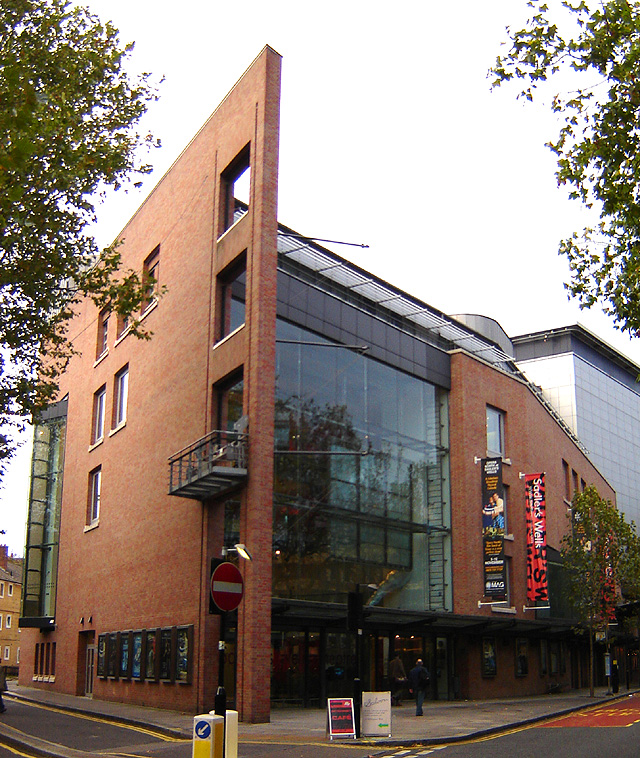

Performance spaces and facilities
The complex contains two principal performance areas: a large main auditorium with seating for roughly fifteen hundred spectators and the smaller Lilian Baylis Studio, designed for experimental and emerging work. In addition to performance halls, Sadler's Wells houses multiple rehearsal rooms, support spaces and technical workshops to accommodate choreography, set construction and touring productions. The layout emphasises flexibility and technical standards suited to dance, contemporary theatre and music programming.
History and development
The site has a long and continuous theatrical lineage beginning in the late 17th century. Over centuries the venue has been rebuilt and reconfigured several times to meet changing theatrical needs. In the early 20th century the theatre was strongly associated with manager and producer Lilian Baylis, whose stewardship fostered companies that would become influential in British performing arts. The theatre was closed during World War II, when resident companies toured around the country, and reopened in the postwar period to renewed activity and repertory.
Resident companies and reconfigurations
- After the war, the dance company associated with Sadler's Wells adopted the name Sadler's Wells Ballet; the theatre's opera company developed into what later became the English National Opera.
- In 1946 the ballet company became resident at the Royal Opera House in Covent Garden, while a second company continued to perform at Sadler's Wells under the name Sadler's Wells Theatre Ballet.
- Through the mid-20th century these companies frequently moved, renamed and reorganised: later iterations included the Sadler's Wells Royal Ballet and, after relocation in 1990, the Birmingham Royal Ballet.
Programming, importance and contemporary role
Sadler's Wells is principally associated with dance in many forms — classical ballet, contemporary dance, international companies, and new choreography. It serves both as a stage for established companies and as an incubator for emerging choreographers and performers. The theatre regularly presents season-long programmes, commissions, tours and community-education initiatives designed to broaden access to dance and to support artistic development. Productions have ranged from classical revivals to premieres and cross-disciplinary collaborations.
Notable productions and facts
In the immediate postwar years the reopened theatre presented major new work, including the staging of Benjamin Britten's opera Peter Grimes following wartime closures. The Lilian Baylis Theatre, a flexible studio space named for the influential manager, opened in 1988 and expanded opportunities for smaller-scale work. The current Sadler's Wells building opened in 1998 with a celebratory programme; one of the first companies to appear in the new house was the Rambert Dance Company with a revival of Gilbert and Sullivan's Iolanthe. Today Sadler's Wells continues to be a major national hub for dance, hosting international visitors, touring companies and festivals and maintaining a reputation for artistic innovation and technical excellence.
For further chronological detail and archival material consult referenced institutional sources such as the theatre's own history pages and published overviews of British theatre and dance developments at dance resources and broader cultural sites covering the United Kingdom. Additional historical context about wartime touring and company relocations is available through resources that document activities during World War II and post-war cultural reconstruction.
Sadler's Wells remains a key platform where long traditions intersect with contemporary practice, and it continues to shape the evolution of dance and performance in Britain and internationally.
Questions and answers
Q: What is Sadler's Wells Theatre?
A: Sadler's Wells Theatre is a performing arts theatre in London located in Rosebery Avenue, Clerkenwell in the London Borough of Islington.
Q: How many performance spaces are there?
A: There are two performance spaces at Sadler's Wells Theatre - a 1,500 seat main auditorium and the Lilian Baylis Studio.
Q: What type of performances take place at Sadler's Wells?
A: Sadler's Wells is one of the most important theatres for dance in the United Kingdom and several dance companies perform there.
Q: What happened to the theatre during World War II?
A: During World War II, the theatre was closed and the dance and opera companies toured to many parts of the United Kingdom.
Q: When did The Royal Ballet Touring Company move to Covent Garden?
A: The Royal Ballet Touring Company moved to Covent Garden in 1956.
Q: When did The Royal Ballet Touring Company return to Sadler's Wells?
A: The Royal Ballet Touring Company returned to Sadler's Wells in 1976, becoming known as the Sadler's Wells Royal Ballet.
Q: When did English National Opera move out of Sadler’s Well Theatre?
A: English National Opera moved out of Sadler’s Well Theatre to the London Coliseum in 1968.
Related articles
Author
AlegsaOnline.com Sadler's Wells Theatre, London Leandro Alegsa
URL: https://en.alegsaonline.com/art/85187