
Red deer (Cervus elaphus): description, range, behavior and human uses
Comprehensive overview of the red deer (Cervus elaphus): identification, distribution, behaviour, ecology, interactions with people and conservation considerations.
Overview
The red deer (Cervus elaphus) is one of the largest deer species, notable for the branched antlers of adult males (stags) and its wide native distribution. Populations historically ranged across much of Europe, parts of the Caucasus Caucasus and Asia Minor, and into western and central Asia. In some regions, such as Kashmir, red deer hold particular cultural or legal status. Small relict populations occur in the Atlas Mountains between Algeria and Tunisia, representing the species' presence in parts of northwestern Africa.
Image gallery
10 Images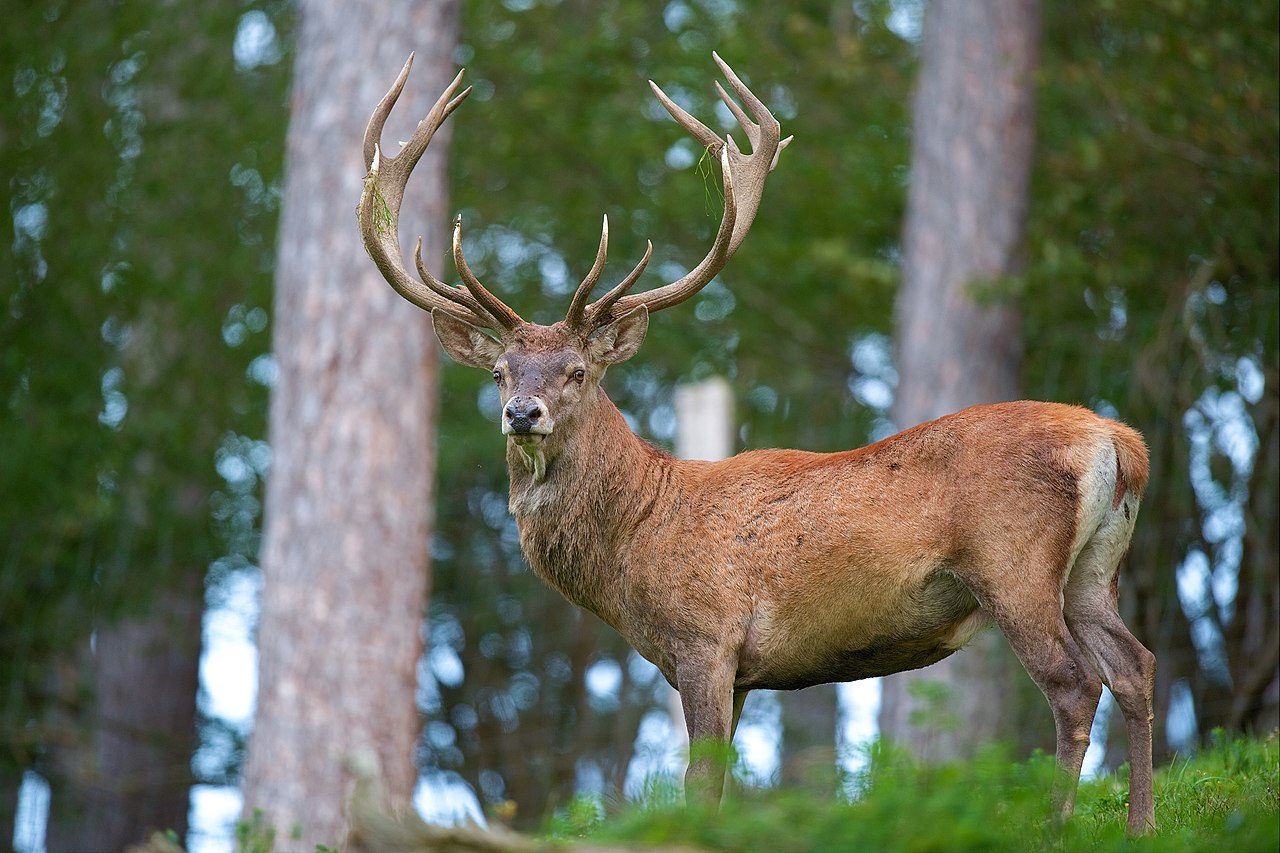


Physical characteristics
Adult stags can be substantially larger than hinds; antlers are grown annually and vary with age, genetics and nutrition. Coat colour is typically reddish-brown in summer, greyer in winter. Body shape is adapted for running and endurance: long legs, a compact body and a short tail. Sexual dimorphism is marked by the presence of antlers in males and their absence or small size in females.
Taxonomy and related forms
The red deer complex includes several regional forms and subspecies. Populations in North America and some parts of eastern Asia have at times been treated as a separate species commonly called wapiti; classifications differ among authorities, and genetic studies have clarified some relationships but debates remain cautious in scope.
Distribution, habitat and introduced populations
Red deer occupy a range of habitats including mixed woodlands, open moorland and mountainous country. Apart from their native range across Europe and Asia, they have been introduced with significant ecological and economic effects to places such as Australia, New Zealand and Argentina, where they now inhabit a variety of landscapes and are managed as game animals in many areas.
Behavior, diet and life cycle
Red deer are social: hinds form maternal groups while stags may form bachelor groups outside the breeding season. The rut (mating season) involves roaring, scent marking and antler contests as dominant stags secure harems. Gestation is about eight months, typically yielding a single fawn. Diet is mixed browsing and grazing—grasses, shoots and leaves—varying by season and local vegetation.
Predators and ecological role
Natural predators vary by region and may include wolves, large felids and bears where these persist. Red deer influence vegetation structure through browsing and grazing and are important prey in natural food webs; in introduced ranges, their impacts on native flora and fauna have prompted management interventions.
Human uses, cultural importance and conservation
Humans have long hunted and managed red deer for meat and sport. Their meat, commonly known as venison, is a prized form of game meat and an element of regional cuisines and commercial farming. Management includes population control, habitat restoration and regulated hunting. Conservation status varies regionally: many native populations are stable or recovering under protection, while others face local declines from habitat loss, fragmentation and persecution. Wildlife policy and food regulation differ by country and region, so local guidance is important for sustainable use and protection of the species food.
- Key identification: large deer with annually shed antlers (species).
- Native range: broad across Europe, the Caucasus and Asia Minor.
- Notable local populations: Kashmir, Atlas Mountains (between Algeria and Tunisia) in northwestern Africa.
- Introductions and management: Australia, New Zealand, Argentina.
- Use and regulation: venison (venison), farmed and wild meat, and regional food policies.
For region-specific information on status, management and hunting regulations consult local wildlife authorities and specialist resources indicated by regional links above.
Related articles
Author
AlegsaOnline.com Red deer (Cervus elaphus): description, range, behavior and human uses Leandro Alegsa
URL: https://en.alegsaonline.com/art/81649