
Atlas Mountains
Mountain range in northwest Africa spanning Morocco, Algeria and Tunisia, known for high peaks, Berber culture, varied climates and its role separating the Mediterranean/Atlantic from the Sahara.
Overview
The Atlas Mountains are a prominent mountain system in northwest Africa. Extending roughly 2,400 km across the region, the chain traverses parts of Morocco, Algeria and Tunisia. Local names reflect the area's languages: in Amazigh the ranges are often called Idurar n Watlas, and in Arabic they are known as جبال الأطلس. The mountains form a major physical barrier that influences climate, hydrology and human settlement patterns in the western Maghreb.
Image gallery
10 Images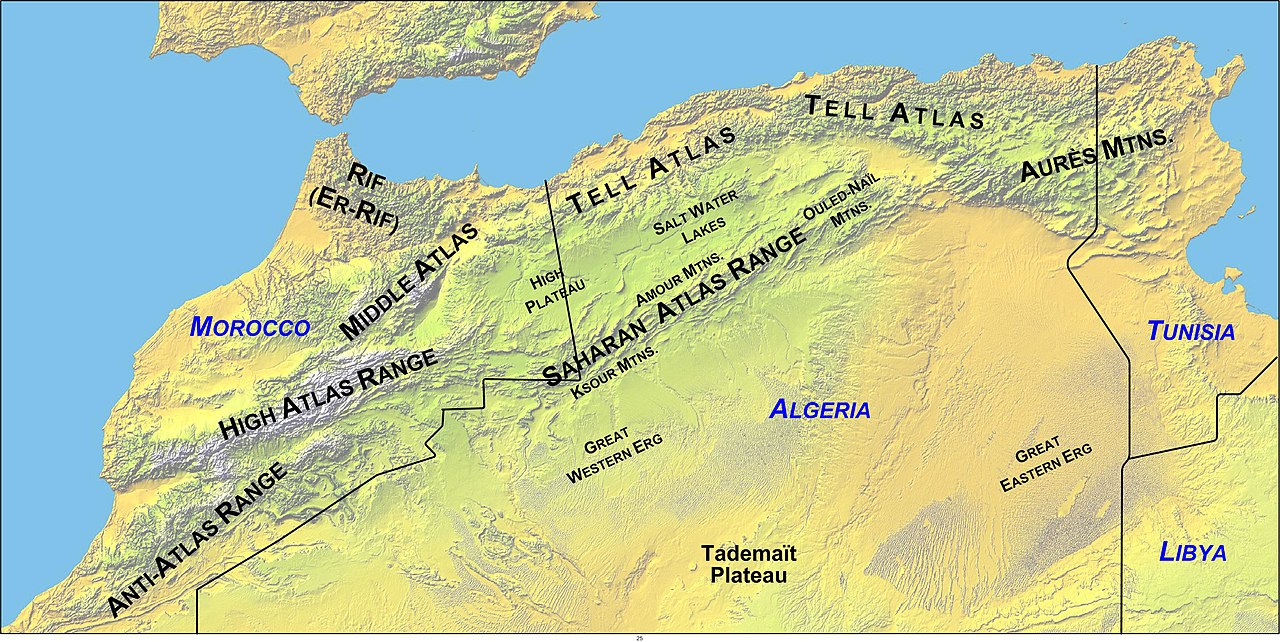


Major subranges and peaks
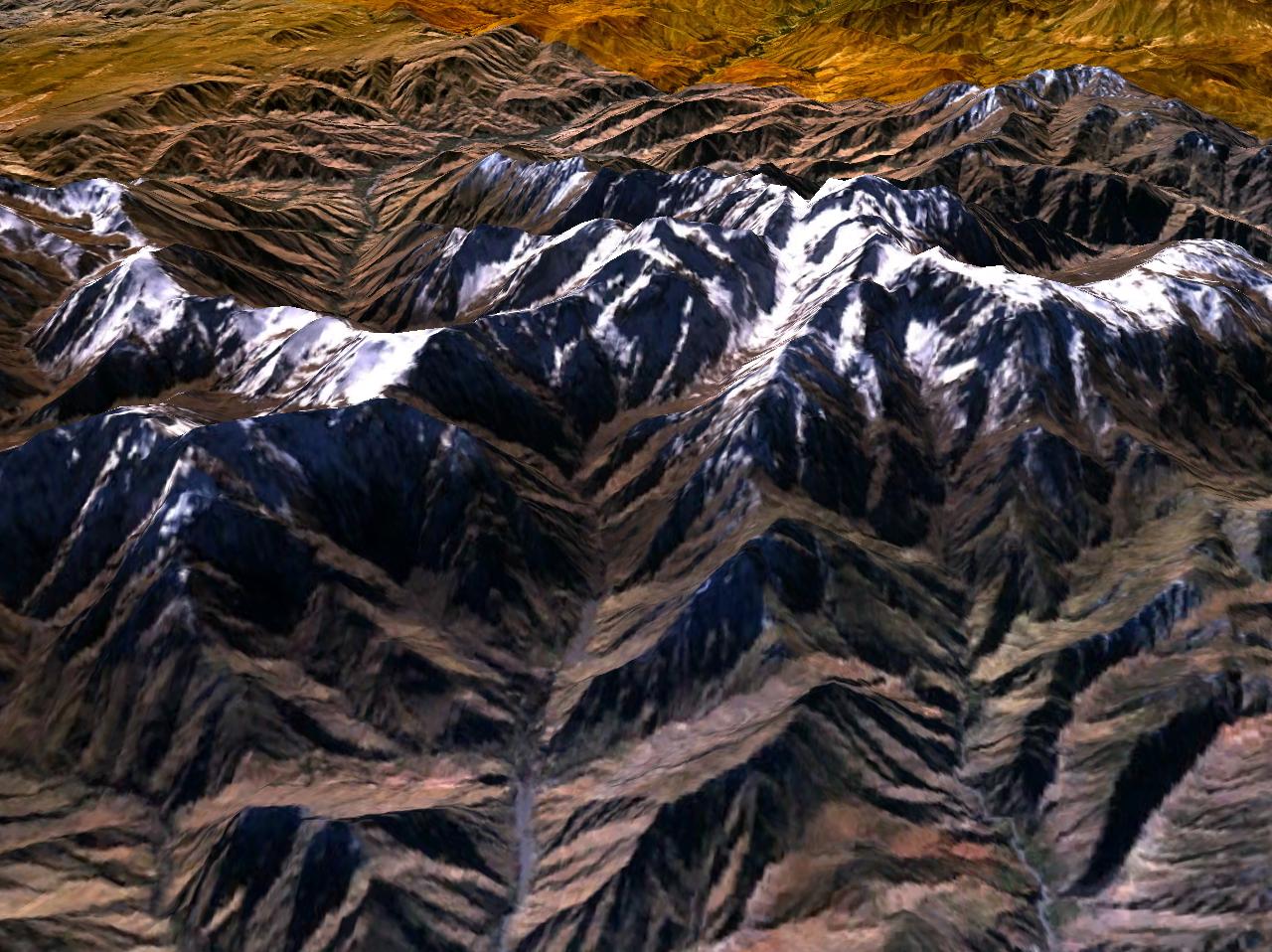
The Atlas system consists of several distinct ranges. Among the best known are the High Atlas, the Middle Atlas and the Anti-Atlas. The High Atlas contains the highest summits, including Jebel Toubkal (about 4,167 m) and nearby peaks such as M'Goun. The Anti-Atlas lies to the southwest and transitions toward desert landscapes. Collectively these ranges separate the coastal plains from the interior deserts and help define local ecological zones.
Geography and climatic role
The Atlas ranges form the divide between the Mediterranean sea-influenced regions and the Atlantic-influenced coastal areas on one side and the arid expanse of the Sahara on the other. Mountain elevations produce orographic rainfall in some sectors, supporting forests and agriculture where plain environments would otherwise be drier. At higher elevations temperatures fall enough to allow winter snowfall, creating seasonal water storage that feeds rivers and groundwater used downstream.
Geology and landscape
Geologically the Atlas Mountains record a complex history of sedimentation, folding and uplift related to interactions between African and Eurasian tectonic plates. Much of the relief reflects Cenozoic tectonic forces that reworked older sedimentary and metamorphic rocks. The result is a varied landscape of high peaks, plateaus, deep valleys and isolated massifs with local differences in rock types and soil that support diverse habitats.
Ecology and land use
Vegetation ranges from Mediterranean woodlands and scrub on wetter slopes to sparse steppe and desert flora toward the south. Cedar, oak and argan trees occur in suitable zones; many plants and animals have adapted to the gradient from humid coasts to dry interior. Human land use includes terraced agriculture, olive and fruit cultivation, pastoralism, and in some areas mining for minerals. Tourism focused on hiking, mountaineering and cultural visits is important in parts of the range.
People, culture and history
The Atlas has long been home to Amazigh (Berber) communities who maintain distinct languages, customs and traditional livelihoods; the term Berber is widely used to describe these indigenous peoples. Settlements, fortified villages and caravan routes reflect centuries of local adaptation and exchange. The mountains also carry cultural and mythological associations: the name itself is linked to the ancient Greek figure Atlas, a classical tradition that influenced later cartography and literature.
Uses, conservation and notable facts
Beyond agriculture and tourism, the Atlas region contributes water resources, biodiversity and mineral wealth to the surrounding countries. Conservation efforts aim to balance development with protection of endemic species and fragile mountain ecosystems. Notable facts: the system is the longest mountain chain in northwest Africa; Jebel Toubkal is the highest peak in the range; and the Anti-Atlas forms a distinct, older belt to the southwest. For broader geographic context and practical travel information see related resources and regional guides such as those available at reference entries and national tourism pages (Atlantic coast guidance, Mediterranean coastal links, Sahara access notes). Additional reading and travel planning can be found through regional conservation and cultural organizations (Morocco, Algeria, Tunisia resources).
- Length: ~2,400 km across three countries.
- Highest: Jebel Toubkal (~4,167 m); other high summits include M'Goun.
- Main subdivisions: High Atlas, Middle Atlas, Anti-Atlas (and associated ranges).
Related articles
Author
AlegsaOnline.com Atlas Mountains Leandro Alegsa
URL: https://en.alegsaonline.com/art/7015