
Red-necked wallaby (Macropus rufogriseus)
A medium-sized macropod native to eastern Australia and Tasmania, the red-necked wallaby is a nocturnal grazer with a grey coat and reddish neck, two subspecies, and adaptable behaviour near human settlements.
Overview
The red-necked wallaby (Macropus rufogriseus) is a medium-sized macropod native to eastern Australia and Tasmania. It is one of the more commonly encountered wallaby species and is often compared with kangaroos because of its general macropod shape: powerful hind legs, long tail and a hopping gait. Adults vary in size by sex and region; males are substantially larger than females and can exceed 20 kg in some populations.
Image gallery
10 Images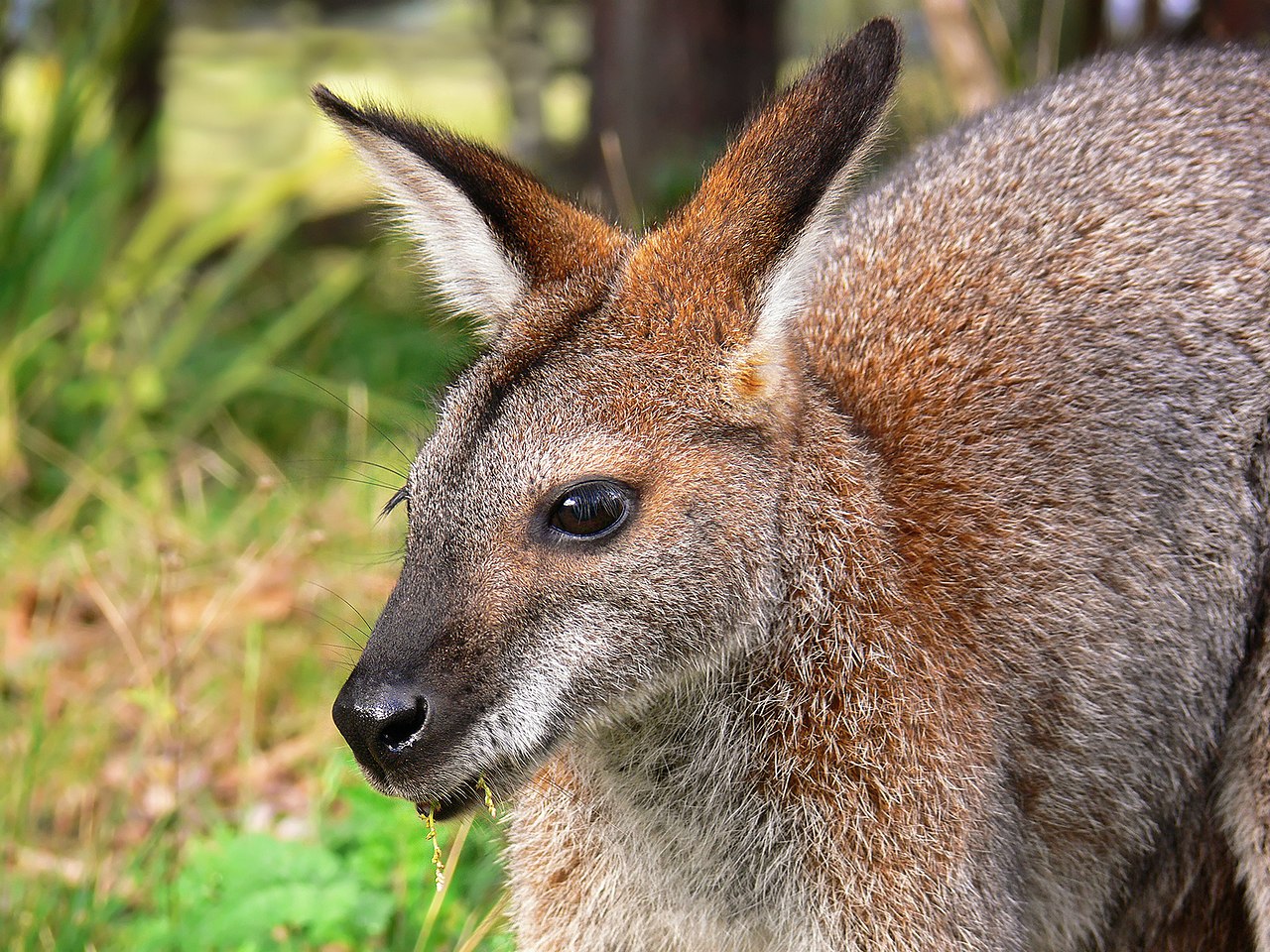



Appearance and distinguishing features
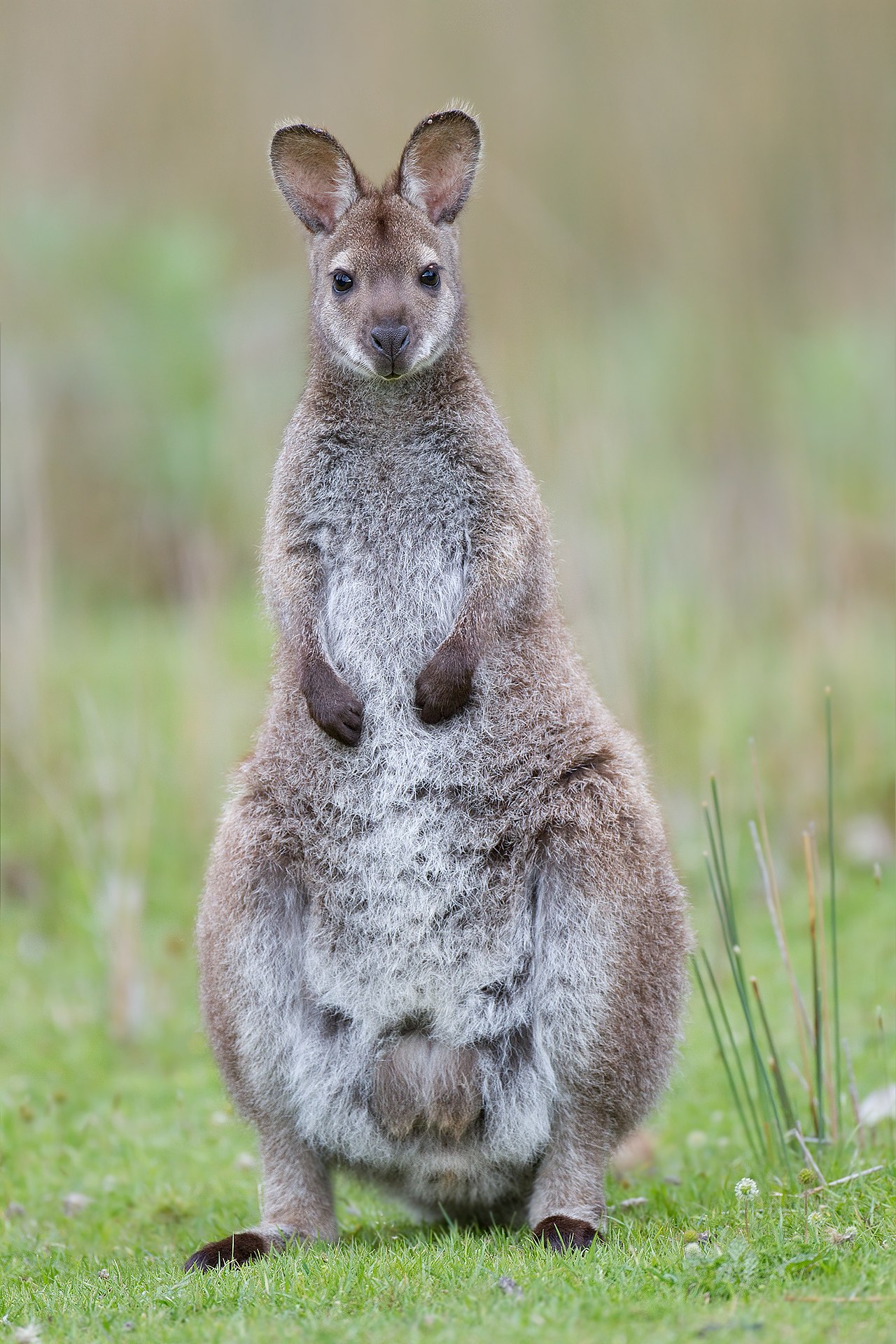
Typical markings include a dark (often black) nose and forepaws, a white stripe on the upper lip, and a predominantly grey coat that shades to a reddish or rufous colour across the neck and shoulders. The fur of Tasmanian individuals tends to be denser and longer, reflecting a cooler climate. Compared with true kangaroos, red-necked wallabies are generally more compact and better adapted to habitats with more ground cover.
Distribution and habitat
This species occurs along much of the eastern seaboard of Australia and on Tasmania and many Bass Strait islands. Its mainland range extends from central Queensland south toward the border with South Australia, while the Tasmanian form is widespread across that island. Red-necked wallabies occupy a variety of habitats including coastal forests, woodlands and cleared pasture adjacent to sheltering vegetation; they typically rest in cover during the day and feed in open areas at night.
Behaviour and diet
Primarily crepuscular and nocturnal, red-necked wallabies feed on grasses, herbs and leaves. They are generally solitary but tolerant of conspecifics: small loose groups or "mobs" may form where food is abundant. Like other macropods, they use their forelimbs for gathering food and their tail for balance while hopping. When alarmed they may remain motionless or retreat to denser cover rather than engage in long pursuits.
Reproduction and subspecies
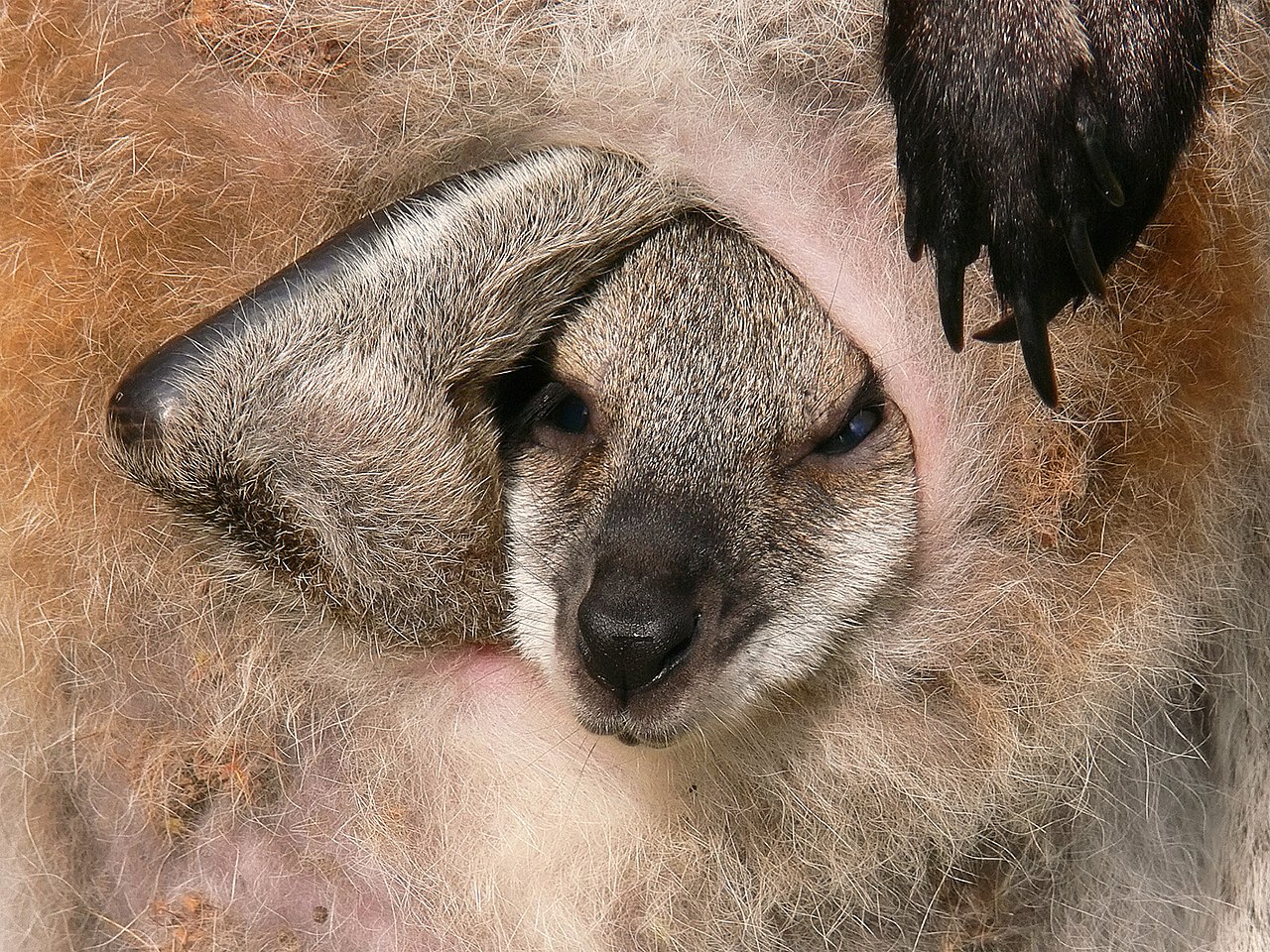
There are two widely recognised forms: the Tasmanian subspecies Macropus rufogriseus rufogriseus (sometimes called Bennett's wallaby) and the mainland Macropus rufogriseus banksianus. The Tasmanian form is smaller, has thicker fur and typically breeds seasonally in late summer. Mainland populations may breed year-round where conditions permit. Females carry a single young, known as a joey, which spends several months in the pouch and may continue nursing and riding on the mother for up to a year or more.
Relationship with people and conservation
In many parts of its range the red-necked wallaby is abundant and adaptable; populations have increased in areas where hunting has ceased and where landscape changes provide a mix of grazing and shelter. They are sometimes reported feeding on suburban lawns or crops, and in some localities management is required to reduce conflict. Overall the species is not regarded as highly threatened, but local declines can occur where habitat is extensively cleared or fragmented.
Notable facts and distinctions
- Common name refers to the reddish colouring on the neck rather than a red skin tone.
- Despite resemblance to kangaroos, wallabies are generally smaller and occupy different niches, favouring more sheltered vegetation.
- Regional differences in size, fur density and breeding seasonality reflect adaptation to local climate.
Further reading and resources
- General species overview
- Distribution in eastern Australia
- Comparison with other wallaby species
- Macropod family information
- Size and weight references
- Morphometrics and measurements
- Range limits and South Australian border notes
- Tasmanian populations and ecology
- Bass Strait island records
- Records from New South Wales
- Coastal Queensland observations
- Subspecies descriptions
- Urban and suburban interactions (e.g., Hobart)
Questions and answers
Q: What is the scientific name of the red-necked wallaby?
A: The scientific name of the red-necked wallaby is Macropus rufogriseus.
Q: Where can red-necked wallabies be found?
A: Red-necked wallabies are found along the coast and forests of eastern Australia, from Rockhampton, Queensland to the South Australian border; in Tasmania and on many of the Bass Strait islands (many of which may have been introduced to the islands).
Q: How much do males weigh?
A: Males can weigh more than 20 kg.
Q: What does a red-necked wallaby look like?
A: A red-necked wallaby looks like a kangaroo. It has a black nose and paws, white stripe on its upper lip, and a medium grey coat with a red color on its neck.
Q: Are there any subspecies of red-necked wallabies?
A: Yes, there are two subspecies - Macropus rufogriseus rufogriseus (also called Bennett's Wallaby) and Macropus rufogriseus banksianus.
Q: How long does a joey stay in its mother's pouch?
A: A joey stays in its mother's pouch for 9 months before continuing to feed from her until 12–15 months old.
Q: When do Tasmanian form of red-necked wallabies breed?
A: The Tasmanian form breeds mostly between February and April each year.
Related articles
Author
AlegsaOnline.com Red-necked wallaby (Macropus rufogriseus) Leandro Alegsa
URL: https://en.alegsaonline.com/art/81679
Sources
- commons.wikimedia.org : Red-necked wallaby
- species.wikimedia.org : Macropus rufogriseus
- bucknell.edu : Mammal Species of the World
- iucnredlist.org : Macropus rufogriseus
- australiazoo.com.au : Australia Zoo, Red-necked wallaby