
Rafflesia: the giant parasitic flower of Southeast Asia
Rafflesia is a genus of parasitic flowering plants native to Southeast Asia, notable for producing the largest single flowers and for lacking stems, leaves or chlorophyll.
Overview
Rafflesia is a genus of unusual parasitic flowering plants native to parts of Southeast Asia. These plants are best known for producing the largest single flowers in the world and for their highly specialized way of life. The genus name is often linked to early colonial natural history; the most famous species, Rafflesia arnoldii, can produce blooms that exceed a metre in diameter.
Image gallery
8 Images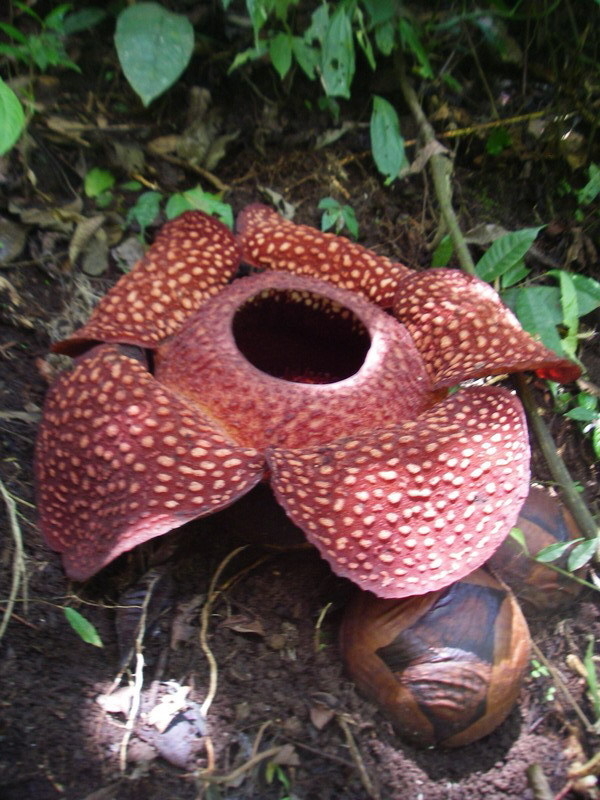



Description and anatomy
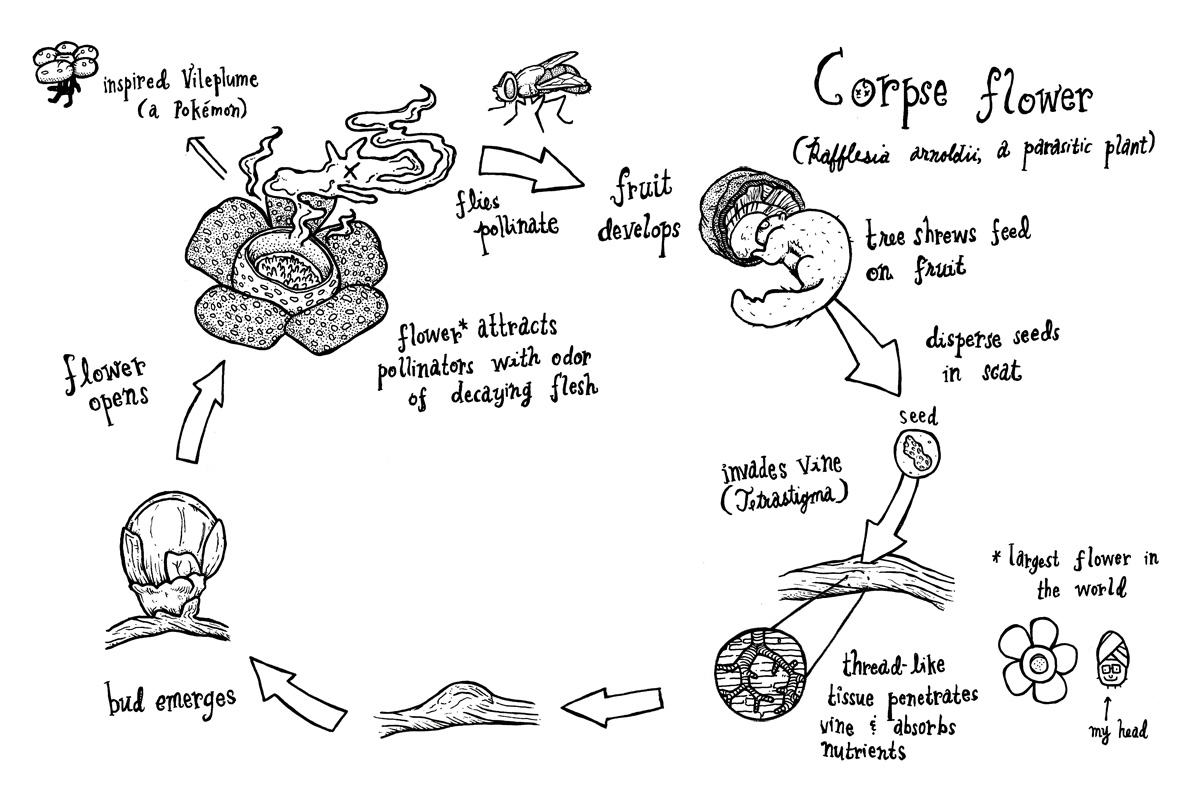
Rafflesia plants do not resemble conventional green plants. As a member of the genus, they lack visible leaves and do not perform photosynthesis because they contain little or no chlorophyll. There is no obvious above-ground stem or true roots; instead the organism survives entirely within the tissues of a host vine, emerging only to produce its solitary, large flower. The vegetative body consists of a network of threadlike, embedded tissue and specialized haustoria that penetrate the host and draw water and nutrients.
Flower structure and pollination
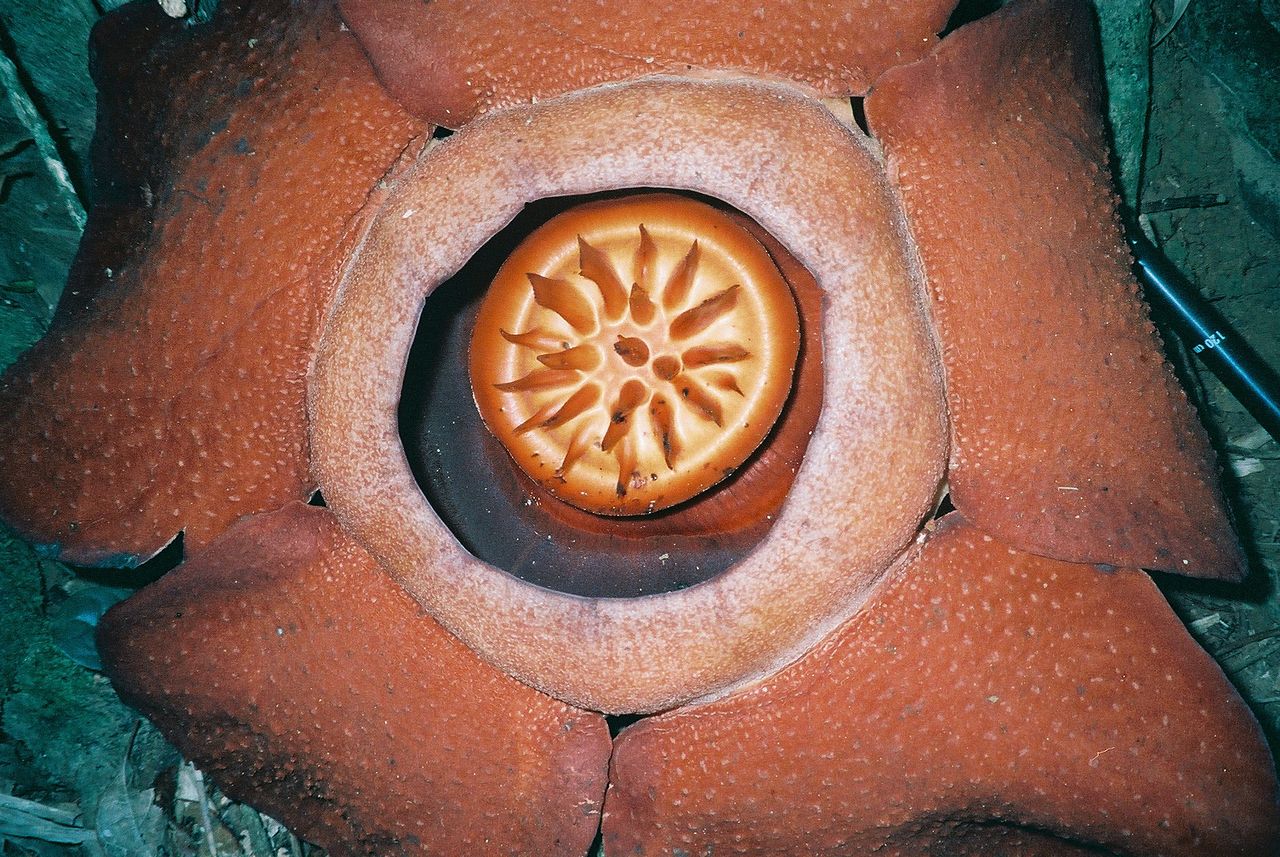
The visible flower is composed of a thick, fleshy, five-lobed perianth with a central chamber. Petal-like lobes are typically reddish or brownish with pale spots; a large central diaphragm and internal reproductive organs lie within. The flowers emit a strong odour reminiscent of decaying flesh, which attracts carrion flies and other scavenging insects that act as pollinators. Individual blooms are short-lived, opening for only a few days to a couple of weeks depending on species and conditions.
Life cycle and host relationship
Rafflesia is an obligate endoparasite of vines in the genus Tetrastigma. Its haustoria penetrate and spread through the vine’s tissues, extracting sustenance without producing its own photosynthetic structures. Flowers are thought to be unisexual in several species, and successful reproduction depends on flies transferring pollen between separate male and female flowers. Seed dispersal is not fully understood for all species; seeds are tiny and may be moved by animals, rain, or other local vectors.
Distribution and notable species
Species of Rafflesia are found in humid tropical forests of the Malay Archipelago and neighbouring regions. Known native locations include the Malay Peninsula, Borneo, Sumatra, parts of Thailand and the Philippines. Several species are locally famous for size or rarity; R. arnoldii is often cited as the largest, with recorded blooms more than a metre across.
History, naming and cultural significance
The genus was described during the period of European botanical exploration in Southeast Asia and carries historical associations with that era. In many of the regions where it occurs, Rafflesia holds cultural interest for local communities, ecotourists and naturalists, who prize sightings as rare and remarkable events because blooms are infrequent and unpredictable.
Conservation and threats
Many Rafflesia species have restricted ranges and specialized habitat requirements. They are vulnerable to habitat loss, fragmentation, and declines in the abundance of their Tetrastigma hosts. Conservation efforts focus on protecting rainforest habitat, studying life histories, and raising public awareness to reduce disturbance during flowering and to support long-term survival.
Quick facts
- Parasitic lifestyle: lives entirely inside host vine, visible only as a flower.
- Largest single flowers: some species produce blooms over 1 m across.
- Pollination: attracted by carrion smell to flies and other scavengers.
- Distribution: confined to parts of Southeast Asia including the Malay Peninsula, Borneo, Sumatra, Thailand and the Philippines.
- Host family: parasitizes vines in the Vitaceae family.
Related articles
Author
AlegsaOnline.com Rafflesia: the giant parasitic flower of Southeast Asia Leandro Alegsa
URL: https://en.alegsaonline.com/art/80822
Sources
- sabah.gov.my : VJR Rafflesia Reserve, Forestry Department Sabah, Malaysia
- loc.gov : "What is the largest flower in the world?"
- unix.cc.wmich.edu : "Rafflesia"