
Ramie (Boehmeria nivea): the fiber plant from the nettle family
Ramie (Boehmeria nivea) is a perennial Asian plant grown for its strong, lustrous bast fiber. It requires degumming, has a long cultivation history, and is used in textiles and industrial blends.
Ramie is the common name for Boehmeria nivea, a herbaceous perennial of the nettle family Urticaceae. Native to eastern Asia, this tall, leafy plant grows to about 1–2.5 m and produces long bast fibers beneath the bark. It has been cultivated as a fiber source for many millennia and remains an important, if specialized, textile crop in parts of Asia.
Image gallery
2 Images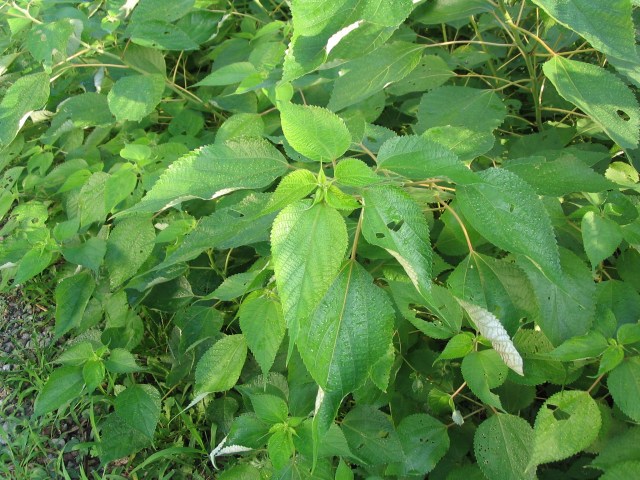

Botany and cultivation
Ramie is characterized by broad, serrated leaves and small, inconspicuous flowers arranged in clusters. It is propagated from cuttings or root divisions and regenerates as a perennial, allowing multiple harvests per year. Under typical conditions farmers harvest ramie two to three times annually, though in favorable climates it can be cut more frequently. The plant is most commonly associated with regions of eastern Asia and surrounding subtropical zones; see general distribution information here.
Fiber features and processing
The fiber produced from ramie is a bast fiber—long, strong and with a natural sheen. Raw fibers are stiff and highly covered with gummy pectins and other noncellulosic materials; therefore ramie requires degumming before it can be spun or woven. Degumming is frequently done with alkaline chemicals, though mechanical and enzymatic methods are used in modern processing to reduce environmental impact. Compared with flax or hemp, ramie yields a whiter, more lustrous thread but is less elastic.
Uses and importance
- Traditional and modern textiles: clothing, table linens, and decorative fabrics.
- Blended yarns: often combined with cotton, wool or silk to improve handle and strength.
- Industrial applications: certain technical textiles where strength and resistance to deterioration are valued.
Ramie is counted among the oldest cultivated fiber crops, valued for durability and sheen. Contemporary production and research focus on improving postharvest processing and environmental performance; national and regional crop reports highlight ongoing cultivation and market roles here.
For botanical reference consult a taxonomic treatment of Boehmeria nivea and resources on bast-fiber processing. While ramie offers unique textile qualities, its commercial use is shaped by processing needs and competition from other natural and synthetic fibers.
Questions and answers
Q: What is ramie?
A: Ramie is a flowering plant in the nettle family Urticaceae, native to eastern Asia and used for fabric production.
Q: How tall does ramie grow?
A: Ramie is a herbaceous perennial growing to 1–2.5 m tall.
Q: How long has ramie been used as a fibre crop?
A: Ramie has been used for at least six thousand years as a fibre crop.
Q: How many times a year is ramie normally harvested?
A: Ramie is normally harvested two to three times a year.
Q: How many times per year can ramie be harvested under good growing conditions?
A: Under good growing conditions, ramie can be harvested up to six times per year.
Q: Does ramie require chemical processing to de-gum the fibre?
A: Yes, unlike other fibre crops, ramie needs chemical processing to de-gum the fibre.
Q: Where is ramie native to?
A: Ramie is native to eastern Asia.
Related articles
Author
AlegsaOnline.com Ramie (Boehmeria nivea): the fiber plant from the nettle family Leandro Alegsa
URL: https://en.alegsaonline.com/art/81031
Sources
- swicofil.com : "Swicofil"
- britannica.com : "Britannica Online"