
Sumatra: geography, ecology, history and economy of the Indonesian island
Sumatra is a large island in western Indonesia, noted for a long volcanic spine, rich tropical forests, endangered wildlife, major ports on the Strait of Malacca, and diverse cultures across many provinces.
Overview
Sumatra, also spelled Sumatera, is one of the world's largest islands and forms the westernmost major landmass of Indonesia. The island is commonly described as the sixth-largest island in the world; for more on its ranking and size see size and ranking. It lies in western Indonesia, west of the main chain of the Sunda Islands, and faces the Indian Ocean on its western flank.
Image gallery
10 Images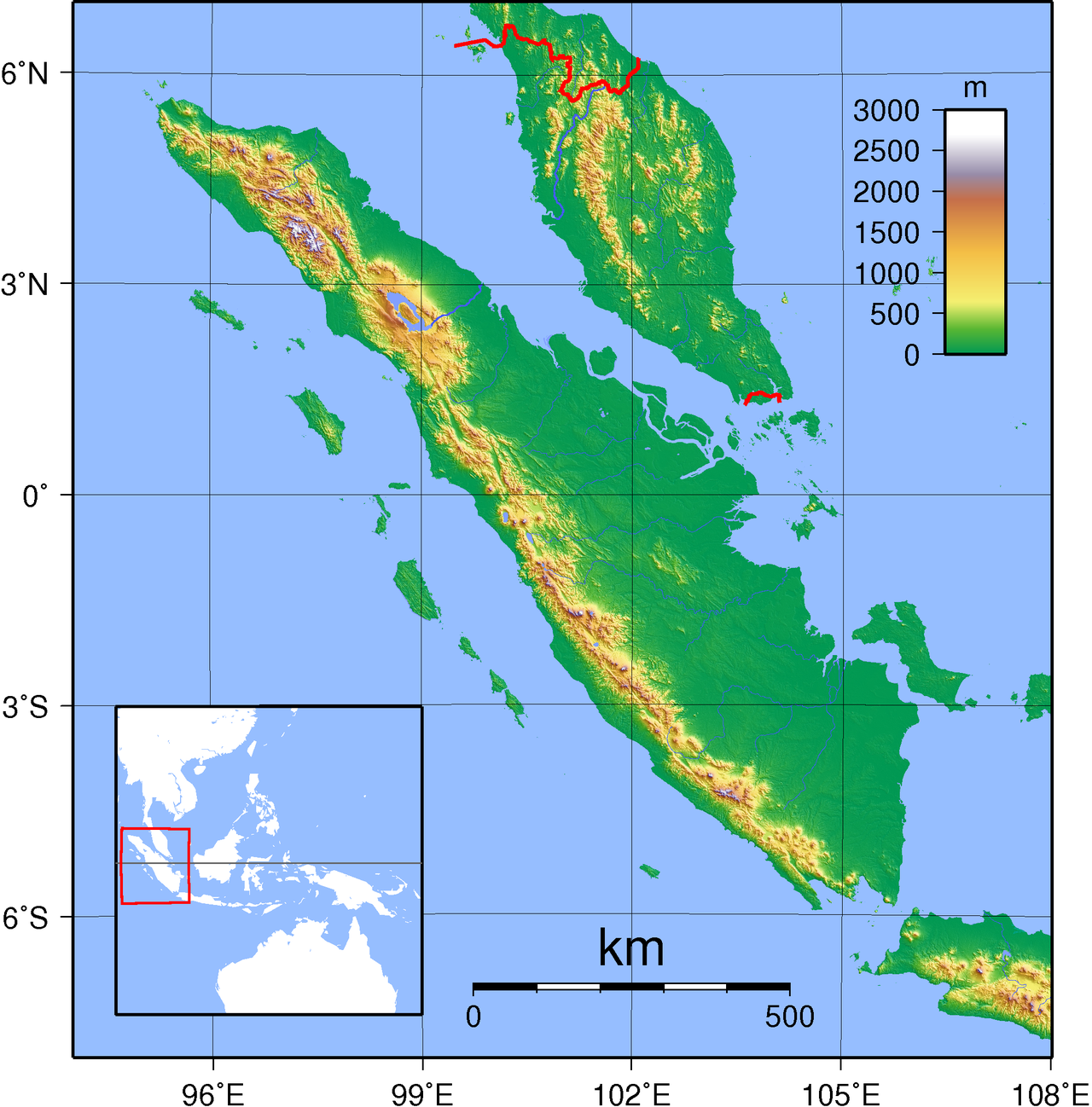



Geography
Sumatra stretches roughly northwest–southeast for about 1,700 kilometres and reaches nearly 370 kilometres across at its widest point. Administratively the island includes several provinces: the Special Region of Aceh, North Sumatra, West Sumatra, Riau, the Riau and the Riau Islands group, Jambi, Bengkulu, South Sumatra, Lampung and the Bangka Belitung Islands. Reported land area figures are commonly given near 443,066 km², though exact totals vary among sources. The interior is crossed by a volcanic mountain chain and interspersed with river valleys, lowland plains and coastal mangroves.
Climate and landscape
The climate is tropical, with high humidity and relatively stable warm temperatures year-round. Rainfall patterns vary across the island and with elevation: coastal plains and western slopes receive heavy rains, while some leeward areas tend to be drier. Peat swamp forests and freshwater wetlands occur in lowland basins, while montane forests cover higher elevations of the central ranges.
Biodiversity
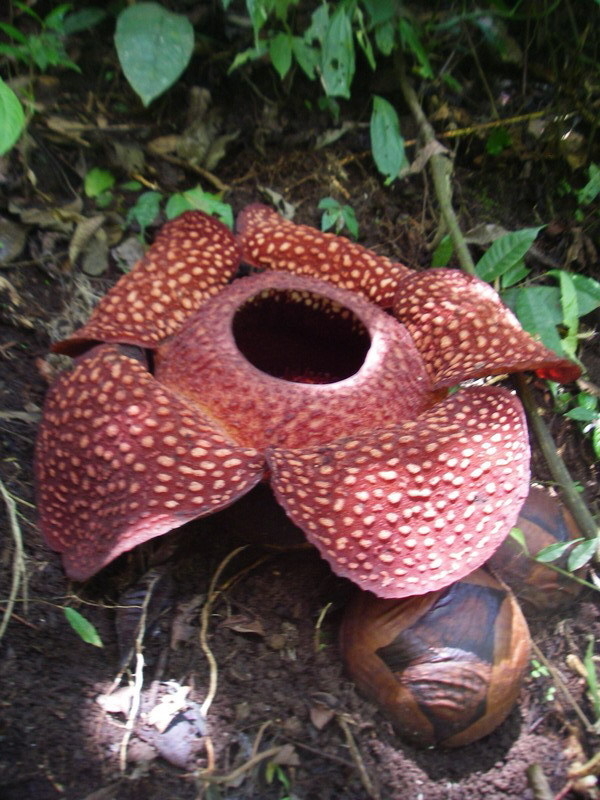
Historically, extensive rainforests supported a rich assemblage of plants and animals. Notable species include the Sumatran orangutan, Sumatran tiger, Asian elephant and Sumatran rhinoceros, all of which are threatened by habitat loss. Lowland forest clearance for agriculture, logging and plantation development, together with peatland drainage and fires, have greatly reduced original forest cover and increased conservation concern.
People and culture
Sumatra is ethnically and linguistically diverse. Major cities such as Medan, Palembang, Padang and Banda Aceh serve as cultural, economic and transportation hubs. Languages and customs vary by region: Aceh in the north retains distinct Islamic and historical traditions, while other areas reflect Malay, Minangkabau, Batak and other cultural influences. Population estimates in the early 21st century placed the island's inhabitants at around 50 million people.
Economy and transport
The island's economy relies on agriculture, forestry and mineral resources. Important commodities include coffee (Sumatra is a recognized origin), palm oil, rubber, timber and petroleum. Major seaports and the island's proximity to the Strait of Malacca make it significant for regional trade. Road and rail links connect population centres, though terrain and development vary widely between provinces.
Hazards and conservation
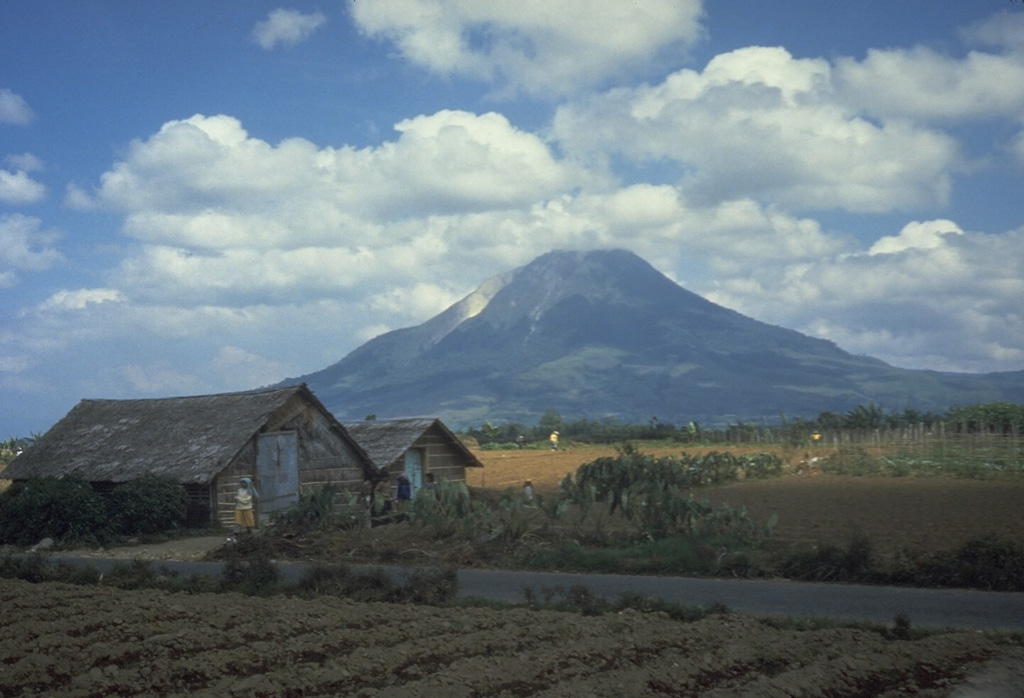
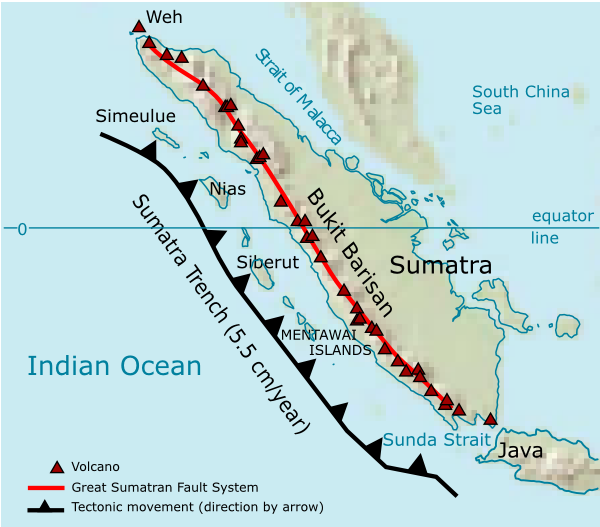
Sumatra lies along active tectonic margins and volcanic arcs, so earthquakes, tsunamis and eruptions are natural hazards that have shaped human settlement and landscapes. Conservation efforts on the island focus on protecting remaining forests and endangered species, restoring peatlands where possible, and developing policies to reconcile biodiversity protection with the livelihoods of millions of residents.
Further reading and resources
- Geography and size details: size and ranking
- Regional context in western Indonesia: western Indonesia
- Relation to nearby island groups: Sunda Islands
- Maritime setting: Indian Ocean
- Provincial information: Riau, Riau Islands
- Area and statistical summaries: reported area
Related articles
Author
AlegsaOnline.com Sumatra: geography, ecology, history and economy of the Indonesian island Leandro Alegsa
URL: https://en.alegsaonline.com/art/94763