
Processed cheese
Processed cheese is a manufactured dairy product made by blending natural cheese with emulsifiers, salts and other dairy ingredients to create a uniform, shelf-stable, meltable food used in cooking and spreads.
Processed cheese is a manufactured dairy product created by combining one or more types of natural cheese with additional dairy ingredients and functional additives. Unlike aged cheeses that develop flavor through fermentation, processed cheese is formulated to deliver consistent texture, controlled melting behavior and an extended shelf life.
Image gallery
10 Images


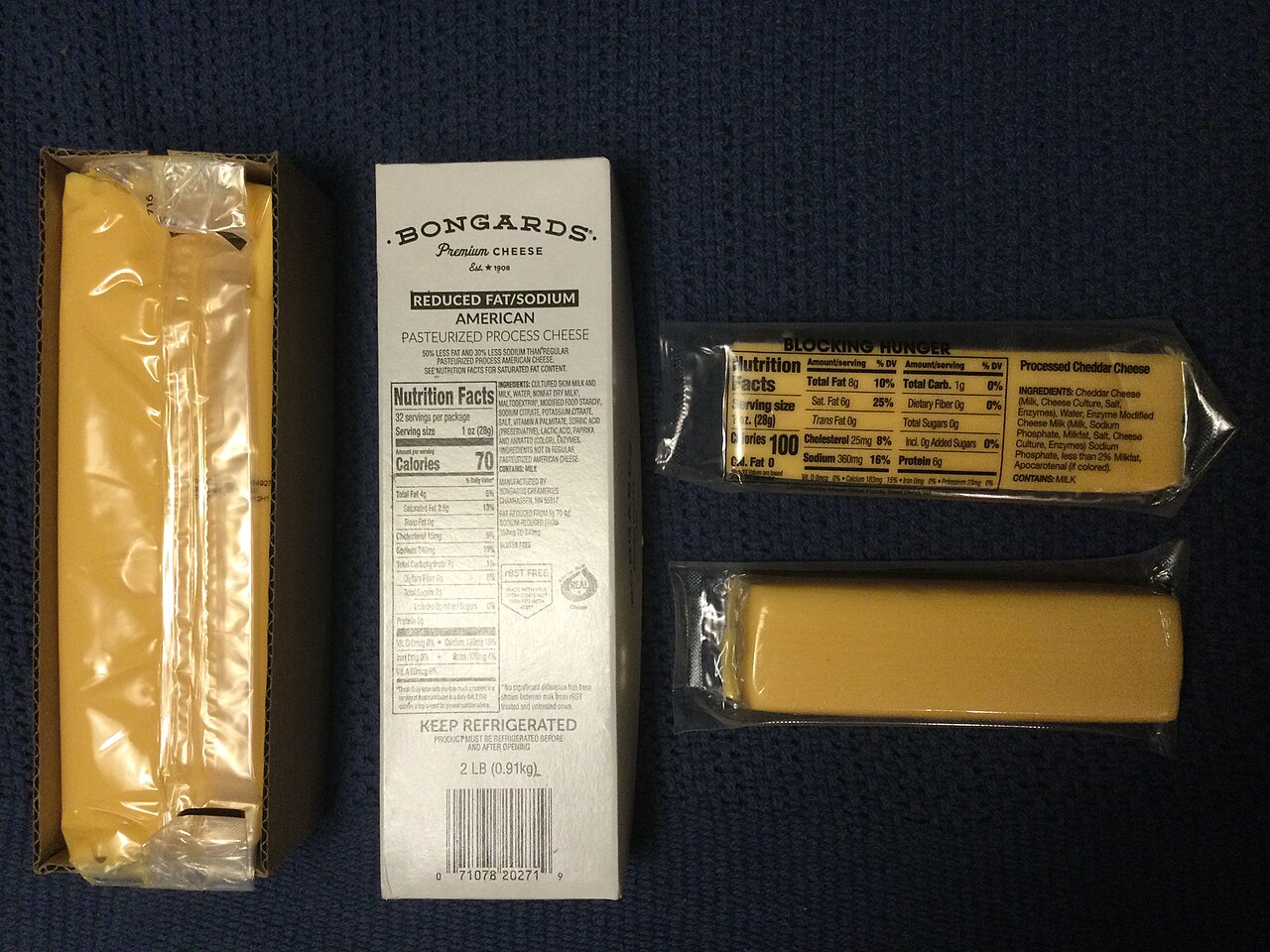


Typical composition
Common components include pasteurized cheese, milk solids and sometimes other unfermented dairy products. Manufacturers add emulsifiers and stabilizers to keep fat and water blended, along with salts for taste and preservation. Food colorings and flavorings may be used for a predictable appearance and mild, uniform flavor. Whey or whey derivatives are often incorporated as economical protein sources and moisture regulators, as noted by whey-containing formulations.
How it is made
Production generally involves shredding or grinding cheeses, then heating and mixing them with emulsifying salts and other ingredients until a smooth, homogeneous mass is achieved. This heated blending denatures some proteins and melts the fat network, producing a product that can be poured, sliced or formed into blocks. After processing, the cheese is cooled and packaged to preserve its texture and prevent separation.
Forms, labeling and regulation
Processed cheese appears in a variety of formats — spreads, individually wrapped slices, blocks and canned spreads. Regulatory frameworks in many countries distinguish categories such as "pasteurized process cheese," "cheese food," or "cheese product" depending on the proportion of real cheese and added ingredients; labels and legal names can therefore indicate composition and permitted ingredients. Manufacturers often use food colorings to standardize appearance across batches.
Uses and culinary properties
Because it melts smoothly and consistently, processed cheese is widely used in commercial foodservice and at home for sandwiches, sauces, burgers and dips. Its predictable behavior under heat makes it a popular choice where uniform meltability is important. It is also valued for convenience: extended shelf life, ease of portioning and resistance to oil separation.
Nutrition and perception
Nutritionally, processed cheese provides protein, calcium and energy like other cheese, but it tends to contain added salt and stabilizers; formulations vary from higher-fat to reduced-fat versions. Some consumers view it as less natural than traditional varieties because of the processing and added ingredients, while others appreciate the functional benefits and affordability. For more detailed technical or ingredient information consult industry and regulatory sources such as product specifications and food safety guidance from relevant authorities (emulsifier references, salts guidance, dairy product standards).
- Primary ingredients: cheese, milk solids, emulsifying salts (examples), salt
- Common forms: blocks, slices, spreads
- Key attributes: uniform melt, extended shelf life, consistent flavor
For further reading on processing methods and ingredient functions, see technical overviews and product labels provided by manufacturers and food science resources (cheese sources, dairy ingredient guides, whey references).
Related articles
Author
AlegsaOnline.com Processed cheese Leandro Alegsa
URL: https://en.alegsaonline.com/art/79325