
Plesiosaurus
Plesiosaurus, an Early Jurassic marine reptile genus, is known for its long neck, four large flippers and fossil discoveries by Mary Anning on the Dorset coast; it informs studies of locomotion, diet and physiology.
Overview
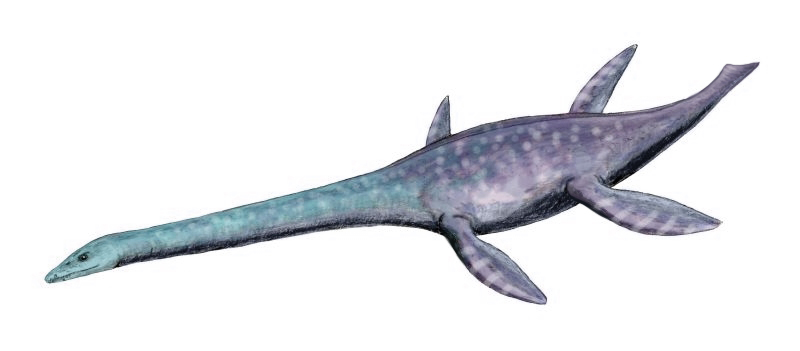
Plesiosaurus is a genus of extinct marine reptiles from the early part of the Jurassic Period. Its remains are known from fossil deposits and it belongs to the larger group of aquatic reptiles called Plesiosauria. Traditionally portrayed with a small head, very long neck and broad body supported by four powerful flippers, Plesiosaurus has become an important reference taxon for understanding Mesozoic marine ecosystems and reptilian adaptations to life in water. As a marine-adapted reptile, it occupied nearshore seas where it hunted swift prey.
Image gallery
10 Images




Anatomy and locomotion
Plesiosaurus combined a compact trunk with an elongated cervical series and a short tail. The skull was relatively short with strong jaws lined by conical teeth set in sockets, suitable for catching slippery animals. Large, paddle-like limbs indicate that propulsion was produced mainly by synchronous or alternating strokes of the fore- and hind-flippers rather than by axial undulation used by many fishes. Typical external characteristics include:
- Long, flexible neck with many vertebrae.
- Four robust flippers for maneuvering and thrust.
- Short tail likely used for steering.
- Teeth adapted for grasping rather than chewing.
Discovery and naming
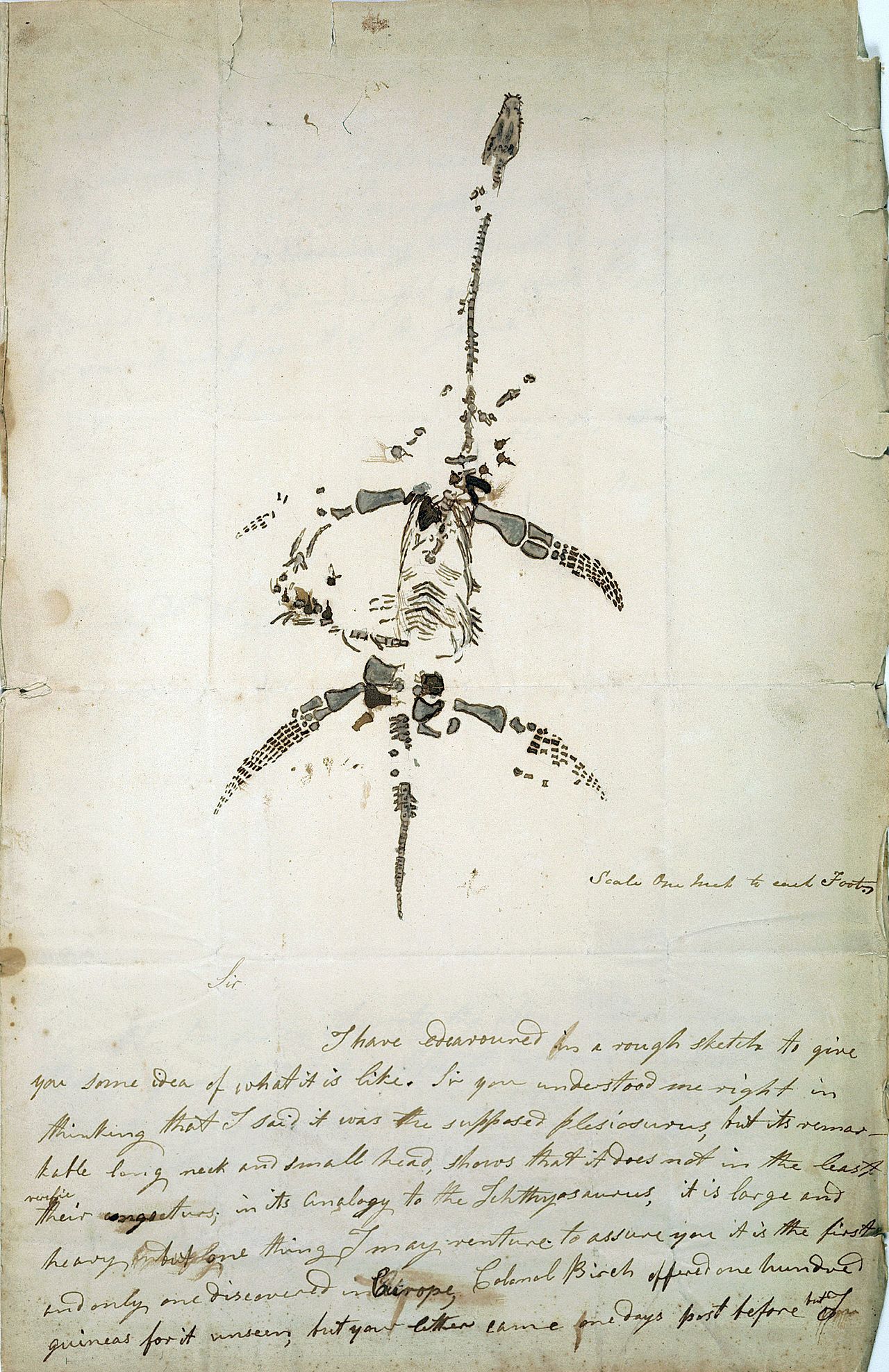
Early specimens of Plesiosaurus were uncovered on the British coast. The most famous collector associated with these finds was Mary Anning, who recovered an incomplete skeleton in 1820–21 and a more complete example with a skull in 1823 from the Jurassic Coast near Lyme Regis in Dorset. The genus name was published in the early 1820s by William Conybeare and others, and those early discoveries helped establish the basic description of the animal’s proportions and lifestyle. Contemporary accounts sometimes note that the first recovered specimen lacked its skull, making later skull-bearing finds especially valuable to paleontologists.
Diet, ecology and behavior
Plesiosaurus is interpreted as a predator of fish and coleoid cephalopods. Fossil evidence and tooth morphology are consistent with a diet that included bony fish and belemnites. It likely swam through schools of fish, using its long neck to strike quickly while keeping its body at a distance; general feeding items reported in the literature include fish and other marine invertebrates. Swimming style emphasized maneuverability: rapid, controlled turns made it effective in coastal and shelf environments where prey could be abundant and agile (swim, schools).
Physiology and scientific debates
For decades scientists have debated whether plesiosaurs were ectothermic (cold-blooded) like many modern reptiles or had some degree of endothermy (warm-bloodedness). Recent approaches combine comparative physiology and geochemical proxies. Studies of breath-hold capacity and body size argue that larger air-breathing animals can store more oxygen and retain function during dives, a pattern that interacts with metabolic rate. Isotopic analyses of tooth phosphate oxygen ratios have been used to infer body temperature in extinct marine reptiles; some results are consistent with elevated metabolic rates compared with typical ectothermic reptiles, though interpretations remain cautious and active areas of research.
Classification, species and temporal range
Plesiosaurus is placed in the Plesiosauroidea and is among the better-known genera from the Early Jurassic. Historically a small number of species have been recognized within the genus; the group appears in strata that span a portion of the early Mesozoic, with a fossil record concentrated in Jurassic deposits. Summaries of species-level taxonomy emphasize conservative assignments because many early names were based on fragmentary material (species, Jurassic).
Importance and legacy
Beyond its scientific importance, Plesiosaurus is culturally prominent as an icon of prehistoric marine life and has influenced popular images of long-necked sea reptiles. Its early discovery helped shape paleontology in the 19th century and highlighted the contributions of field collectors. Ongoing studies of its anatomy, ecology and physiology continue to refine understanding of how reptiles returned to life in the sea and diversified into distinct swimming styles and feeding strategies.
For further general references and summaries see resources on fossils, marine reptiles (marine) and historical collectors (Anning), or consult modern overviews in paleontological reviews and museum accounts (reptile, Plesiosauria, skull, Jurassic Coast, Lyme Regis, Dorset, fish, belemnites, swim, schools, species, Jurassic).
Related articles
Author
AlegsaOnline.com Plesiosaurus Leandro Alegsa
URL: https://en.alegsaonline.com/art/77459