
Poison dart frog — biology, toxicity, and conservation
Small, brightly coloured frogs (family Dendrobatidae) from Central and South America, diurnal, alkaloid-bearing, with diverse reproductive care and conservation challenges.
Overview: Poison dart frog is the common name for a group of small, often brightly coloured frogs in the family Dendrobatidae. They occur naturally in tropical forests of Central America and South America. The English name refers to the traditional use by some indigenous peoples of toxins from a few species to poison the tips of hunting darts; most species were not used in this way. These frogs are notable for being active by day and for their association with skin alkaloids, warning coloration and elaborate parental care. A concise general entry is available at poison dart frogs.
Image gallery
9 Images





Taxonomy and distribution
Dendrobatidae is a New World family of frogs that includes several genera and many species with wide variation in size, colour and ecology. Species are distributed across humid lowland and montane forests, often restricted to particular watersheds or elevations. Some taxa have very small ranges and specialized habitat needs, which influences their conservation status.
Anatomy, coloration and behavior
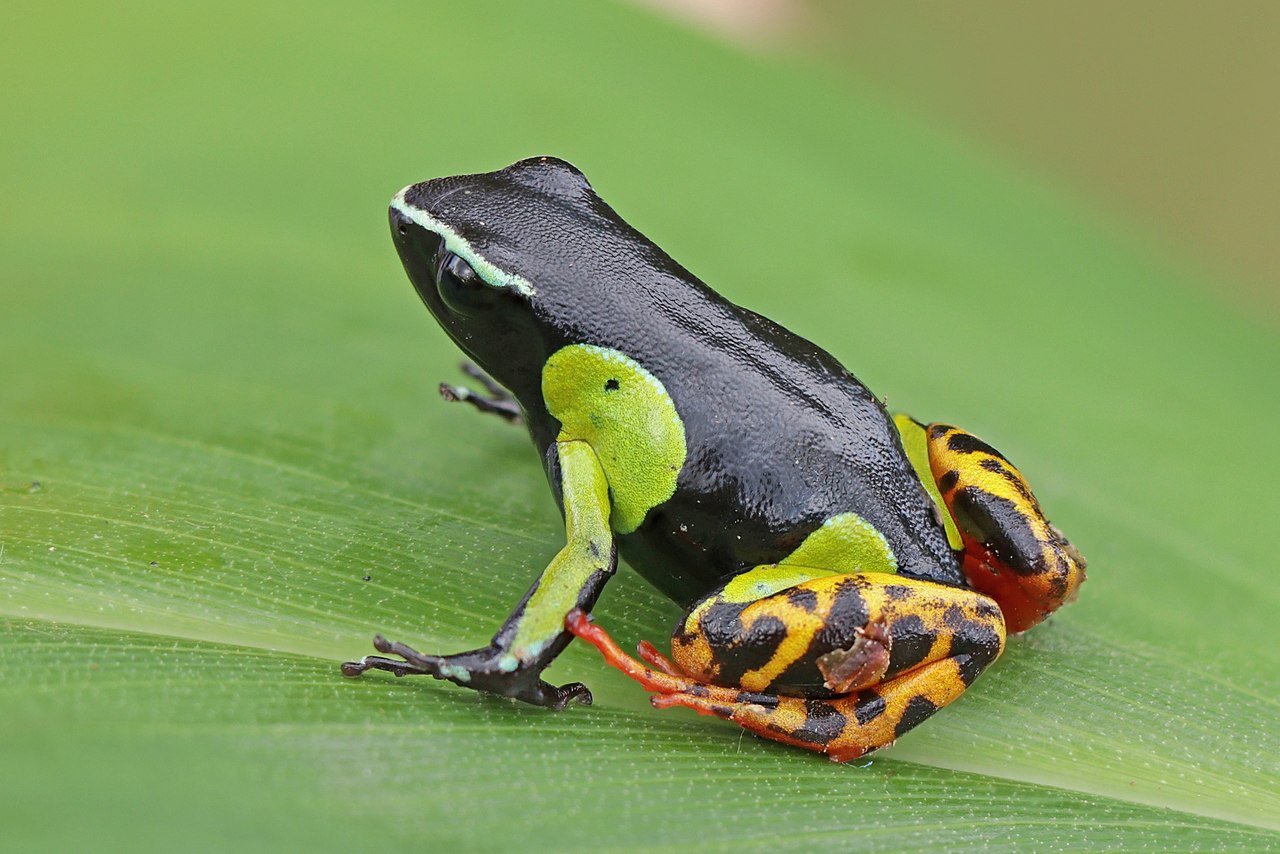
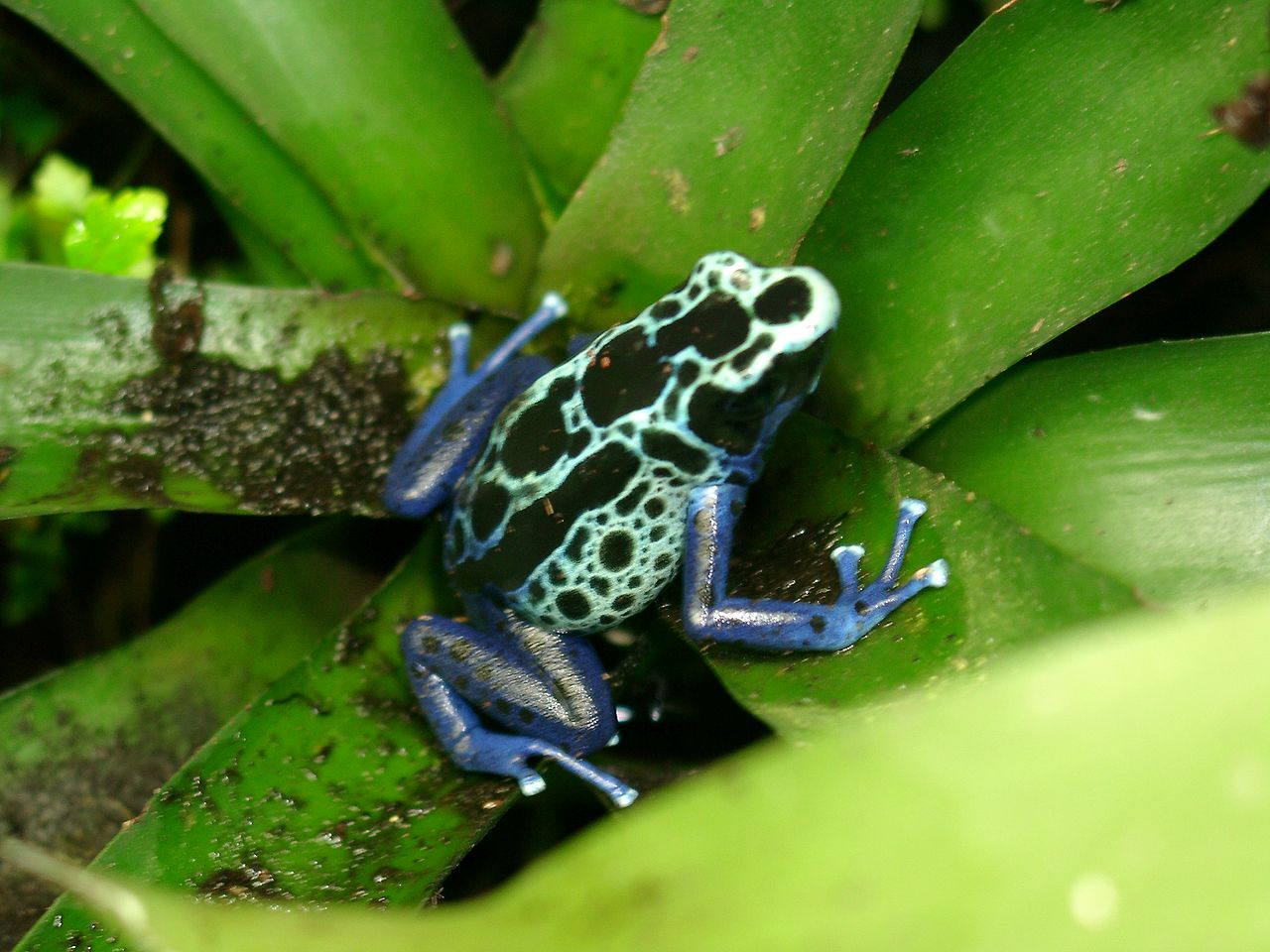
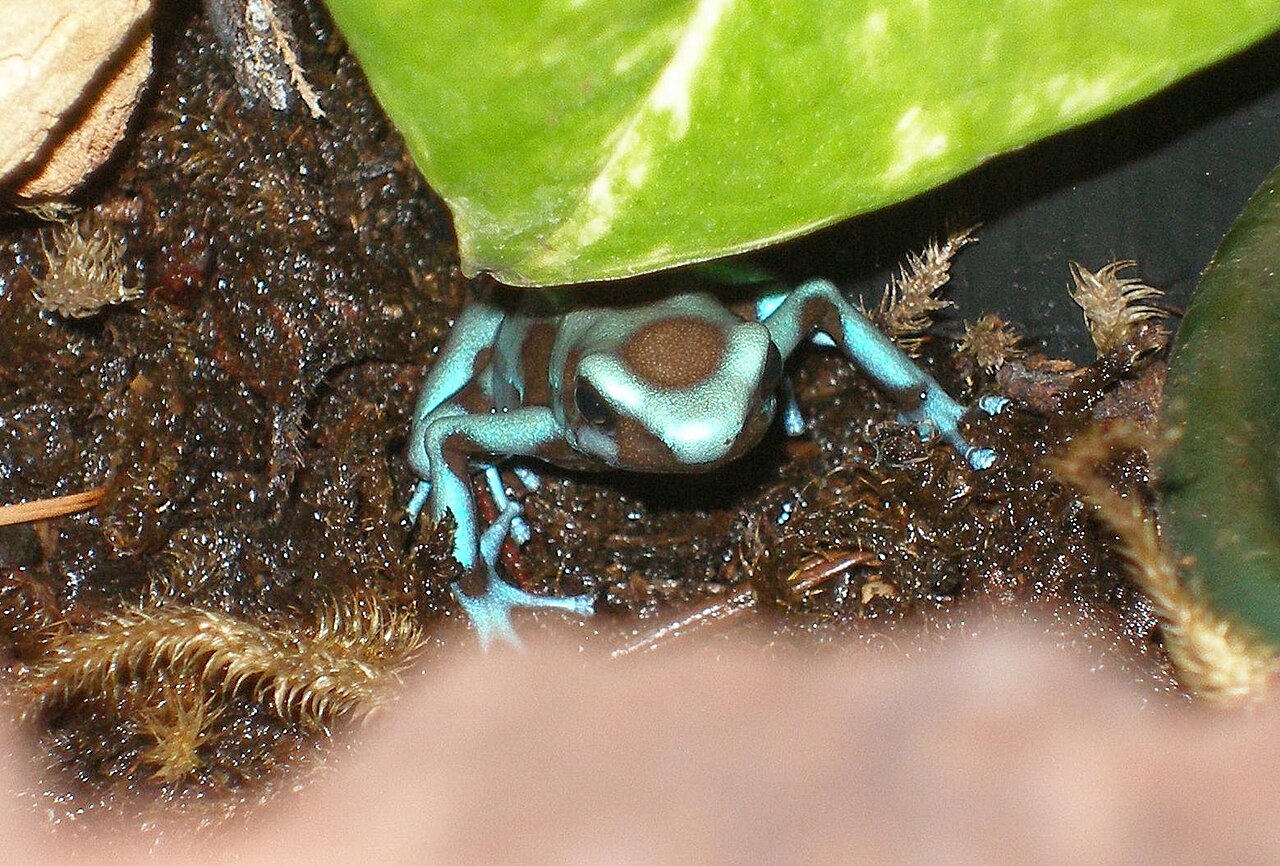
These frogs are typically small and compact with smooth skin and long limbs adapted for hopping. Many display vivid reds, yellows, oranges, blues and blacks in contrasting patterns that function as warning coloration (aposematism) to deter predators. Colour patterns may vary geographically within a species; in some regions different species or populations mimic one another through Müllerian or Batesian mimicry systems. Poison dart frogs are diurnal, often conspicuous on leaf litter, low vegetation or beside small water pools.
Toxicity and diet
All dendrobatids are considered at least somewhat toxic, though toxicity varies greatly among species and populations. The skin toxins are alkaloids—classes include batrachotoxins, pumiliotoxins and others—acquired primarily from dietary sources such as ants, mites and certain beetles that contain or synthesize these chemicals. Captive-bred frogs fed non-alkaloid diets typically lose much of their toxicity over time, supporting the dietary origin of the compounds. In predators or humans, handling or ingestion of very toxic species can cause illness; therefore direct contact with wild animals should be avoided.
Reproduction and life history
Reproductive strategies among poison dart frogs are diverse. Eggs are usually laid terrestrially on leaf litter or other sheltered sites. Parents commonly guard eggs and transport hatched tadpoles on their backs to small water bodies such as puddles, tree-hole pools or bromeliad axils. In several species, adults provide additional care: some transport tadpoles to individual phytotelmata and feed them with unfertilized eggs. This extended parental investment increases offspring survival in variable forest environments.
Ecology and conservation
- Habitat loss and fragmentation from agriculture, logging and development reduce available territory and breeding sites.
- Infectious diseases such as chytridiomycosis have contributed to declines and local extinctions of amphibians globally.
- Collection for the international pet trade can threaten small or localized populations.
- Climate change alters precipitation patterns and microhabitats essential for reproduction and prey availability.
Many species are assessed as vulnerable, endangered or critically endangered by regional and global conservation bodies; limited ranges and specialized life histories make some taxa particularly sensitive. Conservation measures include habitat protection, disease monitoring, captive-breeding programmes and regulation of trade. For assessments and conservation resources see species assessments.
In captivity and scientific importance
In captivity, poison dart frogs are popular among amphibian enthusiasts and are often bred successfully; captive-bred individuals usually lack the dietary alkaloids that make wild frogs toxic. Scientific interest in dendrobatids spans chemical ecology, evolutionary biology, neuropharmacology and behaviour. Alkaloids isolated from these frogs have been studied for their physiological effects and as tools in biomedical research.
Further reading: For introductory and taxonomic information consult general amphibian guides and regional field guides. Additional resources and overviews: general overview, taxonomic references, Central American amphibians, South American amphibians, aposematism studies, toxin chemistry, conservation reports.
Questions and answers
Q: What is a poison dart frog?
A: A poison dart frog is a group of frogs in the family Dendrobatidae that are native to Central and South America.
Q: What makes poison dart frogs different from many other frogs?
A: Unlike many frogs, poison dart frogs are active during the day and often have brightly-coloured bodies which act as warning colouration.
Q: Are all dendrobatids toxic?
A: Yes, all dendrobatids are at least somewhat toxic.
Q: Do different species and populations of poison dart frogs have different levels of toxicity?
A: Yes, in the wild, frog of different species and in different places may have very different levels of toxicity.
Q: Are poison dart frogs endangered?
A: Yes, many species of poison dart frogs are critically endangered.
Q: How do poison dart frogs become poisonous?
A: Poison dart frogs become poisonous by eating ants and other small insects that have toxins in their bodies.
Q: What happens if an animal eats a poison dart frog?
A: If an animal eats a poison dart frog, it will become very sick.
Related articles
Author
AlegsaOnline.com Poison dart frog — biology, toxicity, and conservation Leandro Alegsa
URL: https://en.alegsaonline.com/art/77646
Sources
- amphibiaweb.org : "AmphibiaWeb – Dendrobatidae"
- animaldiversity.ummz.umich.edu : "Dendrobatidae"
- tolweb.org : "Dendrobatidae. Poison-arrow frogs, Dart-poison frogs, Poison-dart frogs"
- doi.org : 10.1016/0041-0101(94)90081-7
- pubmed.ncbi.nlm.nih.gov : 8016850
- ncbi.nlm.nih.gov : "Oribatid mites as a major dietary source for alkaloids in poison frogs"
- doi.org : 10.1073/pnas.0702851104
- pubmed.ncbi.nlm.nih.gov : 17502597
- digitallibrary.amnh.org : "Phylogenetic systematics of dart-poison frogs and their relatives (Amphibia: Athesphatanura: Dendrobatidae)"
- doi.org : 10.1206/0003-0090(2006)299[1:PSODFA]2.0.CO;2
- worldcat.org : 0003-0090
- research.amnh.org : "Amphibian Species of the World"
- ncbi.nlm.nih.gov : "Visual mate choice in poison frogs"
- doi.org : 10.1098/rspb.1999.0900