
Belemnites: extinct Mesozoic coleoids with a fossil rostrum
Belemnites were squid-like marine cephalopods of the Mesozoic known for their bullet-shaped calcitic rostra; they had ten arms, an ink sac, and are important index fossils and paleoenvironmental indicators.
Belemnites (Belemnoidea) are an extinct group of marine coleoids that resembled modern squids and cuttlefish in general form but differed in several anatomical details. They are best known from the Mesozoic fossil record — especially the Jurassic and Cretaceous — and were major components of marine ecosystems until their disappearance at the end of the Cretaceous. Their hard, calcitic internal skeleton commonly survives as fossils and is the typical form in which they are encountered by collectors and researchers.
Image gallery
10 Images

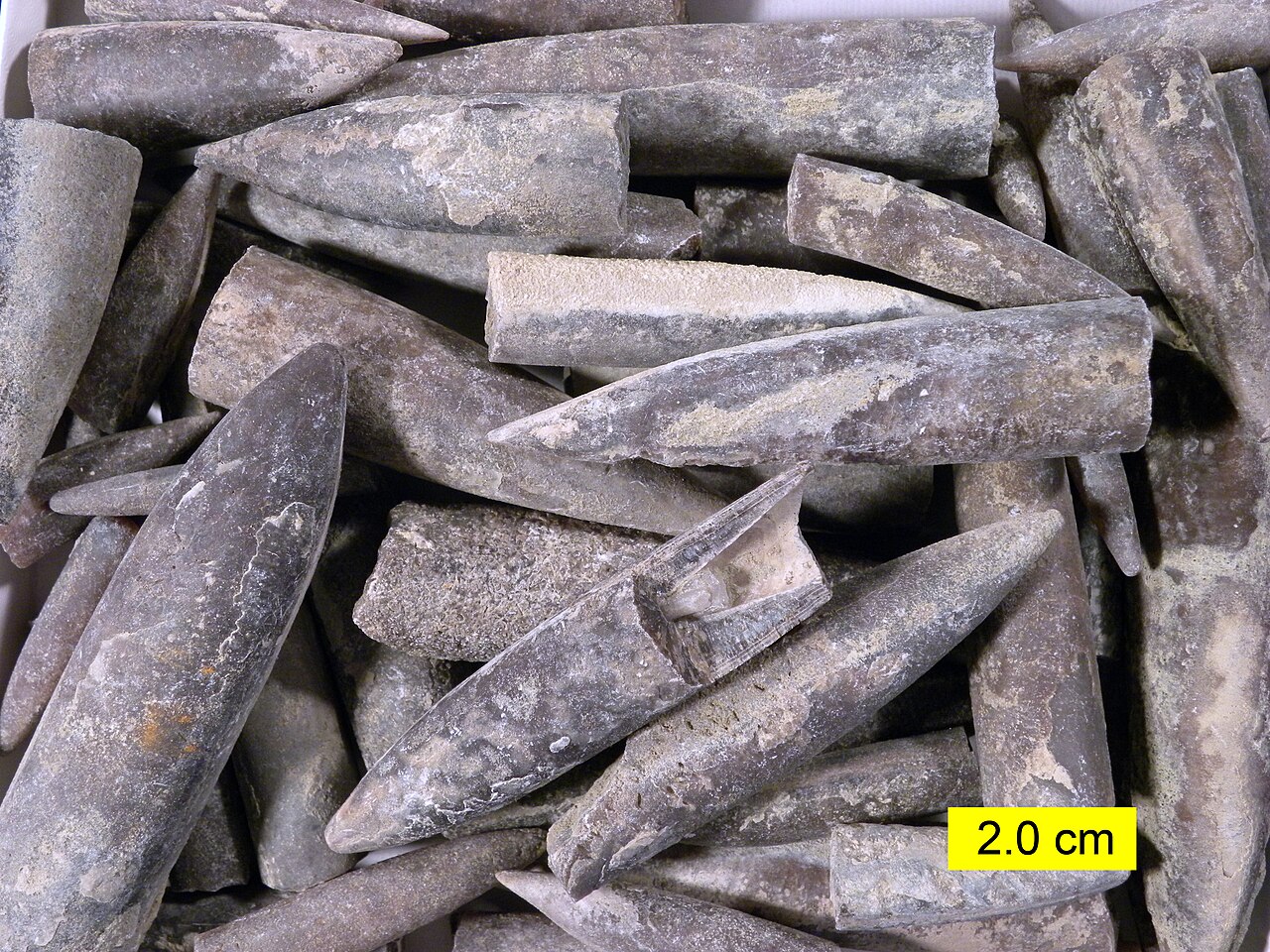


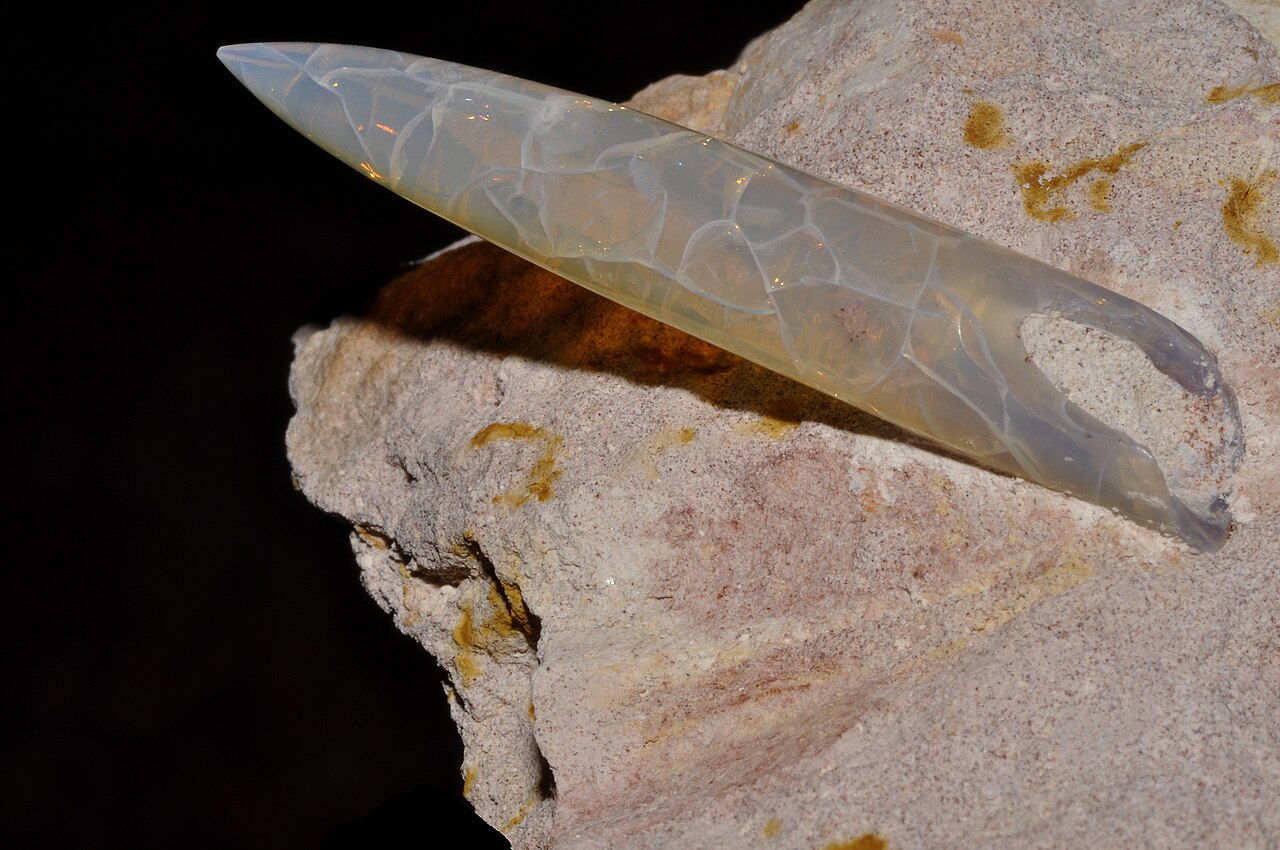

General characteristics
Unlike external-shelled ammonites, belemnites possessed an internal skeleton. The most durable part is the solid, bullet-shaped rostrum (also called the guard), which is often found alone as a fossil. Behind the rostrum lies the phragmocone, a chambered portion similar in concept to other shelled cephalopods, and a thin anterior extension sometimes called the pro-ostracum. Living belemnites would have had a soft body with ten short arms bearing hooks or suckers, an ink sac for defense, and a muscular mantle for jet propulsion.
Anatomy and function
- Rostrum (guard): dense, calcitic, and commonly fossilized; provided ballast and structural support.
- Phragmocone: chambered, helped with buoyancy control.
- Arms and feeding: ten arms of roughly equal length (no long tentacles like many modern squids), used to capture prey.
- Soft parts: evidence indicates they carried an ink sac and other coleoid features similar to other cephalopods.
Evolutionary relationships and classification
Belemnites belong to the superorder Belemnoidea and are related to modern coleoids such as the squid and cuttlefish. Paleontologists typically divide belemnoids into several orders (commonly cited as four major groups), distinguished by features of the rostrum, phragmocone and pro-ostracum. Their relationships help illuminate the broader evolution of cephalopods from externally shelled forms to the largely shell-reduced groups that dominate today.
Ecology, fossil record and importance
Belemnites were active, nektonic predators in marine food webs. Their widespread and abundant rostra make them useful as index fossils for dating Mesozoic marine strata and for paleoenvironmental studies: isotopic analysis of rostra can provide data on ancient temperatures and habitats. Well-preserved fossil specimens occasionally show soft-tissue outlines, arm hooks, and ink sacs, supplying direct evidence of life habits that link them to modern squid and cuttlefish.
Notable facts and distinctions
Although often compared to modern squid, belemnites typically had ten similar arms and lacked the very long feeding tentacles seen in many living squids — a distinction discussed in cephalopod studies and popular summaries (arm and tentacle differences). Their systematics are treated in specialist literature; broad overviews often note several major orders within Belemnoidea (classification references).
Because the rostrum is so durable, much of what is known about belemnites comes from these remains; continued fossil discoveries and analytical techniques keep refining our picture of their diversity, life habits, and role in ancient oceans.
Questions and answers
Q: What are belemnites?
A: Belemnites are an extinct group of marine cephalopods that are similar to modern squids and closely related to modern cuttlefish.
Q: Did belemnites have an ink sac like modern squids?
A: Yes, belemnites, like modern squids, also had an ink sac.
Q: How many arms did belemnites have?
A: Belemnites had ten arms of roughly equal length, but no tentacles, unlike modern squids.
Q: What is the taxonomic status of belemnites?
A: Belemnites are a monophyletic group of superorder status called the Belemnoidea.
Q: How many orders are there within the Belemnoidea?
A: There are four orders within the Belemnoidea.
Q: How do belemnites compare to modern squids?
A: Belemnites are similar to modern squids as they also possess an ink sac. However, unlike modern squids, belemnites have ten arms of roughly equal length and no tentacles.
Q: Are belemnites still alive today?
A: No, belemnites are an extinct group of marine cephalopods.
Tags
Related articles
Author
AlegsaOnline.com Belemnites: extinct Mesozoic coleoids with a fossil rostrum Leandro Alegsa
URL: https://en.alegsaonline.com/art/10208
Sources
- bioone.org : bioone.org/doi/abs/10.1666/09-018R.1