
Polacanthus: Early Cretaceous armoured dinosaur from England
Polacanthus was an armoured, herbivorous dinosaur from the Early Cretaceous of England, known for a broad pelvic shield and spines. Its classification and relationship to other ankylosaurs remain debated.
Overview
Polacanthus was a lightly built but well-armoured dinosaur that lived during the Early Cretaceous period. It was a herbivore, adapted to grazing on low vegetation, and is chiefly known from fossil material collected in southern England. The name Polacanthus means "many spines," a reference to the array of bony plates and spikes that protected its body.
Image gallery
10 Images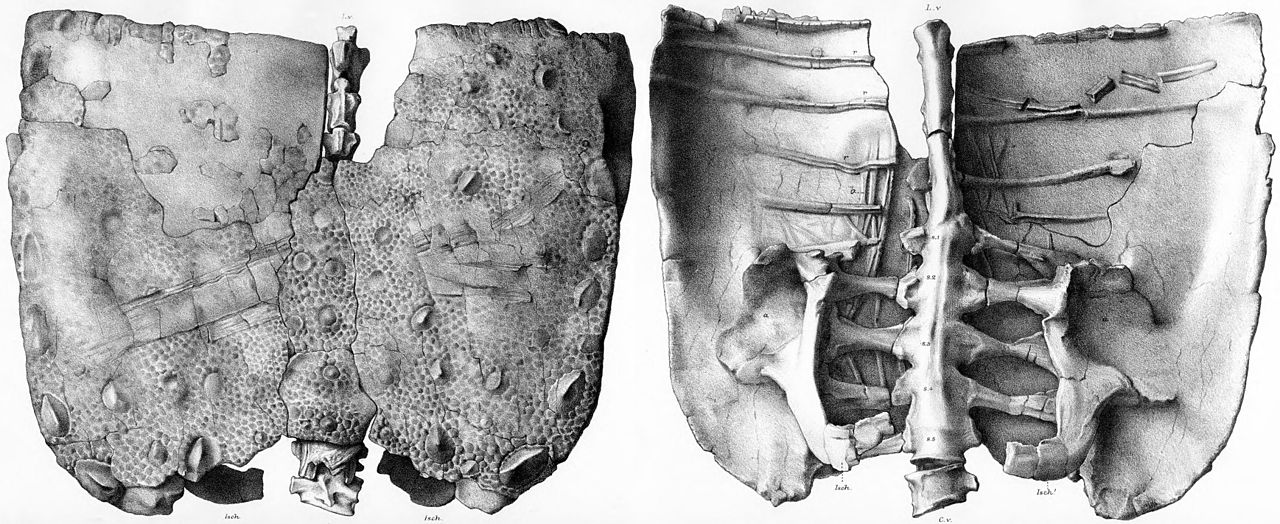


Description and anatomy
Polacanthus is recognized by an arrangement of osteoderms (bony skin plates), pointed spikes and a distinctive broad, flattened shield over the pelvic area. Reconstructions show a low-slung, quadrupedal animal with short, sturdy limbs and a heavy torso covered in armor rather than a heavy tail club. Size estimates vary with fragmentary remains, but many reconstructions place it at roughly four to five metres in length.
Discovery and classification
The first remains were found on the Isle of Wight and other English localities and were described in the 19th century; the best-known species often cited is Polacanthus foxii, named for the collector William Fox. Because much of the original material is incomplete, paleontologists have debated its exact relationships. Some researchers have placed Polacanthus close to nodosaurids or in a distinct group sometimes called Polacanthinae, while others have suggested it might be congeneric with older genera such as Hylaeosaurus.
Paleoecology and significance
As a low-browsing herbivore, Polacanthus would have fed on ferns, cycads and other ground-level plants available across floodplains and coastal environments of Early Cretaceous Europe. Its armor provided protection from contemporary predators and is an important example of convergent defensive strategies among different ankylosaurian lineages. The genus helps scientists understand diversity and biogeography of armored dinosaurs in Europe during this time.
Notable facts and debates
- Etymology: "Polacanthus" translates to "many spines," highlighting its numerous osteoderms and spikes.
- Fragmentary record: Much of what is known comes from partial skeletons and isolated armor plates, which complicates precise reconstructions.
- Taxonomy: Its placement within Ankylosauria is contested; some authors group it with nodosaurids, others in a separate polacanthine assemblage, and some have suggested synonymy with Hylaeosaurus.
- Public interest: Polacanthus appears in museum displays and popular reconstructions as an example of Early Cretaceous European armored dinosaurs.
Further reading
For general background on armored dinosaurs and the Early Cretaceous, see resources on herbivorous dinosaurs and geological summaries at armoured dinosaur introductions. Regional overviews of British dinosaur finds can be consulted via curated collections and regional surveys at England-focused paleontological sites and broader timeline guides at Early Cretaceous summaries.
Questions and answers
Q: What type of dinosaur was Polacanthus?
A: Polacanthus was a plant-eating dinosaur.
Q: When did Polacanthus exist?
A: Polacanthus existed about 132 to 100 million years ago during the Lower Cretaceous.
Q: What is the meaning of the name Polacanthus?
A: The name Polacanthus means "many spines."
Q: What is the genus that some paleontologists believe Polacanthus belongs to?
A: Some paleontologists believe Polacanthus belongs to the same genus as Hylaeosaurus.
Q: Where have fossils of Polacanthus been found?
A: Fossils of Polacanthus have been found in England.
Q: What did Polacanthus look like?
A: Polacanthus was an armoured, spiked dinosaur.
Q: What family did Polacanthus belong to?
A: Polacanthus was an ankylosaurid dinosaur.
Related articles
Author
AlegsaOnline.com Polacanthus: Early Cretaceous armoured dinosaur from England Leandro Alegsa
URL: https://en.alegsaonline.com/art/77687