
Skull (cranium): structure, function, and diversity
A skull is the bony or cartilaginous framework of the head in vertebrates that protects the brain, supports sensory organs, and provides attachment for facial structures and muscles.
Overview
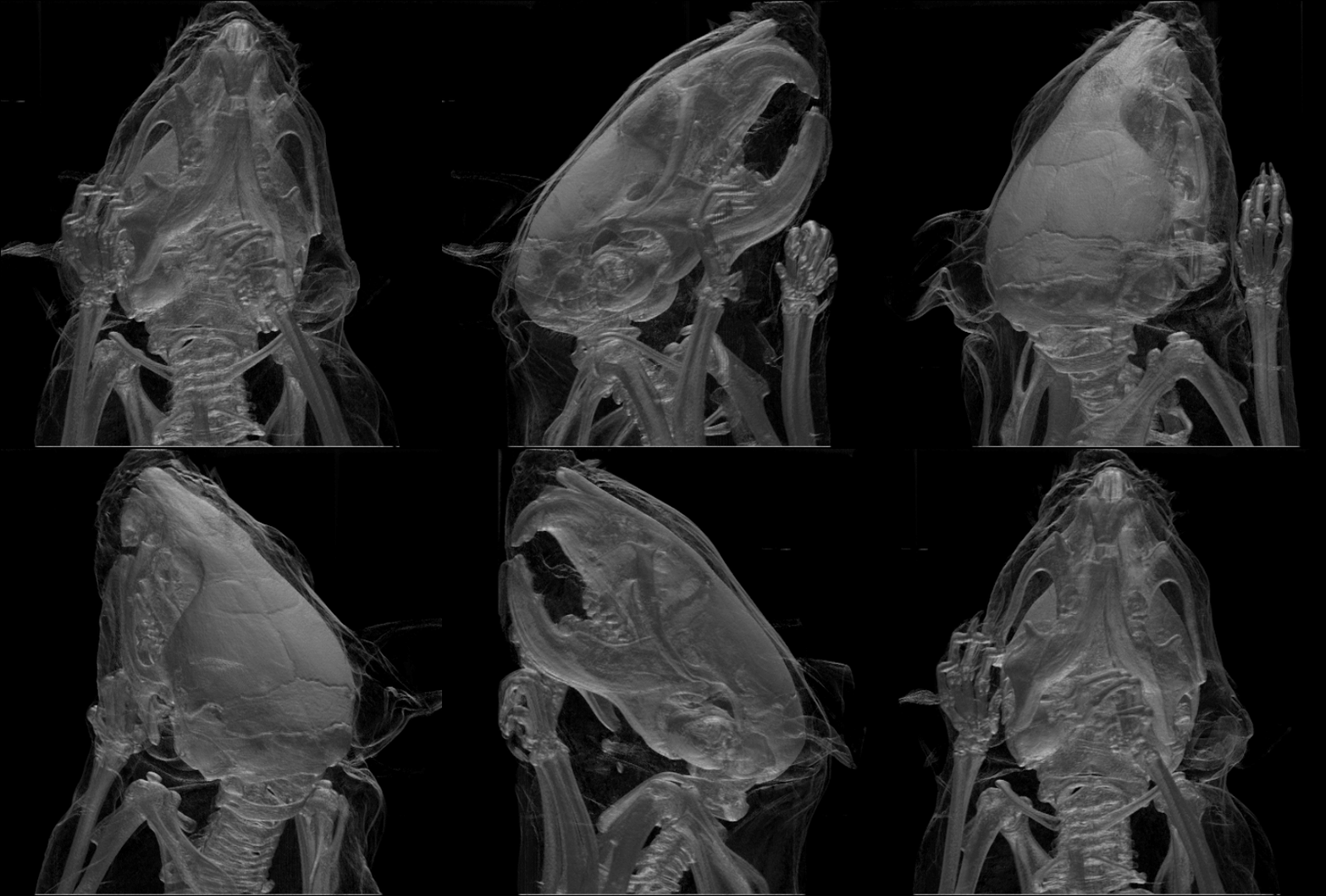
The skull, often called the cranium, is the structural framework that forms the head of a vertebrate. It is composed of multiple joined bones that enclose and protect soft tissues, support the face, and provide the anchor points for muscles. The term head broadly includes the skull and the organs it contains; in comparative anatomy the skull is central to understanding vertebrate biology, development and evolution. In common usage the word cranium is frequently restricted to the braincase, while skull can include facial bones as well.
Image gallery
10 Images



Structure and main parts
Anatomically the skull can be divided into two major regions: the neurocranium (braincase) and the viscerocranium (facial skeleton). Key components include:
- Neurocranium: protects the brain and houses cranial cavities.
- Viscerocranium: forms the face, jaws and openings for the respiratory and digestive tracts.
- Mandible: the lower jaw, typically the only movable bone of the skull in adults.
- Auditory ossicles and hyoid: tiny bones associated with hearing and tongue support; counts vary depending on what is included when describing a skull.
In mammals the bones of the skull are mostly flat and joined by fibrous sutures that permit growth. Human anatomy texts commonly describe the skull proper as 22 bones (8 cranial and 14 facial); if the six middle ear ossicles are counted the total commonly cited rises, reflecting different conventions.
Development and growth
During prenatal and infant stages many skull elements are separated by membranous gaps called fontanelles that allow brain expansion and passage through the birth canal. As growth proceeds these gaps close and sutures fuse in stages into adulthood. The timing and pattern of fusion are important in medicine and forensics for estimating age and diagnosing developmental disorders.
Diversity across vertebrates
Skull form varies widely among vertebrate groups according to diet, sensory reliance and lifestyle. Fish and amphibians may have numerous dermal bones and flexible jaws. Reptiles and birds show adaptations such as temporal openings or fused lightweight bones; birds have beaks in place of teeth and a skull optimized for flight. Mammalian skulls feature a single lower jaw bone (the dentary) and three middle ear ossicles derived from ancestral jaw elements. In cartilaginous fishes like sharks the skull is primarily cartilaginous rather than bony.
Some skulls bear special structures used for display, defense or combat. For example, many horned species develop rigid projections on the frontal bone, and horned ungulates illustrate how skull anatomy can be modified for weapons or ornaments (horned ungulates).
Functions and significance
Beyond mechanical protection of the brain and central sensory organs, the skull fixes the position and spacing of the eyes and ears so the brain can compute depth and sound direction, enabling stereoscopic vision and binaural hearing. It also provides cavities for sinuses, passageways for nerves and blood vessels, and mechanical leverage for chewing and facial expression.
Uses in science, medicine and culture
Skulls are central to paleontology and taxonomy because their features preserve well and reveal relationships among extinct and living species. In medicine and anthropology skull shape, suture pattern and bone landmarks are used to assess health, ancestry, and developmental conditions. Skulls also carry cultural symbolism and have been used historically in art, ritual and forensic study.
For general information on vertebrate anatomy see vertebrate references; for facial structure and clinical details consult resources on the face and cranial cavities (protective cavity).
Related articles
Author
AlegsaOnline.com Skull (cranium): structure, function, and diversity Leandro Alegsa
URL: https://en.alegsaonline.com/art/90974
Sources
- britannica.com : Cephalization definition from
- merriam-webster.com : Definition of skull from
- bikerringshop.com : skull rings