
Pecan (Carya illinoinensis): tree, nut, uses and distribution
Pecan (Carya illinoinensis) is a North American hickory species valued for its edible nuts and wood. Native to the US and Mexico, it has culinary, ecological and economic importance, especially in the southern United States.
Overview
The pecan (Carya illinoinensis) is a species of hickory tree that produces an edible nut commonly referred to as the pecan. It is native to south-central North America, occurring across parts of the United States and Mexico. In the U.S. its natural range extends from southern Iowa and through states such as Illinois, Indiana, western Kentucky, North Carolina and western Tennessee southward into Georgia, Alabama, Mississippi, Louisiana, Texas, Oklahoma and Arkansas. In Mexico it reaches states from Coahuila south toward Jalisco and Veracruz.
Image gallery
10 Images


Name and botanical notes
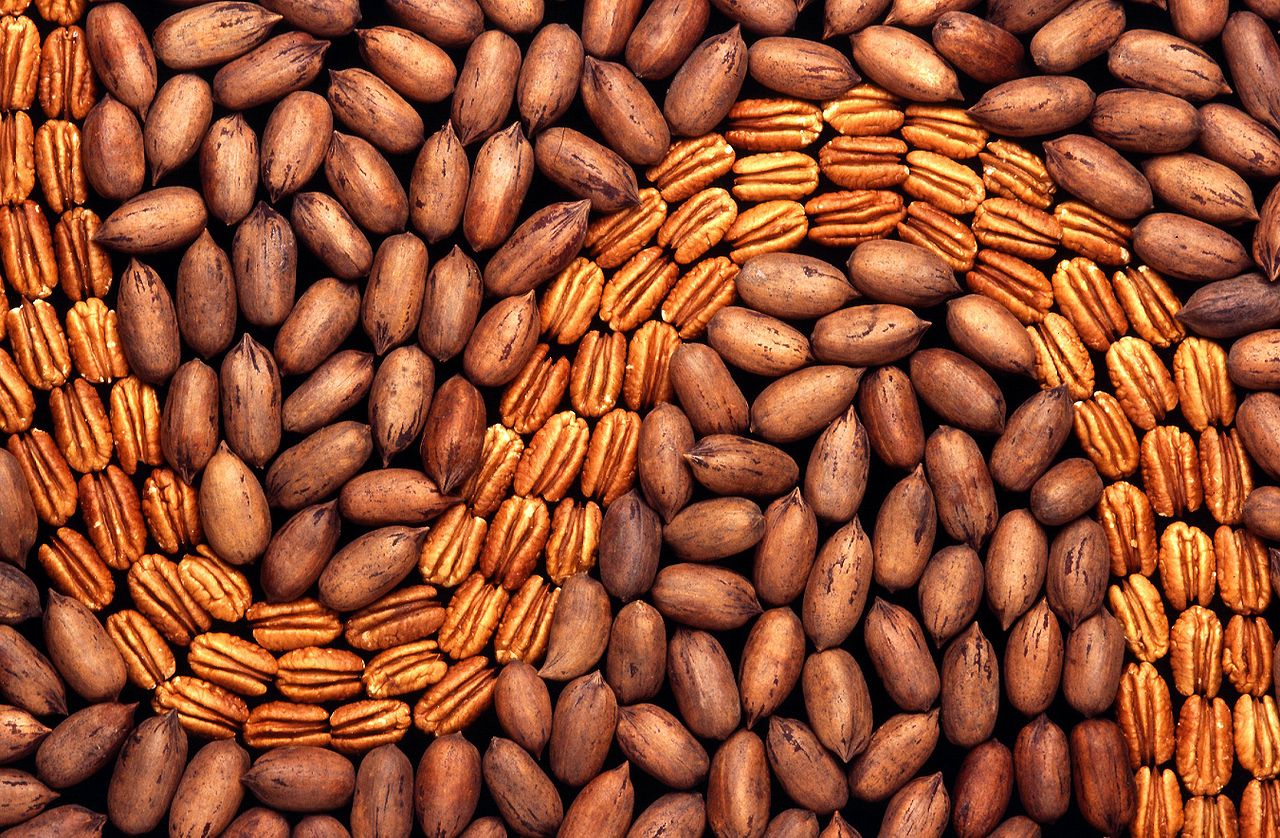
The English name "pecan" derives from an Algonquian term for nuts that must be cracked with a stone. Botanically, pecans are members of the genus Carya; they are often grouped with hickories and have a hard shell enclosing a rich, oily kernel. Trees are deciduous with pinnate leaves and produce separate male and female flowers on the same plant; many cultivated varieties require cross-pollination to set a good crop.
Characteristics and cultivation
Pecan trees can grow into large, long-lived specimens that prefer deep, well-drained soils and sites with ample moisture—river bottoms and lowlands are classic habitats. Nuts are borne in a thin-shelled husk; the kernel has a buttery flavor and high oil content, making it prized for eating raw, roasted or processed. Propagation is done from seed for rootstock and from grafting to preserve named cultivars. Growers manage orchards for spacing, irrigation and pest control; some diseases and pests can affect yields and require ongoing management.
History and cultural uses
Native peoples and later settlers used pecans as a food source and traded them widely. Over time the tree became an important crop in the southern United States, where it is woven into regional cuisines and traditions. Pecan-based desserts and confections are strongly associated with the Southern United States, the best-known being pecan pie. Nuts are also used in candies, baked goods, salads and as a snack.
Common uses and notable facts
- Food: eaten raw, roasted, candied (pralines) or used in baking and confections.
- Oil: pressed from kernels for culinary uses and flavoring.
- Wood: dense, attractive wood used for furniture, flooring and smoking meats.
- Horticulture: many named cultivars exist, selected for nut size, shell thinness and disease resistance.
Pecans remain both a regional culinary signature and an agricultural commodity. Their long juvenile period, care requirements and sensitivity to certain fungal diseases make successful cultivation a matter of experience and selective breeding. For further reading on botany, cultivation and culinary uses, consult specialized horticultural resources or regional agricultural extensions.
More on hickory relatives | Range and habitats | US distribution | Iowa occurrences | Illinois populations | Indiana notes | Kentucky range | North Carolina details | Tennessee areas | Georgia agriculture | Alabama uses | Mississippi traditions | Louisiana cuisine | Texas production | Oklahoma orchards | Arkansas sites | Mexican range | Coahuila | Jalisco | Veracruz | Name origin | Southern US cuisine | Pecan pie
Related articles
Author
AlegsaOnline.com Pecan (Carya illinoinensis): tree, nut, uses and distribution Leandro Alegsa
URL: https://en.alegsaonline.com/art/75380