
Hickory: characteristics, species, ecology and human uses
Hickory (Carya) are deciduous trees valued for pinnate leaves, hard wood and edible nuts. This article covers identification, major species, reproduction, uses, cultivation and conservation.
Overview
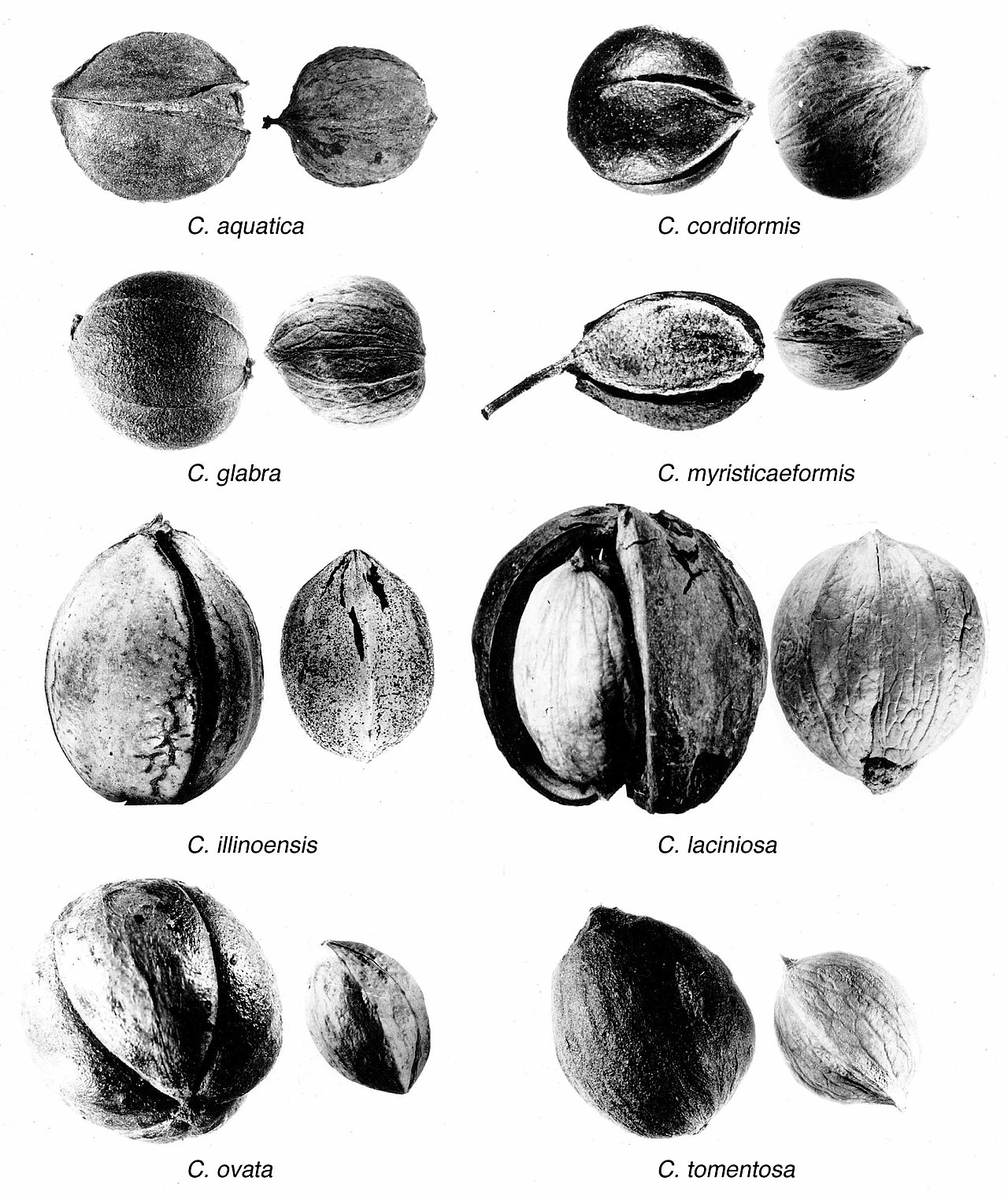
Hickory refers to trees in the genus Carya, part of the walnut family (Juglandaceae). Native mainly to eastern North America and parts of Asia, they are deciduous trees noted for pinnately compound leaves, tough hardwood, and sizeable nuts enclosed in a husk. Many species are important ecologically as food sources for wildlife and economically for timber and nuts.
Image gallery
8 Images




Identification and characteristics
Leaves are pinnate, typically with several leaflets and a terminal leaflet; some species have 5–17 leaflets. Bark varies by species from smooth or furrowed to the distinctive peeling plates of shagbark hickory. Flowers are small, yellow-green catkins produced in spring; hickories are wind-pollinated and, in most species, self-incompatible, requiring pollen from compatible nearby trees for good nut set. The fruit is a hard-shelled nut within a four-part husk that splits at maturity.
Major species and distribution
- Shagbark hickory (Carya ovata) — notable for peeling bark and sweet nuts; see identification notes.
- Pecan (Carya illinoinensis) — widely cultivated for edible nuts and orchard production; horticultural information at horticulture info.
- Mockernut, shellbark, and other hickories — large trees with differing nut size and flavor; comparisons at species comparison.
- Bitternut (Carya cordiformis) — more bitter nuts and a broad northerly range; see range maps.
Reproduction and ecology
Hickories flower in spring with catkins that shed pollen on windy days. Because many species are self-incompatible, fruiting depends on nearby compatible individuals and often shows mast years when many nuts are produced. Nuts are an important food resource for squirrels, birds, deer and other mammals; dispersal is frequently by animals caching seeds. Species contribute to forest canopy structure, successional dynamics and nutrient cycling.
Uses and cultural importance
The wood is dense, hard and resilient, prized for tool handles, flooring, and smoking meat. Nuts are eaten raw, roasted, or used in cooking and baking; pecan has been developed into numerous cultivars for commercial production. Indigenous peoples and early settlers used hickory wood and nuts for fuel, food, and implements. Practical guides on uses and processing are available at practical uses and processing guides.
Cultivation, management and conservation
Hickories grow slowly to moderately and prefer well-drained soils with full sun to partial shade. Propagation is commonly by seed for wild types and by grafting for named cultivars such as pecan varieties. Pests and diseases include cankers, wood-boring insects and fungal problems; integrated management and conservation of genetic diversity help sustain mast-producing stands. For planting and management advice see planting guides and pest management. Further authoritative resources are listed at expert references.
Related articles
Author
AlegsaOnline.com Hickory: characteristics, species, ecology and human uses Leandro Alegsa
URL: https://en.alegsaonline.com/art/44043