
Parthenon: Ancient Temple on the Athenian Acropolis
The Parthenon is the 5th-century BC temple on the Acropolis of Athens, dedicated to Athena; celebrated for its Doric design, sculptural program, and long history of reuse, damage and conservation.
Overview
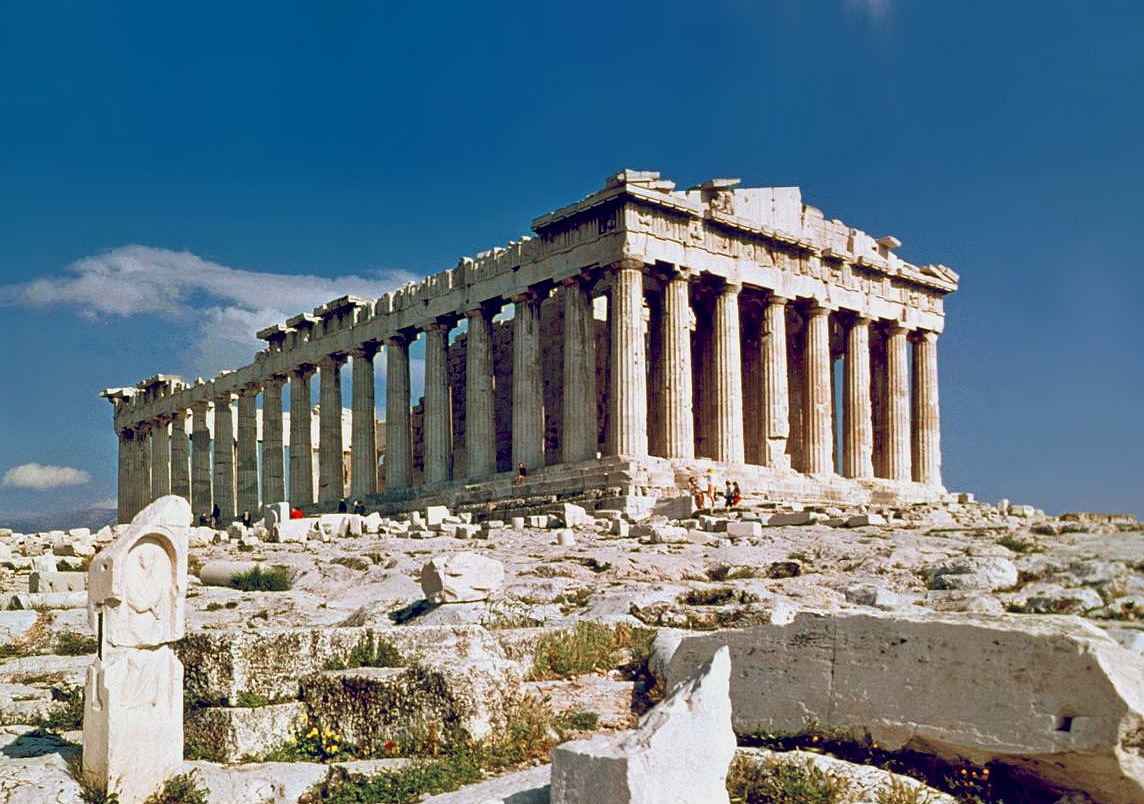
The Parthenon is the best-known ancient temple standing on the Athenian Acropolis. Erected during the leadership of Pericles between about 447 and 432 BC, it served as the principal sanctuary of the goddess Athena and as a powerful civic symbol for Athens in Greece. The name Parthenon derives from a Greek word associated with the virgin, reflecting its connection with Athena Parthenos.
Image gallery
10 Images


Architecture and materials
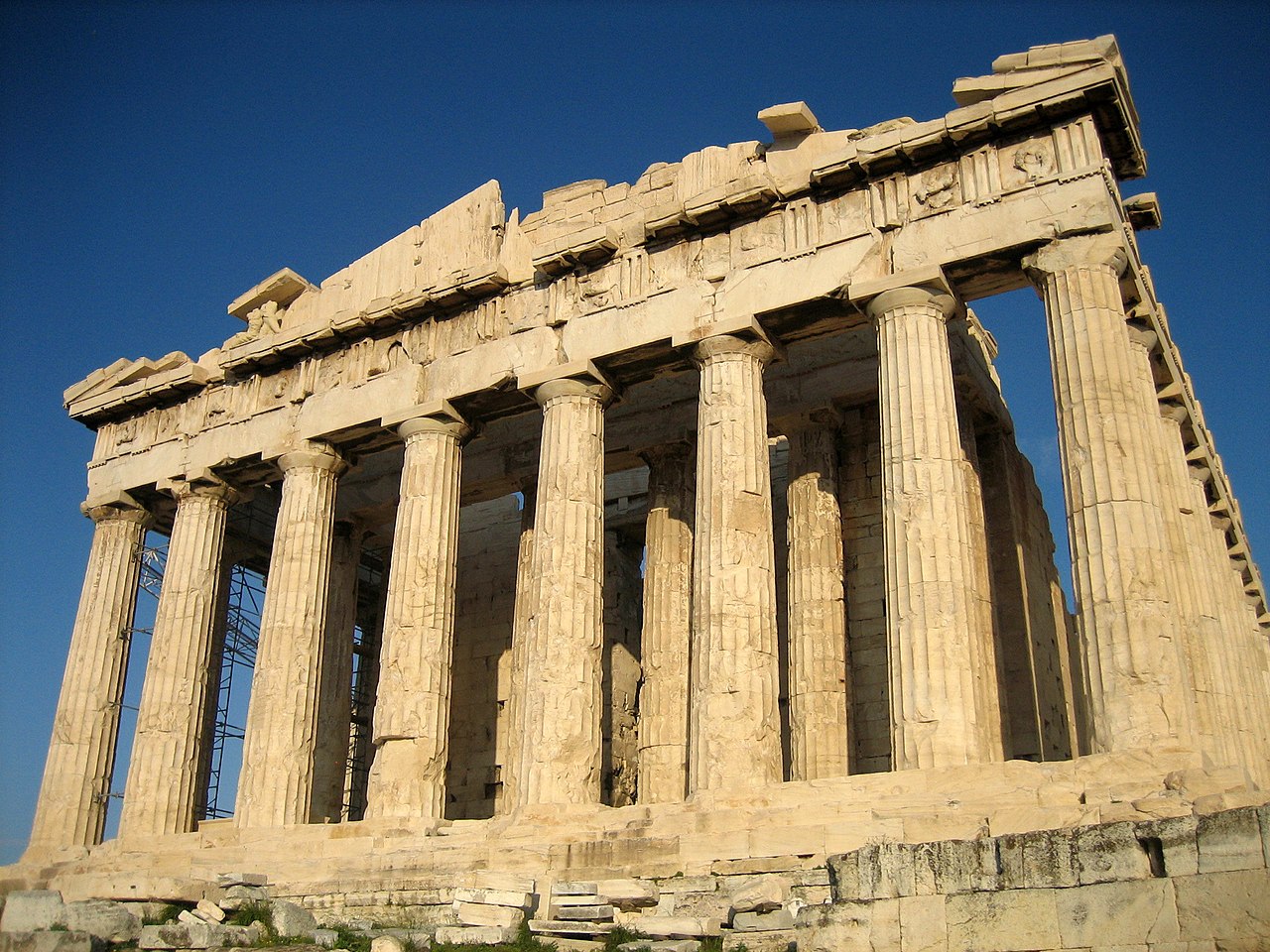
The Parthenon is a peripteral temple: a rectangular inner chamber or cella surrounded by a single row of columns. Its exterior follows the Doric order while incorporating Ionic details in certain elements. Builders used strong foundations based in limestone and dressed much of the visible structure in fine Pentelic marble. The design is traditionally attributed to the architects Ictinus and Callicrates, with the sculptural program overseen by the master sculptor Phidias. The monument’s proportions and carefully applied optical refinements—slight curvature of the stylobate and subtle entasis in the columns—are often cited as high achievements of classical architecture.
Sculpture and decoration
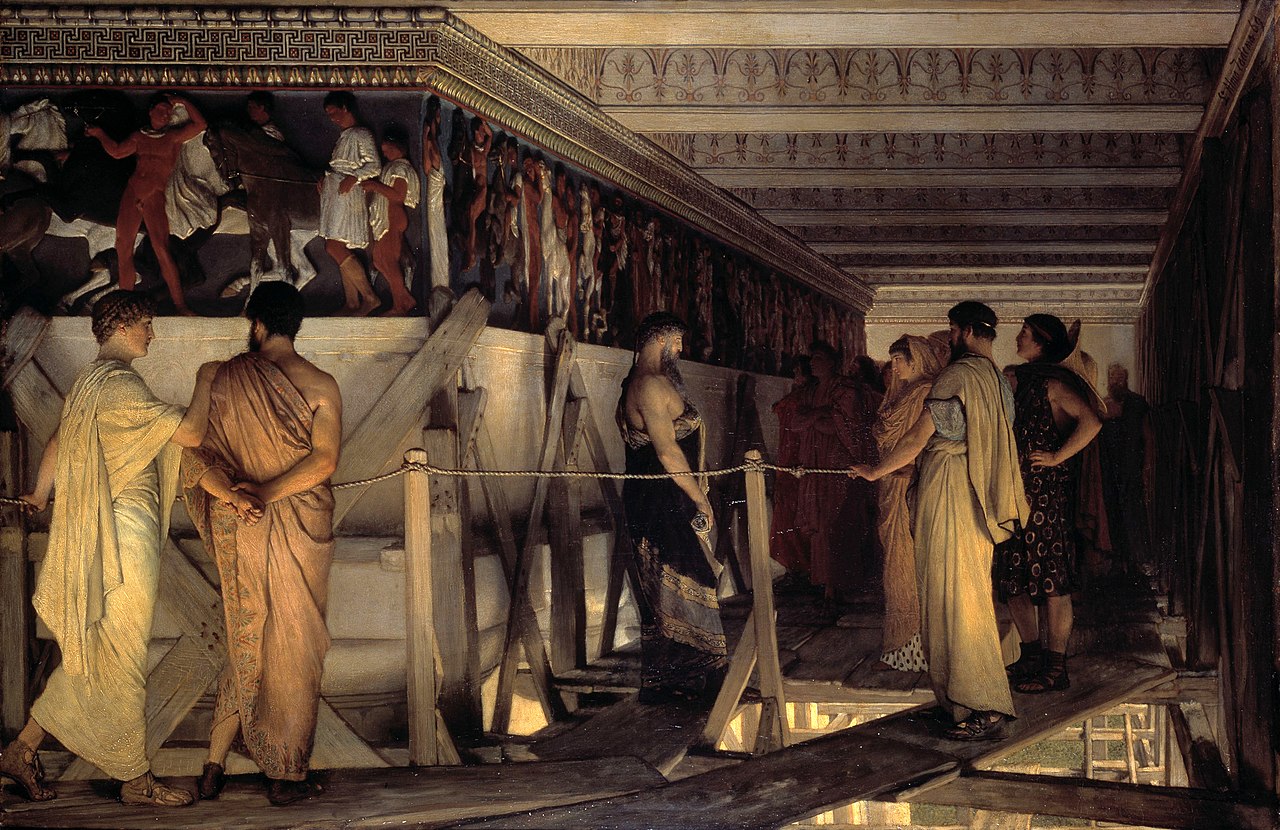
The Parthenon was decorated with an extensive sculptural program: metopes, a long ionic frieze, and sculpted pediments that depicted myth, ritual and civic ideology. In the cella stood a celebrated chryselephantine (gold and ivory) statue of Athena attributed to Phidias, a work that was central to the shrine’s religious role. Many of the surviving sculptural fragments and reliefs are key sources for studying classical art and ancient religion.
History after antiquity
Over the centuries the Parthenon’s function changed: it continued as a pagan temple, was converted to a Christian church in the later Roman and Byzantine periods, and after the Ottoman conquest served for a time as a mosque. In 1687, during a Venetian siege, an explosion among stored gunpowder caused severe damage to the structure and to many sculptures.
Removal of sculptures and debates
In the early 19th century Thomas Bruce, 7th Earl of Elgin, removed a substantial portion of the surviving sculptures; these became known as the Elgin Marbles. Many of those pieces have been displayed in the British Museum since the early 1800s. Their removal—and the wider dispersal of Parthenon fragments—has generated prolonged debate about preservation, cultural property and possible repatriation.
Conservation and research
The Parthenon has been the focus of archaeological study and conservation work for more than a century. Modern efforts aim to stabilize the ruins, conserve surviving sculpture, and in some cases reunite or document fragments and remains. Scholars use architectural study, epigraphy, sculptural analysis and archaeological investigation to better understand construction techniques, liturgical practice and the monument’s changing meanings through time. The site continues to be an important resource for learning about ancient Greece and the development of classical art and civic architecture.
Significance and visitation
Today the Parthenon is widely recognized as an enduring symbol of classical heritage, ancient civic achievement and architectural refinement. It is part of the Acropolis UNESCO site and attracts visitors, historians and conservators from around the world. For introductions to its context, readers may consult studies of the Acropolis, the city of Athens, and general works on classical architecture and art history.
Notable facts
- The Parthenon combines strict Doric form with Ionic features and careful optical adjustments.
- Its construction involved large quantities of Pentelic marble and solid limestone foundations.
- Architects associated with the project include Ictinus and Callicrates; the sculptural program is linked to Phidias.
- The monument served variously as a pagan temple, a Christian church and an Ottoman mosque before becoming an archaeological and cultural monument.
- Controversies over the Elgin Marbles in the British Museum illustrate modern debates about cultural heritage.
For further exploration, consult specialized publications and museum catalogues on classical architecture and Greek sculpture. Summary resources on the Parthenon and its setting are available through general works on ancient Greece and studies of classical architectural history.
Related articles
Author
AlegsaOnline.com Parthenon: Ancient Temple on the Athenian Acropolis Leandro Alegsa
URL: https://en.alegsaonline.com/art/74822
Sources
- credoreference.com : "Parthenon - Credo Reference Topic"
- wikidata.org : wikidata.org/wiki/Q10288
- catalogue.bnf.fr : cb11947956g
- data.bnf.fr : (data)
- d-nb.info : 4068909-8
- id.loc.gov : sh85098340
- data.nlg.gr : 4291
- viaf.org : 242092481
- worldcat.org : viaf-242092481