
Petronas Towers
Twin skyscrapers in Kuala Lumpur, Malaysia, completed in 1998. Designed by César Pelli, they were the world’s tallest buildings until 2004 and remain the tallest twin towers, noted for Islamic-inspired geometry.
Overview
The Petronas Towers are a pair of landmark skyscrapers in the Kuala Lumpur City Centre, a prominent element of the skyline of Kuala Lumpur, Malaysia. Completed in the late 1990s, the towers became symbols of Malaysia’s economic development and international aspirations. At roughly 452 metres to the pinnacle and with 88 floors each, they held the title of the world's tallest buildings until 2004 and still hold the record as the tallest twin towers.
Image gallery
10 Images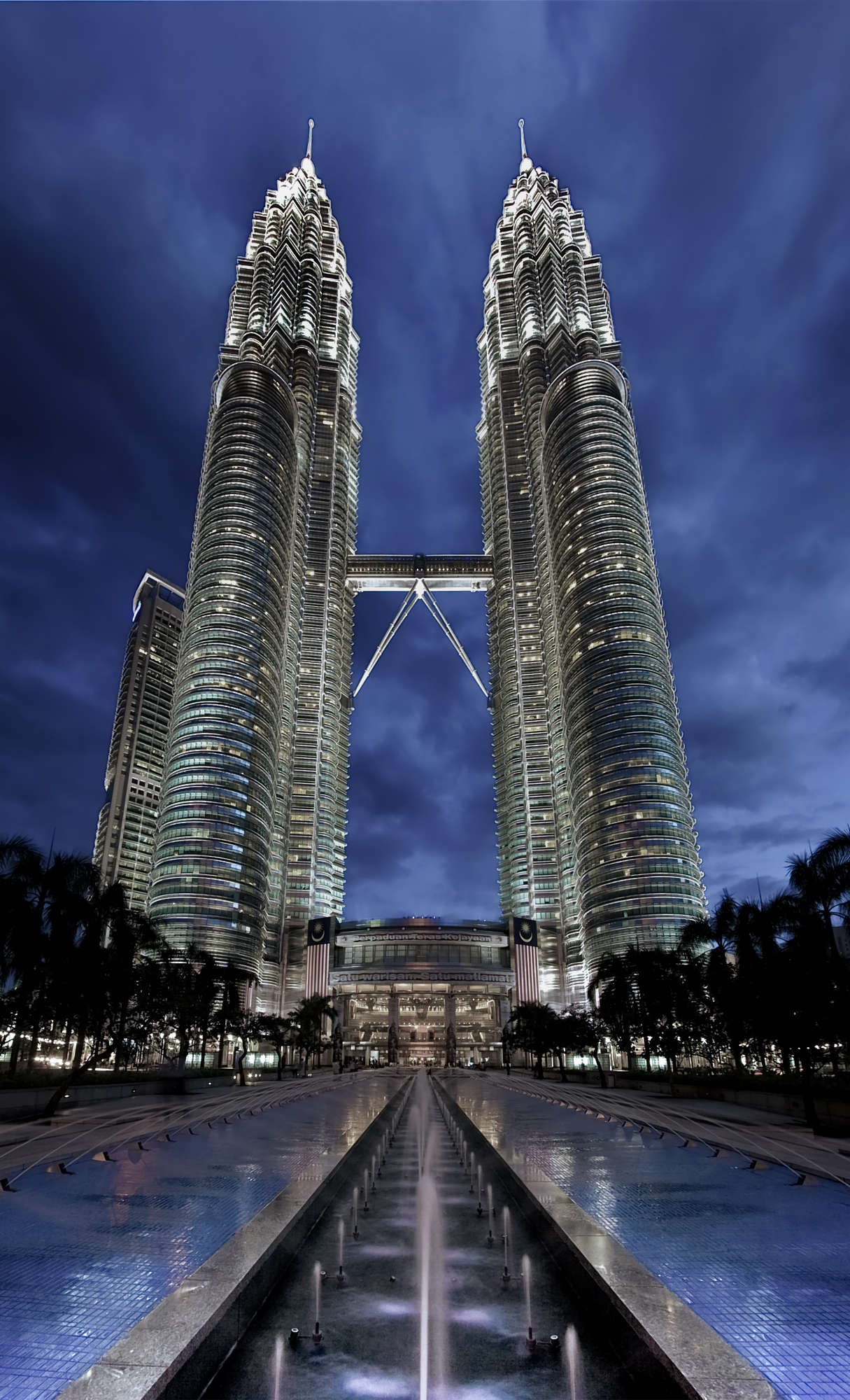




Design and architecture
The towers were designed by architect César Pelli in a postmodern idiom that draws on regional and religious motifs. The floor plan is based on an eight-pointed star created from two interlocking squares, a geometry that echoes patterns used in Islamic art and provides a distinctive façade rhythm. The exterior combines stainless steel and glass with a repeating pattern of pinnacles and setbacks to create a sculptural silhouette above the city.
Construction and materials
Construction progressed through the 1990s as part of a larger Kuala Lumpur City Centre development that includes a park, a large shopping complex and convention facilities. The towers use high-strength reinforced concrete as the primary structural material, chosen for stiffness and economy in the local context. Steel and glass elements form the cladding and crown. The careful engineering of foundations and core structures was necessary to support height and to resist wind and seismic forces typical for tall buildings.
Skybridge and public access
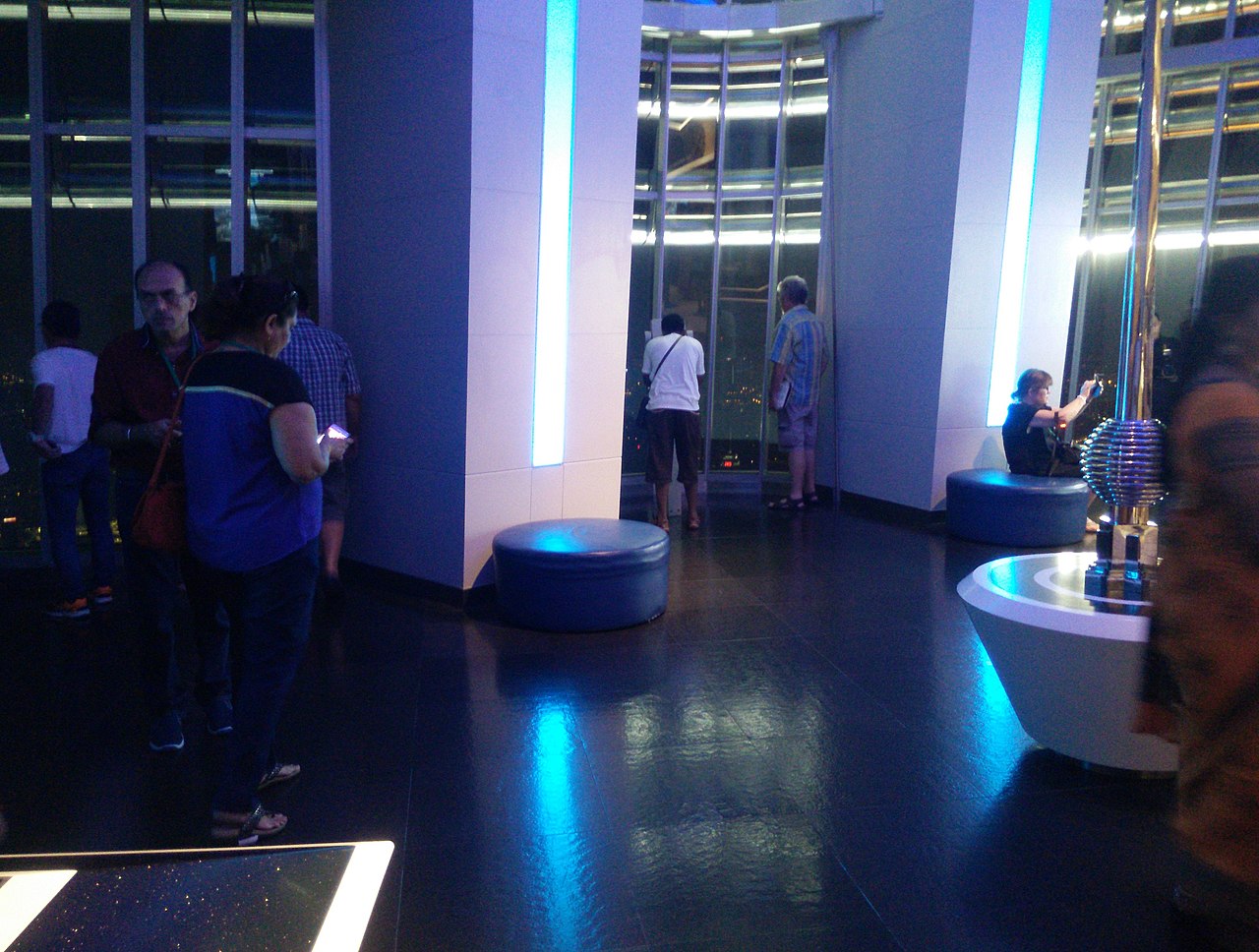
A distinctive feature is the double-decker skybridge that links the two towers around the 41st and 42nd floors. The bridge is not rigidly affixed to both towers; it is engineered to slide to accommodate movement and thermal expansion. The skybridge also functions as an emergency egress and as a visitor attraction. Public access to the skybridge and the observation levels is regulated and ticketed; prospective visitors should consult official visitor resources such as visitor information before planning a visit.
Uses and tenants
Primarily developed as commercial office buildings, the towers house corporate offices, including those of the national oil company, multinational firms and professional services. The surrounding complex includes retail, entertainment and public parkland, contributing to the area’s role as a business and cultural district. Services and tenancy have evolved over time as companies relocate and as the city grows.
Significance and legacy
The Petronas Towers are widely cited as an example of late-20th-century skyscraper design that fuses advanced engineering with an architectural language rooted in local culture. They helped stimulate development in the Kuala Lumpur City Centre and remain a major tourist draw and a symbol of modern Malaysia. For up-to-date details on architecture, tenancy and visitor access, see official or municipal sources such as the developer’s site at official pages, city portals at Kuala Lumpur resources and national tourism guidance at Malaysia tourism.
- Completed in the late 1990s and briefly the world’s tallest buildings before being surpassed in 2004.
- Noted for an Islamic-inspired geometric plan, twin composition and a mid-height double-decker skybridge.
- Part of a mixed-use urban complex that includes retail, parkland and cultural amenities.
Related articles
Author
AlegsaOnline.com Petronas Towers Leandro Alegsa
URL: https://en.alegsaonline.com/art/76233
Sources
- edition.cnn.com : www.edition.cnn.com.
- skyscrapercenter.com : skyscrapercenter.com
- emporis.com : Petronas Towers
- glasssteelandstone.com : Petronas Towers
- skyscraperpage.com : Petronas Towers
- en.structurae.de : Petronas Towers
- commons.wikimedia.org : Petronas Towers