
Elgin Marbles (Parthenon Marbles)
Ancient Greek marble sculptures taken from the Parthenon in the early 19th century, long displayed in the British Museum and subject to ongoing debates over cultural ownership and restitution.
The Elgin Marbles, often called the Parthenon Marbles, are a collection of classical-era stone sculptures removed from the Parthenon and nearby structures on the Acropolis of Athens. These works include freestanding figures and carved relief panels that once formed part of the temple’s decorative program and illustrate scenes from mythology, religious procession and war.
Image gallery
10 Images
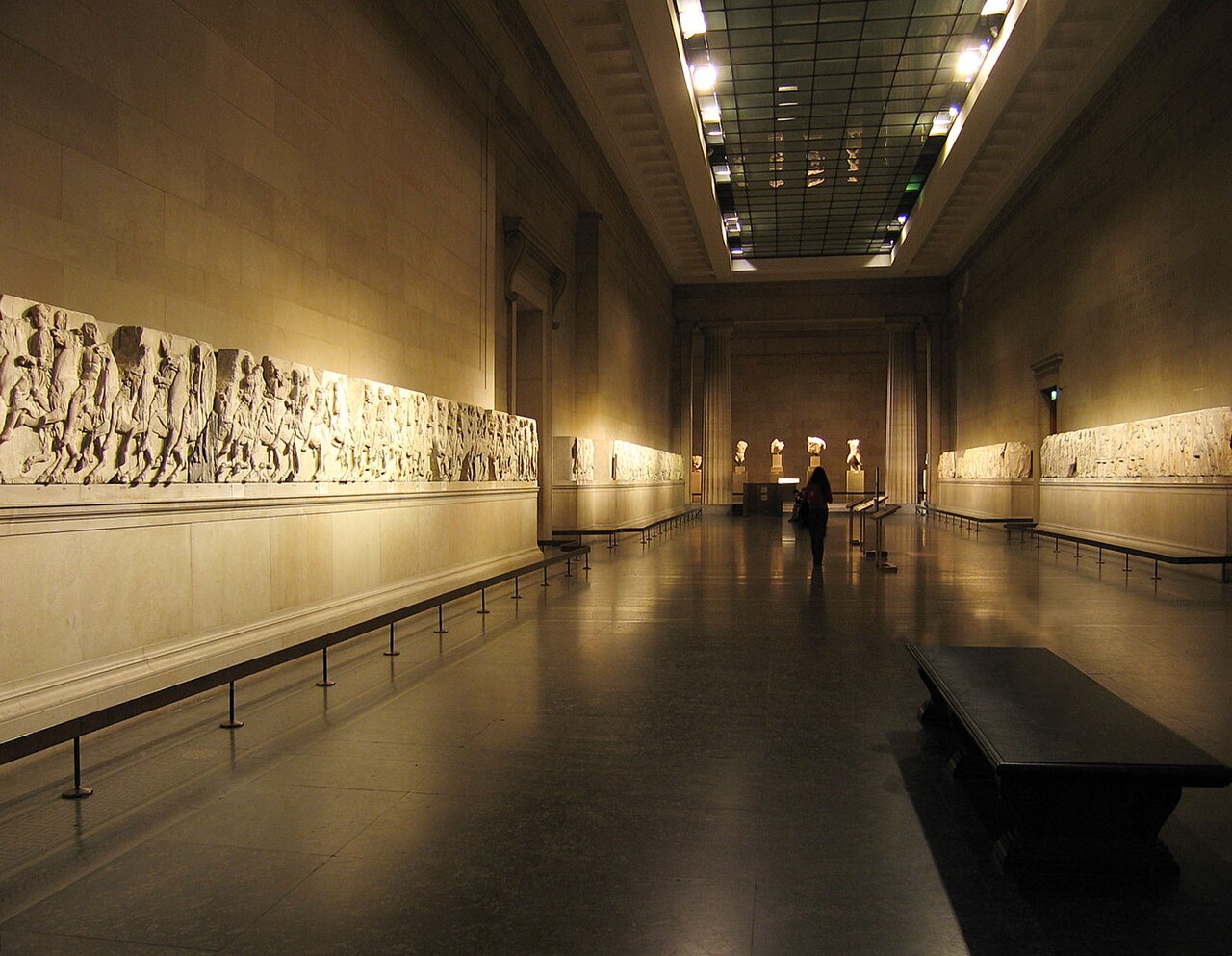



Description and principal components
Crafted in Pentelic marble, the group contains several distinct types of sculpture. Key elements are:
- The long sculpted frieze that ran around the Parthenon’s inner chamber, depicting a ritual procession;
- Triangular pediment groups that once filled the building’s gable ends;
- Thirty-two metopes—square reliefs placed above the exterior colonnade—showing mythic battles;
- Detached figures and architectural fragments originally integrated into the temple in the Parthenon, a classical temple atop the Acropolis in Athens.
Removal, transportation and museum acquisition
In the first years of the 1800s Thomas Bruce, 7th Earl of Elgin, who served as British ambassador to the Ottoman administration that then controlled Athens, arranged for many sculptures to be taken from the monument and transported to Britain. Supporters point to surviving documentary material that they say granted limited permission for removal; critics dispute the scope and legality of the action. The sculptures entered public display in London and were formally purchased from Elgin and placed in the British Museum, where they remain on view.
Controversy and claims for restitution
The removal has been the subject of prolonged international debate. The government of Greece and many scholars and citizens argue that the marbles were wrongfully taken and should be reunited with the remainder of the surviving Parthenon sculptures in Athens. Opponents of immediate restitution cite legal acquisitions, concerns about precedent, and the museum’s role in conservation and access. Some critics have described the removal as an act of theft; others emphasize a complex legal and historical context.
International responses and current status
Requests for return have been made repeatedly by Greek authorities. International bodies have sometimes offered to help mediate: for example, UNESCO offered mediation in 2014, a proposal that the holding institution declined. The debate now focuses on possible solutions—long-term loans, loans for special exhibitions, negotiated transfer, or shared custodianship arrangements—that seek to balance cultural justice, conservation needs, and public access.
Significance and continuing discussion
Beyond legal questions, the Elgin Marbles are central to discussions about cultural heritage, museum ethics and the legacy of imperial collecting. They remain important objects of study for classical art history and attract millions of visitors. The dispute highlights broader questions about how nations, museums and international organizations address claims for culturally significant objects in the modern era.
For further context on the objects and the dispute, see resources on ancient Greek sculptures, the biography of Thomas Bruce, 7th Earl of Elgin, commentary on claims that they were stolen, and the collection information at the British Museum.
Related articles
Author
AlegsaOnline.com Elgin Marbles (Parthenon Marbles) Leandro Alegsa
URL: https://en.alegsaonline.com/art/30811
Sources
- athensguide.com : "Athens Guide - the Parthenon Marbles"
- greece.org : "The Parthenon Marbles - demands of the Greek Government"
- commons.wikimedia.org : Elgin Marbles