
Doric order (ancient Greek architectural order)
The Doric order is the earliest and sturdiest of the classical Greek architectural orders, known for fluted, base-less columns, simple capitals, and an entablature with triglyphs and metopes.
Overview
The Doric order is one of the principal systems of classical architecture developed in Ancient Greece. It is traditionally counted among the three canonical classical orders, alongside the Ionic order and the Corinthian order. The name relates by later tradition to the Dorian Greeks; the Doric is widely regarded as the earliest and most austere of the orders and served as the dominant temple style on the Greek mainland and some colonies.
Image gallery
10 Images



Key characteristics
Doric architecture is distinguished by relatively heavy, fluted columns with plain, unadorned capitals and—originally in Greek practice—no separate base. Doric columns typically exhibit a compact, robust proportion and often show a subtle convex swelling called entasis that corrects optical illusion. The overall effect is one of strength and restraint rather than ornate decoration.
Principal parts
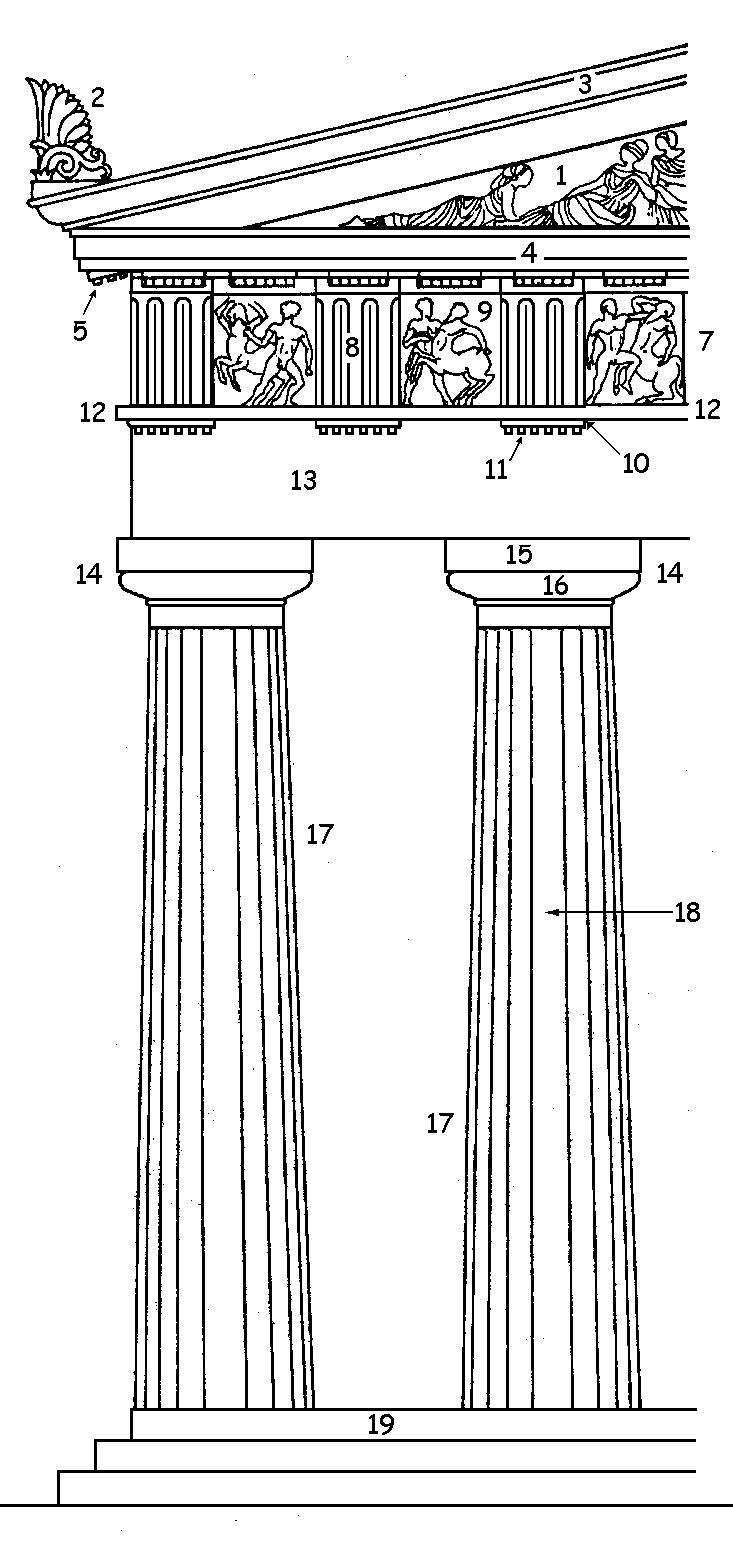
- Column: divided into shaft (fluted), capital (a rounded echinus below a square abacus), and in Greek examples usually no separate base.
- Entablature: the horizontal structure above the columns, composed of a plain architrave, a distinctive frieze with alternating triglyphs and metopes, and a projecting cornice.
- Decorative elements: triglyphs (three vertical grooves) and metopes (plain or sculpted panels) are a hallmark of the Doric frieze.
The number of flutes and the exact proportions vary by period and region; many Doric shafts have flutes around twenty and have a visibly shorter height-to-diameter ratio than Ionic or Corinthian columns.
History and development
Scholars believe the Doric order evolved from earlier wooden construction, its stone vocabulary carrying forward shapes and joints of timber architecture. Classic examples in stone date from the Archaic and Classical Greek periods; the Parthenon is commonly cited as a mature and highly refined Doric building (Parthenon). When adopted by Roman architects the Doric was modified—Romans often added a base and adjusted proportions—and the order experienced revivals in the Renaissance and neoclassical movements across Europe and the Americas.
Uses, significance, and identification
Doric temples originally served religious and communal functions; later the style was adapted for civic and institutional buildings where an impression of solidity and dignity was desired. To identify a Doric structure look for stout, fluted columns with simple capitals, an entablature featuring triglyphs and metopes, and an overall emphasis on proportion and rhythm rather than lavish ornament.
Notable distinctions
Compared with the more slender and decorative Ionic and the richly acanthus‑leafed Corinthian orders, Doric architecture is the simplest and most robust. Regional and chronological variations exist, so some examples blend features or reflect later reinterpretations. Understanding these differences helps when placing a building in its historical and stylistic context.
For further reading on the classical orders and specific monuments consult general architectural histories and specialist studies of Greek temple design.
Related articles
Author
AlegsaOnline.com Doric order (ancient Greek architectural order) Leandro Alegsa
URL: https://en.alegsaonline.com/art/28556
Sources
- credoreference.com : credoreference.com/entry/columency/orders_of_architecture
- credoreference.com : "Doric order. (2008). In The Columbia Encyclopedia"