
Pericles — Athenian statesman and leader of the Age of Pericles
Prominent Athenian statesman, orator and general (c.495–429 BC) who shaped 5th-century BC Athens through democratic reform, imperial policy, cultural patronage and civic building.
Pericles (Greek name: Περικλῆς, c. 495–429 BC) was a central figure in fifth‑century BC Athens. Widely remembered as a leading statesman, persuasive orator and military general, he exercised political influence during the decades between the Persian and Peloponnesian conflicts. Contemporary historian Thucydides described him as "first among citizens" for the combination of authority, popularity and public presence that he enjoyed in Athens.
Image gallery
10 Images





Political role and reforms
Pericles led or shaped a series of policies that strengthened popular institutions in Athens while also concentrating power in the hands of the citizen assembly and its leaders. He supported measures that broadened participation in public life, including payments for jury service and other civic duties that enabled poorer citizens to serve. Around mid‑fifth century he endorsed more restrictive rules for citizenship, making parentage a factor in civic rights; this and other moves were controversial and reflect the era's tensions between inclusion and exclusivity. Critics and later commentators sometimes labeled his tactics populist, a charge that highlights both his appeal to the demos and the political skill he used to retain leadership.
Military leadership and the Delian League
Pericles played a leading role in converting Athens' maritime alliance into an imperial power. Under his direction the Athenian-led Delian League became, in practice, an empire centered on Athens; league resources were marshalled for collective defence and for Athenian initiatives alike. He commanded Athens during the opening years of the Peloponnesian War, and his strategic choices—favoring naval strength and avoiding large land battles—shaped the conflict's first phase. Pericles himself died in the plague that struck Athens in 429 BC, removing a dominant public figure early in the war.
Cultural patronage and public works
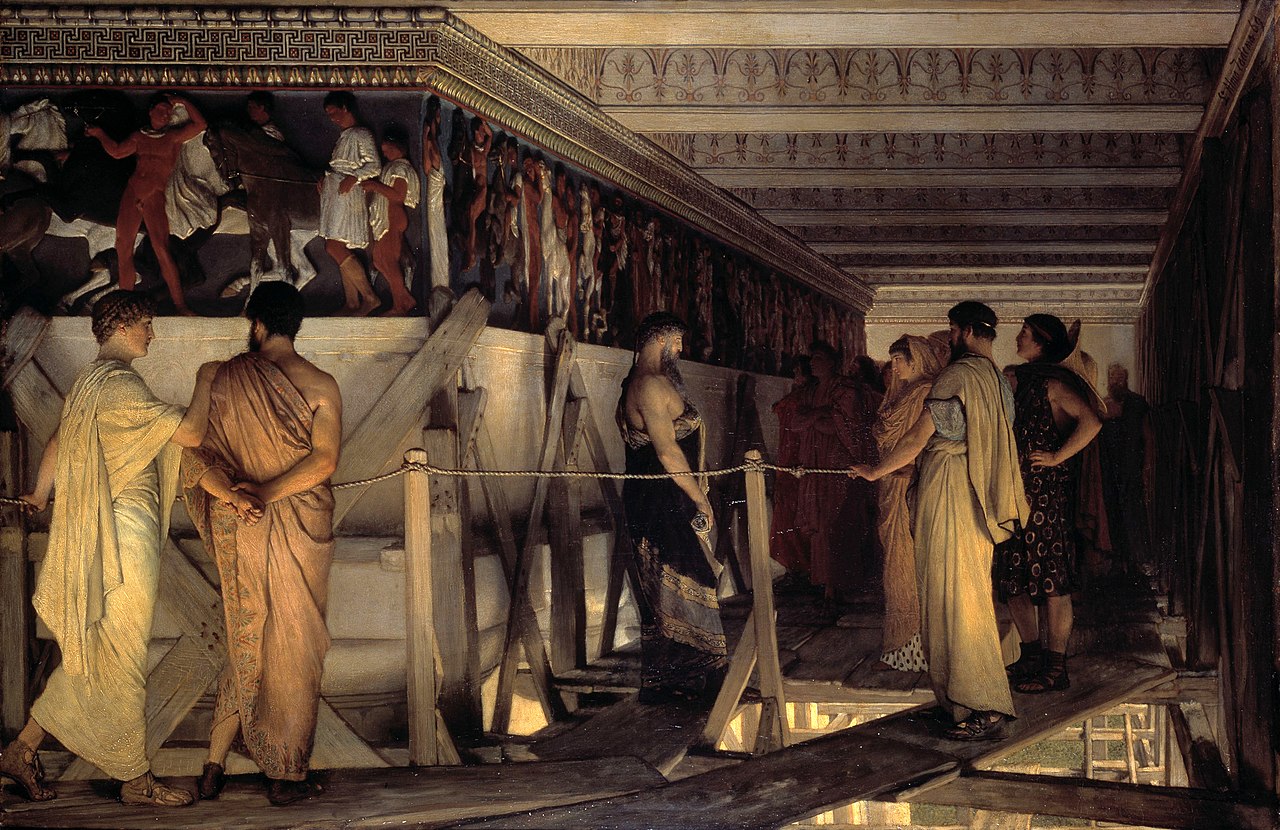
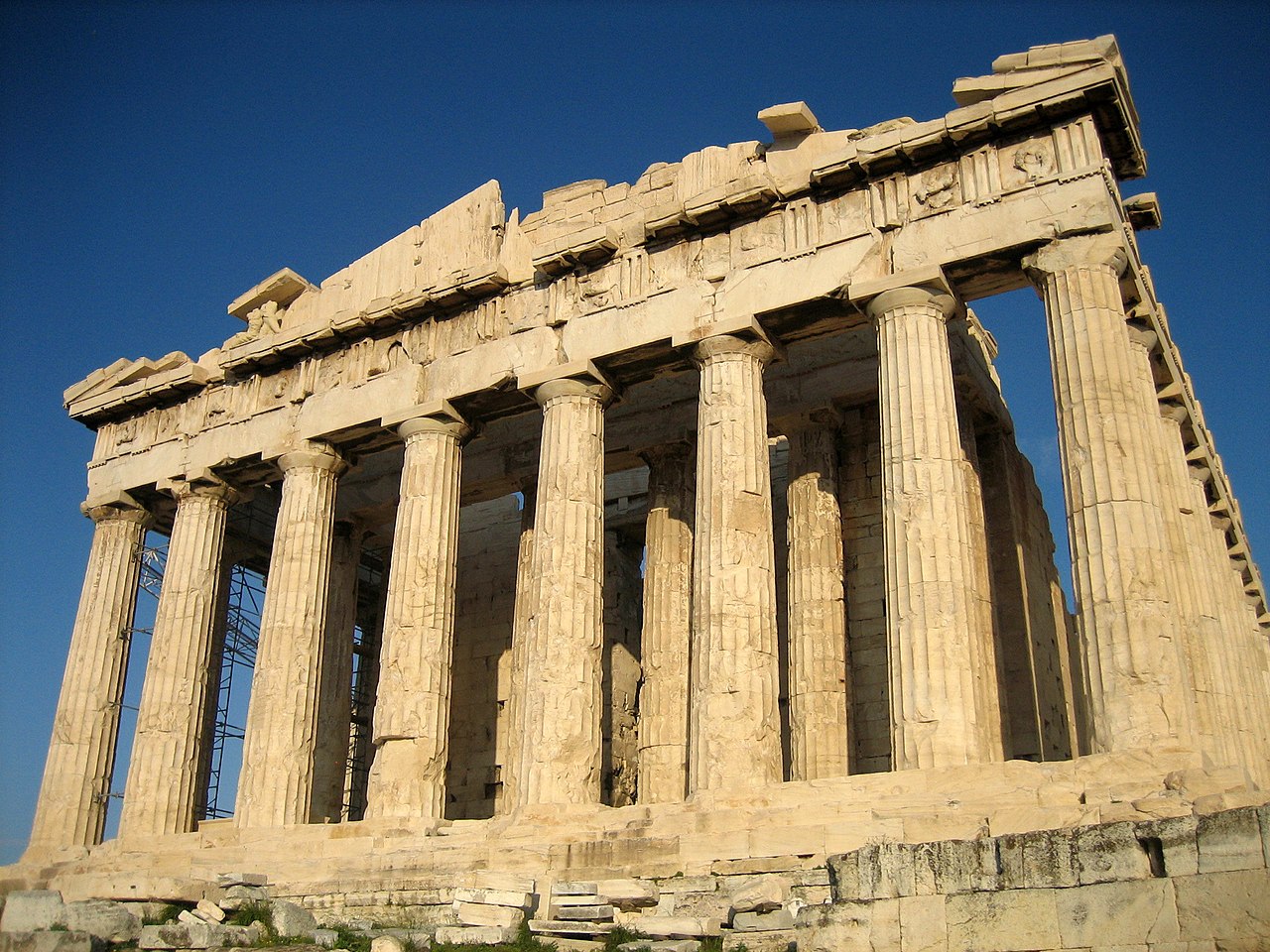
A devoted patron of the arts and public culture, Pericles initiated an ambitious program of building and artistic patronage that reshaped the cityscape. The most visible result was the reconstruction of the Acropolis, including monuments such as the Parthenon, which symbolized Athenian prestige and religious devotion. He encouraged drama, intellectual life and festivals that made Athens a cultural center of the Greek world; his policies also created employment and promoted civic identity. Some contemporaries and later critics objected to the use of public and allied funds for Athenian display, yet the program left enduring monuments and helped define classical Greek aesthetics.
Pericles' personal life attracted attention in antiquity. He had a public marriage and children, and he was closely associated with Aspasia of Miletus, a well‑known intellectual companion who moved in his circle. His relationship with reformers such as Ephialtes—whose reforms curtailed aristocratic power—illustrates the political alliances that underpinned his agenda; Ephialtes' assassination in the mid‑460s BC was a dramatic episode in the period's factional politics.
Legacy and notable facts
- Often dated as leading Athens from about 461 to 429 BC, his era is commonly called the "Age of Pericles."
- Thucydides recorded Pericles' famous Funeral Oration, a speech that became a lasting statement of Athenian values and civic pride.
- His building program on the Acropolis produced architectural and sculptural achievements that shaped classical art; the Parthenon remains the best‑known example.
- Pericles' mixture of democratic reform, imperial policy and cultural sponsorship made Athens the leading center of the Greek world in the fifth century BC.
- Contemporaries debated his motives and methods, and later historians have alternately praised his leadership and criticized his imperial ambitions and political style.
For further reading about his speechmaking, military decisions and cultural projects, see treatments of Pericles in classical histories and modern syntheses of fifth‑century Athens. The contours of his life illustrate the complex interplay of democracy, empire and culture that defined classical Greece.
Related terms: statesman, orator, general, and the wider context of the Peloponnesian conflicts and the Athenian alliance system.
Questions and answers
Q: Who was Pericles?
A: Pericles was a prominent and influential statesman, orator, and general of Athens who lived between the Persian and Peloponnesian wars.
Q: What is the "Age of Pericles"?
A: The "Age of Pericles" is the period during which he led Athens, roughly from 461 to 429 BC. It can include times as early as the Persian Wars or as late as the next century.
Q: What did Pericles do for Athenian society?
A: Pericles had great influence on Athenian society. He took away the noble's powers with Ephialtes, promoted arts and literature, fostered Athenian democracy to such an extent that critics call him a populist, and started an ambitious project that built most of the surviving structures on the Acropolis (including the Parthenon).
Q: Who was Ephialtes?
A: Ephialtes was a politician with whom Pericles took away nobles' powers. He was later assassinated.
Q: What did Pericles do for entertainment in Athens?
A: In his late 20’s, Pericles sponsored a major dramatic production for the festival of Dionysus and entertained all of Athens with it.
Q: Who did Pericles marry?
A: The name of his wife is unknown but he associated with a courtesan named Aspasia.
Q: How many sons did he have?
A; He had two sons.
Related articles
Author
AlegsaOnline.com Pericles — Athenian statesman and leader of the Age of Pericles Leandro Alegsa
URL: https://en.alegsaonline.com/art/75799
Sources
- nipissingu.ca : Periclean Athens
- perseus.tufts.edu : Perseus program
- en.wikisource.org : Constitution of the Athenians
- perseus.tufts.edu : Perseus program
- perseus.tufts.edu : Perseus program
- perseus.tufts.edu : Perseus program
- perseus.tufts.edu : Perseus program
- perseus.tufts.edu : Perseus program
- perseus.tufts.edu : in Perseus program
- perseus.tufts.edu : Perseus program
- perseus.tufts.edu : Perseus program
- perseus.tufts.edu : Perseus program
- perseus.tufts.edu : Perseus program
- perseus.tufts.edu : Perseus program
- thelatinlibrary.com : The Latin Library