
Part (music)
A musical part is an independent line of music performed or sung by an individual or group. This article explains definition, notation, vocal and instrumental roles, polyphony, history and notable multi‑part works.
Overview
In musical terminology a part is an individual line or strand of music assigned to a performer or ensemble. A part can be carried by a single player, a section of instruments, or a group of singers who share the same notes. In some contexts the word is used interchangeably with voice or line, but its precise meaning depends on whether one speaks of an orchestral score, a choral arrangement, chamber music, or solo writing.
Image gallery
3 Images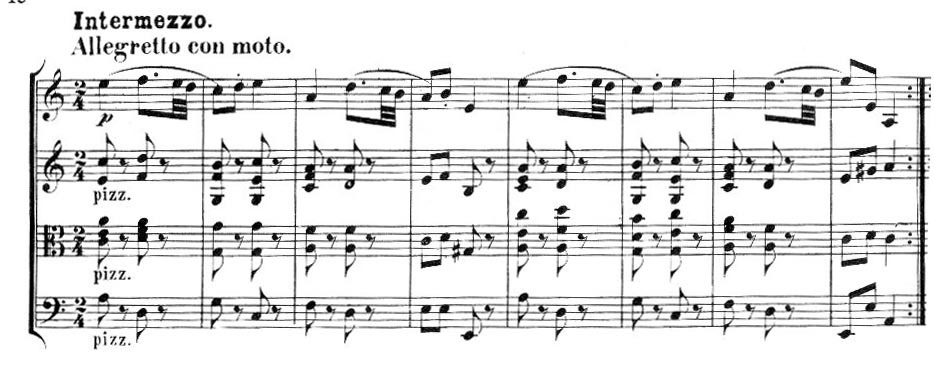


Characteristics and types of parts
Parts differ by range, rhythm and musical function. In an orchestra, for example, the first violins often have the principal melodic material while the second violins and violas provide supporting lines. In chamber ensembles like a string quartet, each instrument typically plays an independent part, creating an intimate polyphonic texture.
- Unison: multiple performers sing or play the same part together.
- Harmony parts: complementary lines that shape chords beneath a melody.
- Counterpoint: independent parts that interweave melodically.
Vocal practice and choral writing
Choral literature commonly divides singers into distinct parts: unison singing means everyone performs the same line, whereas divisions into soprano, alto, tenor and bass create multi‑part textures. Four‑part writing is a staple of Western choral tradition: the sopranos may carry the principal tune while altos, tenors and basses supply the underlying harmony. When each part has its own melodic identity the music is polyphonic, meaning several voices move independently yet form a coherent whole.
Notation, keyboard writing and contrapuntal forms
Parts are not always written on separate staves. A pianist’s score may show multiple parts across two staves, and an organ piece can distribute several parts across three or more staves to indicate independent lines for each hand or pedal. Keyboard works that specify a fixed number of lines—such as a three‑part invention or a five‑part fugue—can be played by one keyboard player or assigned to multiple instruments because the musical material itself defines the parts. Historically, the fugue is a form well suited to explicit part writing; a piano or organ fugue may be described by its number of voices, for instance a five‑part fugue.
Terminology, languages and history
In many European languages the term for a musical part equals the ordinary word for voice: German Stimme, Stimme or French voix are used in both senses. The way composers combine parts evolved over centuries from simple homophony to highly elaborate polyphony. By the Renaissance and later periods, counterpoint techniques grew increasingly sophisticated. For example, the 16th‑century composer Thomas Tallis wrote an expansive motet titled Spem in alium, which is famous for employing forty independent parts and demanding a large number of singers to realize each line distinctly.
Practical usage, challenges and notable facts
Composing and arranging for many parts increases complexity: each line must be harmonically and rhythmically compatible with the others, and practical issues such as balance, range and breath for singers need attention. In performance, ensembles may reduce the number of performers on a part (one singer per part in chamber polyphony, or sections doubling a line in orchestral practice). Some modern ensembles and educational groups use explicit part assignments for rehearsals and study; conductors and editors often produce individual part extracts from full scores so that each musician sees only their own line. The interplay of parts remains a core element in genres from choral music and orchestral scores to jazz ensembles and popular arrangements. For further reading on score layout, performance practice and vocal division see related resources: reference overview, terminology guide, line and voice, string sections, orchestral roles, viola part, chamber music, unison singing, soprano, alto, tenor, bass, harmony, polyphony, piano, organ, fugue, voice terms, German usage, French usage, Renaissance composers, Tallis, advanced score study.
Related articles
Author
AlegsaOnline.com Part (music) Leandro Alegsa
URL: https://en.alegsaonline.com/art/74817