
Harmony: principles, history, types and musical roles
An overview of musical harmony: how multiple notes form chords, its historical development, types (tonal, chromatic, atonal), common textures, and practical uses in composition and performance.
Overview
Harmony is the aspect of music that concerns the sounding of two or more notes together to create chords and vertical sonorities that support or enrich a melody. The term derives from the Greek harmonia, which means joining or fitting together. In most Western traditions harmony organizes pitches into stable and unstable relationships that give music a sense of direction: consonance suggests rest, while dissonance seeks resolution.
Image gallery
4 Images
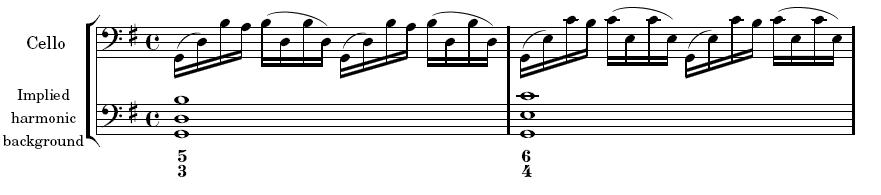

Basic elements and common practices
A chord is a group of notes heard at the same time. Simple triads—built from the 1st, 3rd and 5th scale degrees—are the basic building blocks of many harmonic systems and often serve as the "home" or tonic chord in a given key. Adding additional notes, such as sevenths, ninths or other extensions, produces richer textures widely used in genres from classical to jazz. Harmonization is the process of creating an accompaniment of chords for a melody; studying how chords follow one another is the study of chord progressions.
Texture relates to how harmony is distributed among voices. Homophonic music features a single principal melody with supportive chords underneath, while polyphony treats multiple lines as independent melodies that together form harmonic relationships. Even polyphonic music follows harmonic principles so that the simultaneous lines form pleasing combinations.
Voices, ensembles and instrumentation
In vocal and chamber settings harmony is often allocated among distinct parts. A typical four-part choir divides into soprano, alto, tenor and bass, each contributing a line that combines into chords. A standard string quartet splits harmony across violin 1, violin 2, viola and cello, creating a compact ensemble capable of both supportive and contrapuntal textures. Instrumentation affects harmonic color: the same chord voiced differently on piano, strings or brass will convey different timbral qualities.
Historical development
Harmony as an explicit system evolved over many centuries. Medieval and Renaissance music centered on modal relationships and counterpoint. By the Baroque era of the Baroque and the 17th century (17th century) harmonic practice had coalesced into tonal rules that underpinned large-scale forms. Later composers expanded these rules: Classical and Romantic composers explored chromaticism and novel progressions, while 20th-century developments included atonal and serial approaches.
Music theory texts and treatises by influential music theorists have documented, codified and critiqued harmonic practice across eras, providing the foundations of pedagogy used in conservatories and classrooms.
Types and notable distinctions
- Tonal harmony: Uses the notes of a key or scale and functional relationships (tonic, dominant, subdominant) to create a sense of center and progression.
- Chromatic harmony: Introduces accidentals and altered chords to enrich color and tension.
- Atonal harmony: Avoids a central key; composers such as Arnold Schoenberg developed systems that treat pitches without traditional tonal functions.
Uses, examples and importance
Harmony shapes musical emotion and expectation: a sudden major chord can brighten a passage, while suspended or unresolved intervals create yearning. Composers and arrangers use harmonic devices—modulation, reharmonization, voice leading and pedal points—to generate variety and coherence. Popular music often relies on repeated chord progressions for structure, while film scoring manipulates harmony to support narrative and mood.
Practical considerations and learning
Students of harmony learn to recognise chord types, invert chords, connect chords smoothly (voice leading), and craft progressions that serve a piece’s style and form. Practical training often includes keyboard harmony, figured bass from earlier styles, and modern harmonic analysis. Resources for further study include textbooks, online courses and annotated scores; annotations and examples are frequently linked in educational materials (chords, European practice overviews).
Further notes and contexts
Harmony interacts with melody, rhythm and timbre to define musical identity. Different cultures develop distinct harmonic vocabularies; Western classical harmony is one influential approach among many global practices. Ensembles of different sizes use harmony differently—compare a solo accompanist who fills in full chords with a large chorus where independent voices create the harmonic fabric. For quick reference, common ensembles and their typical harmonic roles include: a four-part choir (soprano, alto, tenor, bass), the string quartet (violin 1, violin 2, viola, cello), and modern band or orchestral sections where harmony is distributed among keyboard, guitar, horns and strings. Further reading and materials can be found via educational sites and library collections that catalogue examples and analyses (17th century studies, progression guides, historical surveys).
Questions and answers
Q: What is the meaning of the word "harmony"?
A: Harmony means playing several notes together to make “chords”. The word comes from the Greek harmonia meaning "to join things up".
Q: What is harmonization?
A: Harmonization is studying how to add an accompaniment of chords to a tune in order to create harmony.
Q: What type of music uses a tune with harmony underneath?
A: Music which is made of a tune with harmony underneath is called “homophonic”.
Q: How many notes are needed for harmony?
A: At least three notes are needed for harmony, but in most homophonic music there are four.
Q: What type of harmony uses just the notes of the key?
A: Harmony which uses just the notes of the key (e.g. just using white notes for C major) is called “tonal harmony”.
Q: What type of harmony adds lots of extra sharps and flats?
A: Harmony which adds lots of extra sharps and flats is called “chromatic harmony”.
Q: Is it possible for music to be atonal and still have harmonic elements?
A: Yes, if music is not in any key at all, like in some music by Arnold Schoenberg, it can be considered “atonal” yet still have harmonic elements present.
Related articles
Author
AlegsaOnline.com Harmony: principles, history, types and musical roles Leandro Alegsa
URL: https://en.alegsaonline.com/art/42498