
Fugue (musical form and technique)
A fugue is a contrapuntal composition built around a recurring subject and systematic voice entries; developed in the Baroque era and used from Bach through modern composers.
Overview
A fugue is a contrapuntal composition in which a principal theme, the subject, is stated and then imitated and developed by two or more independent musical lines or parts. The texture of a fugue is shaped by overlapping entries of the subject and related material so that each part retains some independence while contributing to a coherent whole. The term derives from the Italian fuga, meaning "flight," a metaphor for the subject as it seems to pursue itself through the different parts. Fugues appear as independent works (especially for keyboard or organ), as movements within larger works, and as episodes or passages within vocal and instrumental music.
Image gallery
8 Images
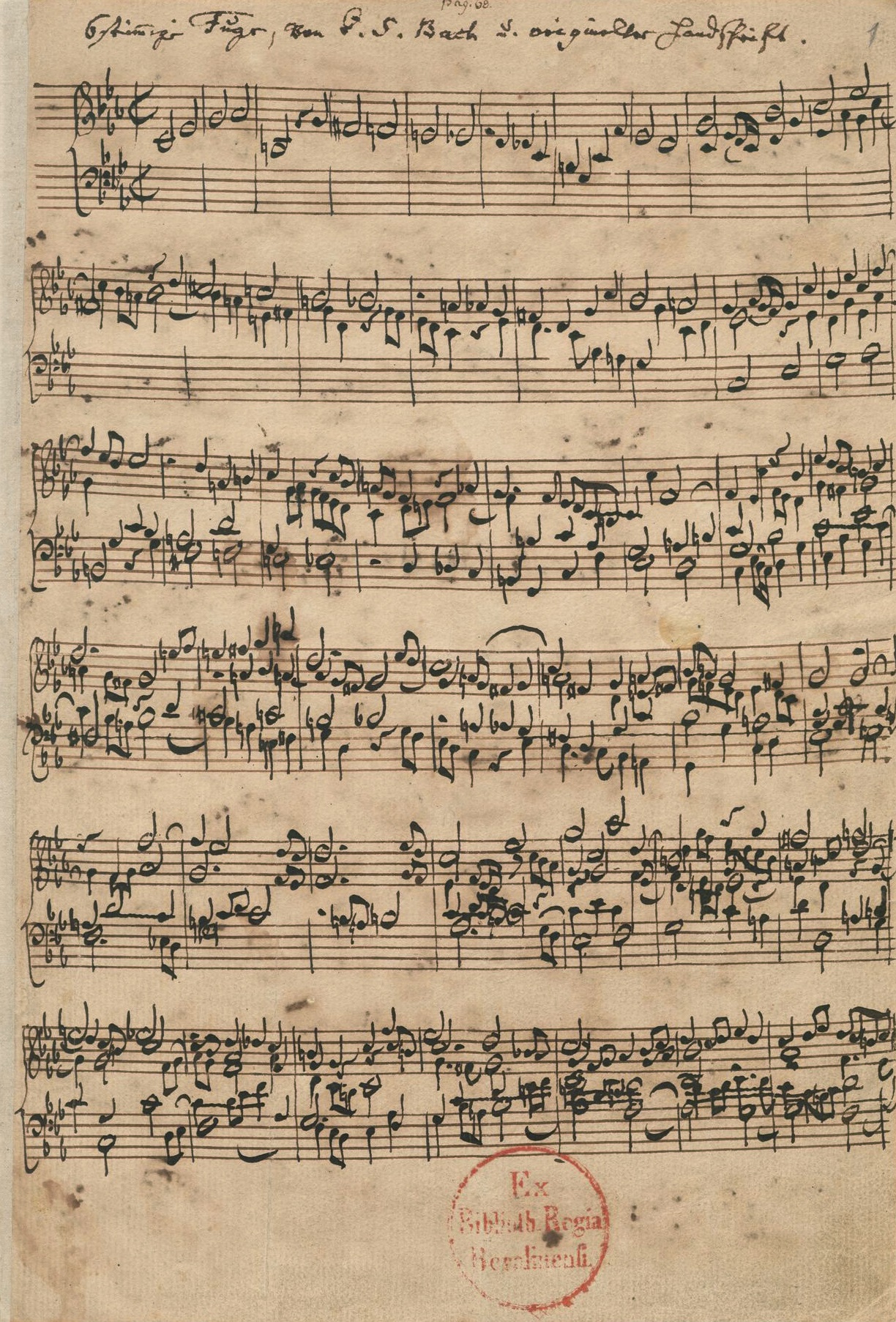


Structure and essential elements
A conventional fugue often follows a recognizable course, although composers adapt the plan flexibly. The main formal components are:
- Exposition: each voice enters in turn with the subject; the second entry is usually the answer, often at the dominant.
- Subject and answer: the subject is the defining theme; an answer imitates it at a different pitch level and may be a real (exact) or tonal (adjusted) answer to preserve harmony.
- Countersubject: a recurring counter-line that accompanies the subject in one or more voices.
- Episodes: connective passages that modulate, develop fragments of the subject or countersubject, and prepare further entries without presenting the full subject.
- Stretto and contrapuntal devices: stretto (overlapping entries), inversion (turning intervals upside down), augmentation (lengthening note values), diminution (shortening them), and imitation at different intervals.
Variants and related forms
Fugues come in several types: simple fugues with a single subject; double or triple fugues that use two or three subjects (sometimes combined); and invertible counterpoint or mirror fugues where lines can exchange registers. A ricercar is an earlier, often more serious contrapuntal piece closely related to the fugue. A fugato is a fugal passage within a larger, non-fugal movement. Composers also combine fugal technique with canonic writing, chorale-based fugues, or free, modern contrapuntal textures.
History and development
The fugue as a clearly codified form flourished in the Baroque era, with Johann Sebastian Bach widely regarded as a master of the genre. Collections such as The Well-Tempered Clavier and The Art of Fugue explore the form in many keys and permutations. Earlier Renaissance polyphony and later Classical and Romantic uses of fugal writing influenced its evolution: Classical composers incorporated fugal passages into sonata-style movements; Romantic and 20th-century composers adapted fugal procedures to new harmonic languages. The technique remains a fundamental part of Western compositional practice and pedagogy.
Performance, analysis and pedagogy
Performers must balance clarity of individual lines with overall ensemble blend; effective phrasing, articulation, and awareness of voice-leading reveal the structure and entries. Students study fugue writing to learn voice-leading, harmonic function, and formal planning. Analysis often traces subject entries, key regions, and the use of contrapuntal devices. Resources on musical voices and on counterpoint give practical guidance for understanding and composing fugues.
Notable examples and influence
Beyond keyboard literature, famous fugal writing appears in works by many composers who used the technique expressively: from contrapuntal movements in the Classical era to Romantic reinventions and modernist reworkings. The fugue's blend of rigorous procedure and expressive potential has made it both a vehicle for formal mastery and a means of contrapuntal expression across centuries.
Related articles
Author
AlegsaOnline.com Fugue (musical form and technique) Leandro Alegsa
URL: https://en.alegsaonline.com/art/36904