
Thomas Tallis: Leading Composer of Tudor England
Comprehensive overview of Thomas Tallis (c.1505–1585), his life, service to four Tudor monarchs, musical style, major works including Spem in alium, the printing privilege with Byrd, and his legacy in English choral music.
Overview
Thomas Tallis (born c.1505; died in Greenwich on 23 November 1585) is widely regarded as one of the most important English composers of his generation. His music, written for varied liturgical uses and changing royal preferences, survives in a range of vocal genres and continues to be central to the choral repertory. Tallis’s work displays both technical mastery of Renaissance polyphony and an ability to adapt to demands for clear text-setting in the vernacular.
Image gallery
5 Images



Early life and formative posts
Biographical evidence for Tallis’s youth is sparse and often conjectural. Contemporary records suggest early associations with cathedral or collegiate foundations: he may have served as organist at places such as Dover and is linked in some sources with Waltham Abbey. Like many musicians of his era he moved between institutional posts and, after the upheavals of the Dissolution of the monasteries, he appears briefly in connection with Canterbury Cathedral. Documentary traces first record him as a professional singer and organist attached to the royal establishment.
Royal service and patronage
Tallis was appointed a Gentleman of the Chapel Royal, a position that tied him to the musical life of the court and ensured steady employment. He served under four monarchs—Henry VIII, Edward VI, Mary Tudor and Elizabeth I—adapting his output to the alternating Catholic and Protestant liturgical requirements of each reign. Records indicate he received a respectable salary and held property in Kent, while spending his later years at a house in Greenwich where he died in 1585. Notes in some accounts comment on period monetary values and offer comparisons to modern equivalents to indicate the relative comfort his pay provided.
Musical style and adaptability
Tallis’s output reflects the stylistic demands of a turbulent religious age. Early Tudor church music favoured dense imitative textures: Tallis wrote in this idiom when complex Latin polyphony was required. At other times, particularly during reforms that emphasised congregational intelligibility, he produced syllabic and homophonic settings in English that foreground the text. Even in his simpler pieces his counterpoint is carefully controlled; when the court favoured elaborate Latin music, as under Mary I, Tallis returned to richly woven imitative writing demonstrating his command of continental contrapuntal practices.
Major works
Tallis composed Masses, motets, anthems and service music in both Latin and English. His late masterpiece Spem in alium is a forty-part motet for eight choirs of five voices each and remains a landmark of Renaissance choral writing. The precise date and occasion of Spem in alium are uncertain; some traditions associate it with a courtly celebration, but firm documentary proof is lacking. Other well-known pieces include short English anthems such as the devotional setting commonly known by its opening words and a number of Latin motets composed during the Marian restoration of Catholic rites.
- Spem in alium: notable for its spatial and textural design and for requiring a very large ensemble.
- Diliges Dominum and related contrapuntal collections: include exercises and canonic techniques, one of which survives in later tradition as Tallis’s canon.
- Service music and anthems in English: demonstrate his skill in clear text-setting and prosody.
Printing, partnership with Byrd and the 1575 licence
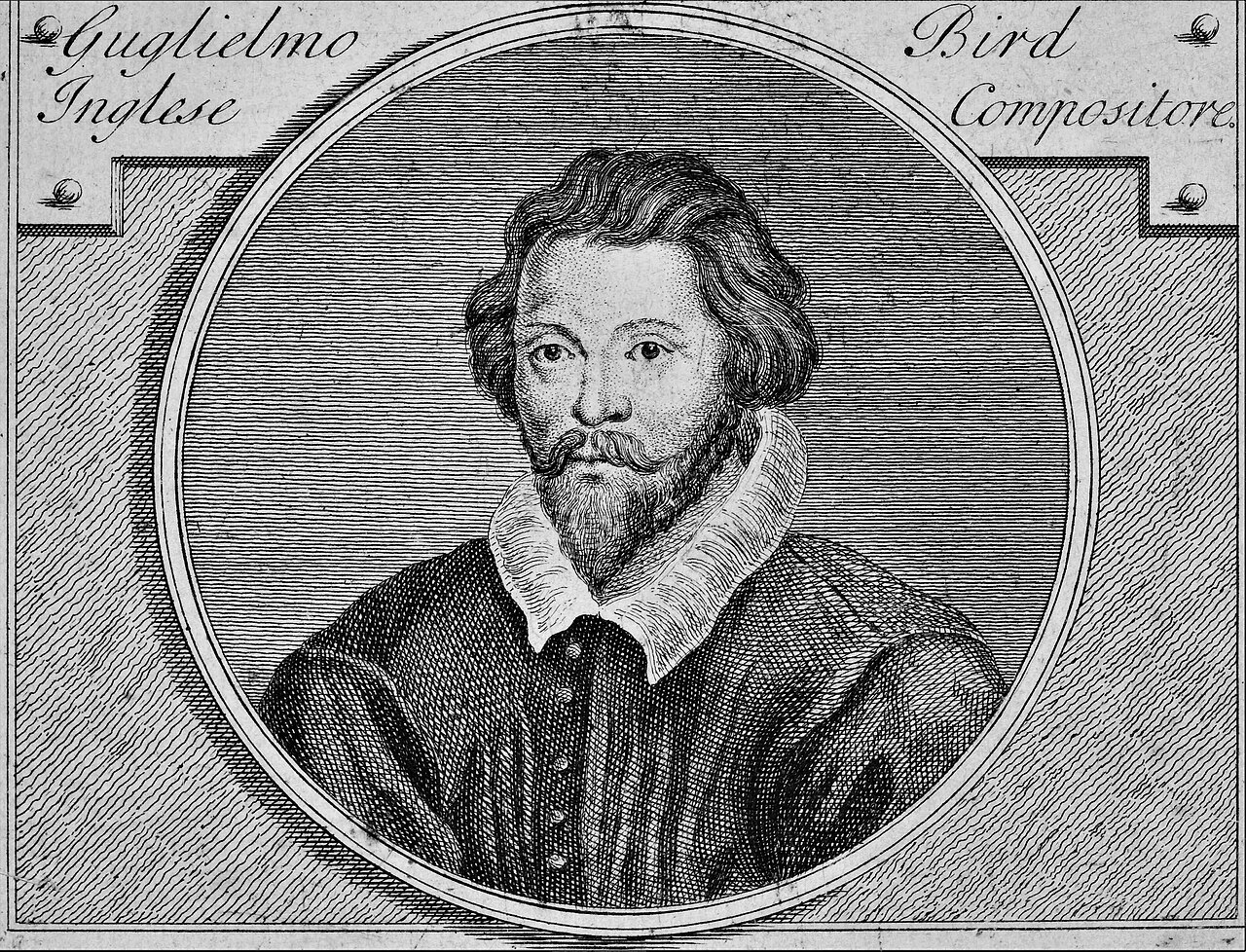
An important episode in Tallis’s later life was his association with the younger composer William Byrd. In 1575 the two were granted a royal licence that authorised them to print and publish music in England, a privilege that recognised both their standing and the growing importance of music printing. The licence allowed them to produce and legally distribute collections at a time when printed music was still uncommon in England; surviving editions associated with this venture increased the circulation of their works and helped to shape English musical tastes for generations.
Legacy and reception
Tallis’s music has had enduring influence on the English choral tradition. Choirs and scholars prize his ability to combine contrapuntal richness with attention to textual clarity. His works remained in use within ecclesiastical settings after his death and were copied and performed by successive generations. In the modern era his compositions are frequently recorded and performed by cathedral and collegiate choirs worldwide, and pieces such as Spem in alium have inspired contemporary composers and arrangers exploring large-scale vocal textures.
Selected notes and context
- Professional position: Tallis was a servant of the Chapel Royal and held official duties as a singer and organist (Gentleman of the Chapel Royal).
- Geographical ties: archival notices place him in southern England, with property and residences in Kent and Greenwich.
- Historical context: the Dissolution of the monasteries and subsequent religious changes directly affected the institutions and liturgies for which he composed.
- Publishing milestone: the 1575 privilege shared with Byrd marks an early moment in English music printing and distribution (print/publish).
- Pedagogical legacy: contrapuntal collections associated with Tallis, including canonic examples, have been studied as models of voice-leading and technique (Tallis’s canon).
Thomas Tallis’s career exemplifies the work of a skilled professional musician negotiating royal service, shifting liturgical fashions and the emergence of new technologies for music dissemination. His surviving corpus, while not vast, includes works that continue to define aspects of the Renaissance and English choral heritage.
Questions and answers
Q: What is known about Thomas Tallis's early life?
A: Very little is known about Thomas Tallis's early life. It is believed that he may have started his career as an organist at Dover and then Waltham Abbey.
Q: How many monarchs did Tallis work for?
A: Thomas Tallis worked for four monarchs during his lifetime - Henry VIII, Edward VI, Mary Tudor and Elizabeth I.
Q: What type of music did Tallis compose?
A: Thomas Tallis composed both church music and secular music. He wrote polyphonic works, homophonic works, anthems and contrapuntal exercises.
Q: What salary did the Queen grant to Tallis?
A: Queen Elizabeth I granted a salary of £91 12s a year (12s is 60p in modern money) to Thomas Tallis. This was a very good salary in those days.
Q: What licence did the Queen give to William Byrd and Thomas Tallis?
A: The Queen gave William Byrd and Thomas Tallis a licence which meant they were the only people allowed to print and publish music in England (music printing was a very new invention at the time).
Q: Which famous piece of music did he write for 40 voices?
A: One of his most famous pieces was Spem in Alium which was written for 40 voices or more. It is possible that this piece was written for Queen Elizabeth I’s 40th birthday in 1573 but this cannot be confirmed with certainty.
Q:What other composition by him became popularly known as "Tallis' Canon"?
A:Diliges Dominum, a collection of contrapuntal exercises by Thomas Tallis, became popularly known as "Tallis' Canon".
Author
AlegsaOnline.com Thomas Tallis: Leading Composer of Tudor England Leandro Alegsa
URL: https://en.alegsaonline.com/art/131863