
Violin
The violin is a four‑stringed bowed instrument central to Western art music and many folk traditions, known for its wide expressive range, high register, and roles from soloist to orchestral section.
The violin is a bowed string instrument with four strings normally tuned to G, D, A and E. It is played by drawing a bow across the strings or by plucking them with the fingers. The instrument is held between the left collarbone and the chin, often with a shoulder rest, so the left hand can perform fingering while the right hand controls the bow. The bow itself is a separate tool, typically stretched with horsehair and treated with rosin to improve grip on the strings: bow.
Image gallery
10 Images


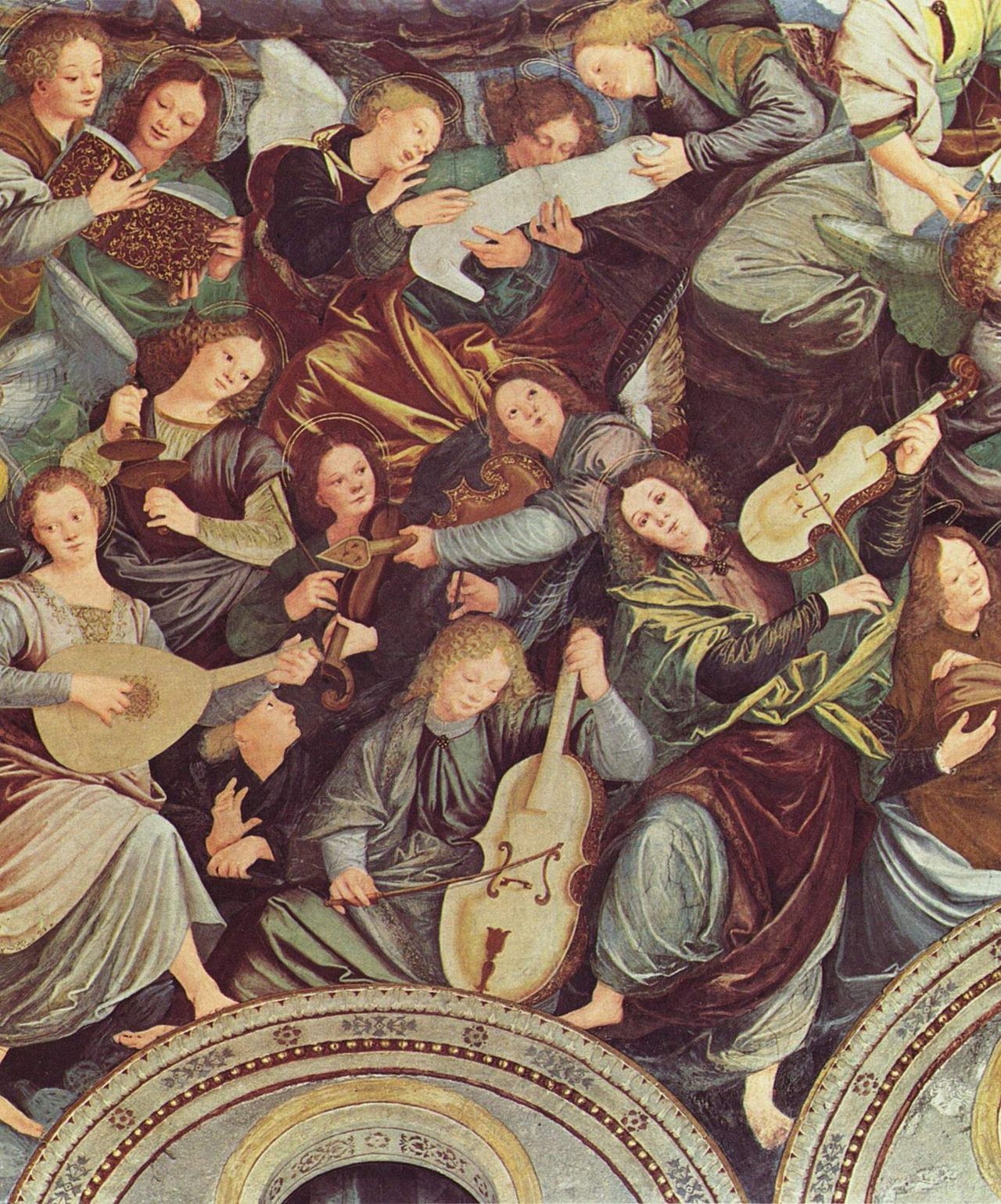
Physical characteristics and parts
A typical modern violin has a hollow wooden body with two f-shaped soundholes, a neck and fingerboard, a bridge that transmits string vibrations to the top plate, and an internal soundpost that helps shape tone. Tuners or pegs at the scroll adjust pitch, while the tailpiece anchors the strings. The instrument has no frets, so pitch is produced by precise finger placement rather than fixed markers: no frets. The violin is the smallest and highest-pitched member of the orchestral string family, distinct from the viola and cello: highest pitched.
How it is played
Players use the left hand, fingers and sometimes shifting to different positions to change pitch: left hand. Bowing techniques—legato, spiccato, détaché, col legno—and left-hand effects, such as vibrato and double stops, create a wide palette of tone and expression. Pizzicato, the plucking of strings, is also common in solo and ensemble repertoire. The term fiddle is often applied when the violin appears in folk contexts; a player may be called a fiddler or a violinist.
History and development
The form of the modern violin crystallized in northern Italy in the 16th and 17th centuries. Early luthiers refined shape, materials and construction to enhance projection and tone. Makers such as the Amati, Guarneri and Stradivari families are widely cited in instrument history for their influence on craft and acoustics. The violin's present-day design is roughly four centuries old and it became central to orchestral and chamber music as ensembles developed in the Baroque and Classical periods: luthier, orchestras.
Roles, repertoire and traditions
Virtually every major Western composer wrote for the violin, producing concertos, sonatas and chamber works. Violins are divided in orchestras into first and second sections to cover melody and harmony. The instrument is also prominent in numerous folk traditions—Irish, American old-time, bluegrass and Eastern European styles—where it is commonly called the fiddle: chamber music, solo, folk music.
Technique, learning and notable distinctions
Learning the violin emphasizes ear training, intonation and posture. Technical studies cover scales, shifting, bow control and articulation. Unlike fretted plucked instruments, small finger adjustments change pitch continuously, allowing microtonal inflections and expressive slides. The violin is used across genres including concert classical, jazz, and popular music: jazz. It is sometimes colloquially referred to by nicknames or shortened terms: nickname, shoulder, chin, instrument.
- Common parts: scroll, pegs, neck, fingerboard, bridge, f-holes, tailpiece.
- Common techniques: bowing styles, pizzicato, vibrato, double stops, harmonics.
- People associated: violinist, fiddler, luthier.
- Contexts: orchestral, chamber, solo, folk, jazz.
The violin remains one of the most versatile and widely taught instruments worldwide, bridging formal conservatory traditions and living regional practices. For further reading and specialized resources, consult instrument makers, conservatories and performance guides: bow, fingering, register, fiddle tradition.
Questions and answers
Q: What is a violin?
A: A violin is a string instrument with four strings that are usually tuned to the notes G, D, A, and E. It is held between the left collar bone and the chin and played with a bow while fingering (pressing on the strings) with the left hand.
Q: How old is the modern violin?
A: The modern violin is about 400 years old.
Q: Who plays the violin?
A: A person who plays the violin is called a violinist.
Q: What does it mean to "fiddle"?
A: To "fiddle" means "to play the fiddle", which can be used as a nickname for playing the violin. It's commonly used when talking about folk music but can be used in all kinds of music genres.
Q: Who makes or repairs violins?
A: A person who makes or repairs violins is called a luthier.
Q: How many instruments make up an orchestra?
A: Nearly half of all instruments in an orchestra are made up of violins, which are divided into two parts - first violins and second violins.
Q:What role did it play in European music?
A:The Violin was very important in European and Arabian music, having no other instrument playing such an important part in Europe before its development nearly 400 years ago . Almost every composer wrote for it , whether as solo instrument , chamber music , orchestral music , folk music or even jazz .
Related articles
Author
AlegsaOnline.com Violin Leandro Alegsa
URL: https://en.alegsaonline.com/art/105481