
Partisan (irregular combatant)
An armed irregular fighter unaffiliated with regular armed forces; the term covers resistance fighters, guerrillas and militias and has specific legal implications under the law of armed conflict.
Overview
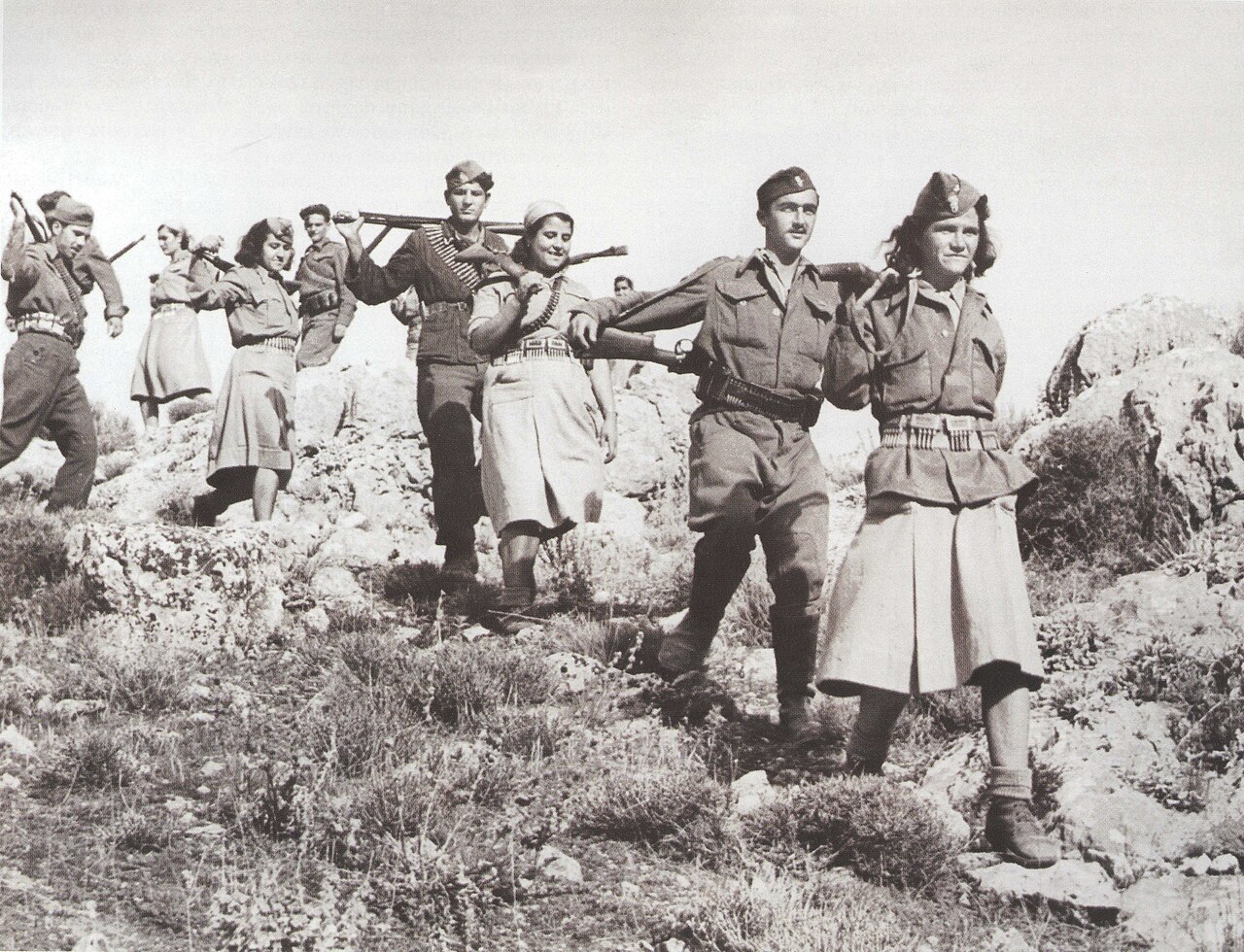
A partisan is an armed individual or member of a small, irregular military group who is not part of a state's regular armed forces. Partisans typically operate as resistance fighters, guerrillas, or local militias and can be motivated by nationalism, ideology or local defense. The word comes from Italian, where partigiano originally meant a partisan of a political faction. Partisans have played prominent roles in conflicts from nineteenth-century uprisings to the resistance movements of the twentieth century.
Image gallery
10 Images




Characteristics and legal criteria
Under international humanitarian law, not every person who takes up arms is automatically entitled to prisoner-of-war status if captured. Traditional legal tests for combatant status focus on four practical criteria. A person who meets these criteria may be treated as a lawful combatant; failure to meet them can place fighters in an ambiguous or unlawful category.
- Existence of a responsible command structure or leader who can be held accountable.
- Use of a fixed distinctive sign or emblem that can be recognized at a distance.
- Open carriage of arms—making clear they are engaged in hostilities.
- Conduct that conforms to the laws and customs of war while conducting operations.
These principles are summarized in treaties and customary rules; for a general introduction to how irregular fighters are treated under the law of armed conflict see relevant legal guidance. Additional instruments adopted in 1977 qualified the open-weapon requirement by allowing that arms need be carried openly during each military engagement and during such time as they are visible to the adversary, rather than at all times.
History and examples
Partisan and guerrilla warfare has a long history. Large-scale modern examples include resistance groups in occupied Europe during World War II, such as Soviet and Yugoslav partisans and networks of the French Resistance, which combined sabotage, intelligence and support for regular forces. In colonial and post-colonial struggles, local irregulars often fought using partisan tactics against better-equipped armies.
Uses, risks and practical importance
Partisans can be militarily effective by exploiting local knowledge, conducting ambushes, and disrupting supply lines. They are also politically significant as symbols of resistance and popular mobilization. At the same time, the irregular nature of partisan warfare creates legal and humanitarian challenges: distinguishing fighters from civilians can be difficult, raising risks of unlawful reprisals, collective punishment, and civilian harm. Civilians who directly participate in hostilities temporarily lose certain protections; armed groups that fail to comply with the laws of war may be denied combatant privileges.
Distinctions and notable facts
Commonly confused categories include partisans, guerrillas, insurgents and militias. Terminology often overlaps: "guerrilla" emphasizes a mode of warfare (hit-and-run, small unit actions), while "insurgent" stresses the political aim of overturning an authority. Whether a partisan is lawful or unlawful depends less on the label and more on conduct, organizational traits and compliance with legal criteria. For further context on the distinction between regular forces and irregular fighters, see general background material at additional resources.
Summary: Partisans occupy a complex space between civilians and regular soldiers. Their historical impact is significant, but their legal status and the protections they receive in armed conflict depend on meeting established criteria and on adherence to the laws of armed conflict.
Questions and answers
Q: What is a partisan?
A: A partisan is an armed fighter who is not part of the regular troops of a country or state.
Q: Where does the term "partisan" come from?
A: The term "partisan" comes from Italian, where it meant member of a political party.
Q: Is there a separate legal status for partisans in international law?
A: No, there is no separate legal status for partisans in international law.
Q: What criteria does the law of war use to legally define someone as a prisoner of war if they are captured?
A: The law of war uses four criteria to legally define someone as a prisoner of war if they are captured: someone is at the head of the organization and assumes liability, they can be identified by a sign or mark visible from far away, they carry their weapons openly, and they adhere to the customs and laws of war during their operation.
Q: How many additional protocols were added in 1977, and what did they clarify?
A: Two additional protocols were added in 1977, and they clarified that it is sufficient to carry the weapons openly only on some occasions to be titled an armed combatant.
Q: What does it mean to be titled an armed combatant?
A: To be titled an armed combatant means that you are legally recognized as someone who is involved in armed conflict.
Q: Can a partisan be considered an armed combatant?
A: Yes, if they carry their weapons openly on some occasions and adhere to the customs and laws of war during their operation, a partisan can be considered an armed combatant.
Related articles
Author
AlegsaOnline.com Partisan (irregular combatant) Leandro Alegsa
URL: https://en.alegsaonline.com/art/74843
Sources
- ihl-databases.icrc.org : "3rd Geneva Convention, 1949 relative to the Treatment of Prisoners of war: Article 4: Prisoners of War"
- ihl-databases.icrc.org : "Geneva convention for the amelioration of the treatment of the wounded and the sick, 1949; Article 13: Protected persons"
- ihl-databases.icrc.org : "Protocol Additional to the Geneva Conventions of 12 August 1949, and relating to the Protection of Victims of International Armed Conflicts (Protocol I), 8 June 1977. Article 43: Armed forces"
- ihl-databases.icrc.org : "Protocol Additional to the Geneva Conventions of 12 August 1949, and relating to the Protection of Victims of International Armed Conflicts (Protocol I), 8 June 1977. Article 44: Combatants and prisoners of war"