
Osmium (Os) — the densest naturally occurring element and a rare platinum-group metal
Osmium (Os, atomic number 76) is a very dense, rare noble metal of the platinum group. It is notable for its hardness, low reactivity, toxic volatile oxide (OsO4), and specialized industrial uses.
Overview
Osmium is a chemical element with the symbol Os and atomic number 76 on the periodic table. It belongs to the platinum group of transition metals and is one of the rarest metals in the Earth's crust. Osmium is widely recognized as the densest naturally occurring element by mass for a given volume.
Image gallery
10 Images



Physical and chemical characteristics
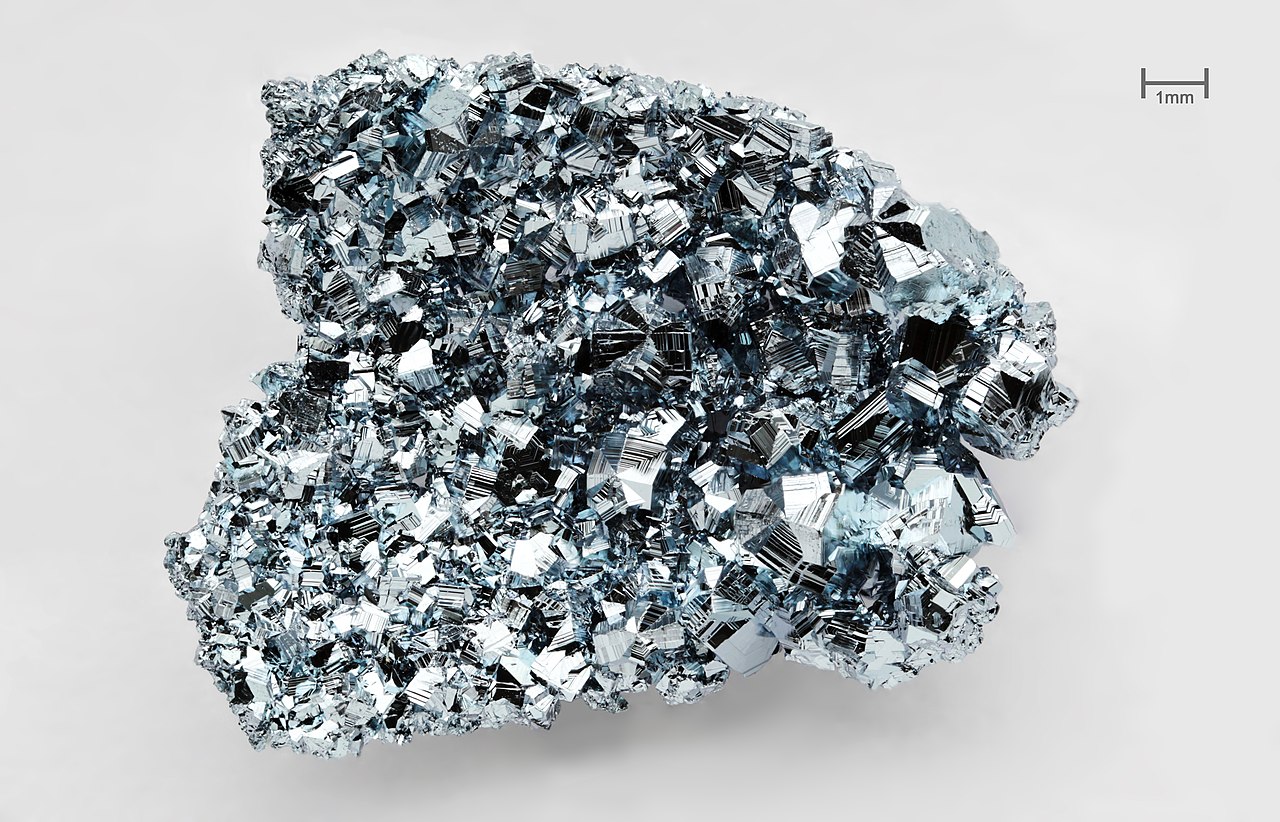
Osmium is a hard, brittle, bluish-white metal with a high melting point and low electrical resistivity. Chemically it is relatively unreactive compared with many other transition metals — it does not react easily under normal conditions and is often classified as a noble metal. One of its most important chemical properties is the formation of osmium tetroxide (OsO4), a volatile and highly toxic oxide that has a distinctive, pungent odor.
History and discovery
Osmium was discovered in the early 19th century by the British chemist Smithson Tennant, who isolated it as a distinct substance while studying impurities in platinum ores. He found osmium together with iridium in residues left after dissolving natural platinum in aqua regia. The name "osmium" derives from the Greek word for smell, a reference to the sharp odor of its oxide.
Uses and applications
Because of its rarity and challenging handling properties, osmium is not used in bulk applications. Its principal uses include:
- Small amounts in hard, wear-resistant alloys (often with iridium or platinum) for tips, pivots, and electrical contacts.
- Osmium tetroxide as a staining agent in electron microscopy and as a reagent in certain organic oxidation reactions, handled under strict safety controls.
- Specialized scientific and industrial devices where extreme density or hardness is required.
Occurrence, economics and safety
Osmium occurs mainly in platinum-group mineral deposits and as a minor component in nickel–copper ores; it is recovered as a by-product of platinum and nickel refining. Its scarcity and the difficulty of working with tiny quantities make it expensive. Safety is a major consideration: volatile osmium compounds, especially OsO4, are highly toxic and require careful containment and protective procedures.
Notable facts and distinctions
Osmium is often mentioned alongside other platinum-group elements because of similar chemical behavior, but its extreme density and the toxicity of some oxides set it apart. Its physical hardness and brittleness make it useful in niche applications rather than widespread industrial use. For further technical references and data consult specialized sources and material safety guidance before handling osmium compounds.
Related articles
Author
AlegsaOnline.com Osmium (Os) — the densest naturally occurring element and a rare platinum-group metal Leandro Alegsa
URL: https://en.alegsaonline.com/art/73391