
Aqua regia: composition, chemistry, history and applications
Aqua regia is a highly corrosive, oxidizing mixture of concentrated nitric and hydrochloric acids (1:3) used to dissolve gold and platinum in refining, analysis and etching; handle with strict safety precautions.
Overview
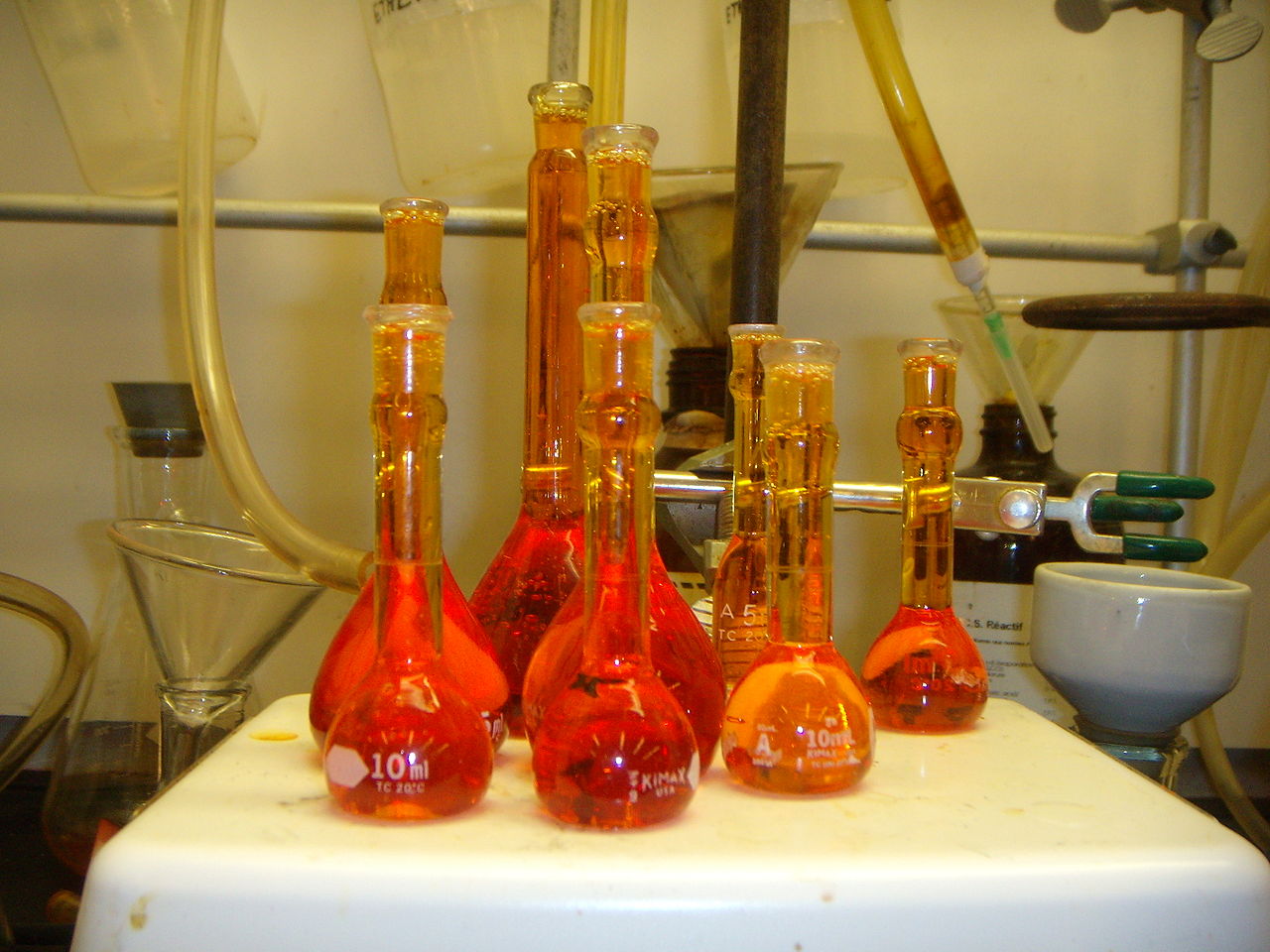
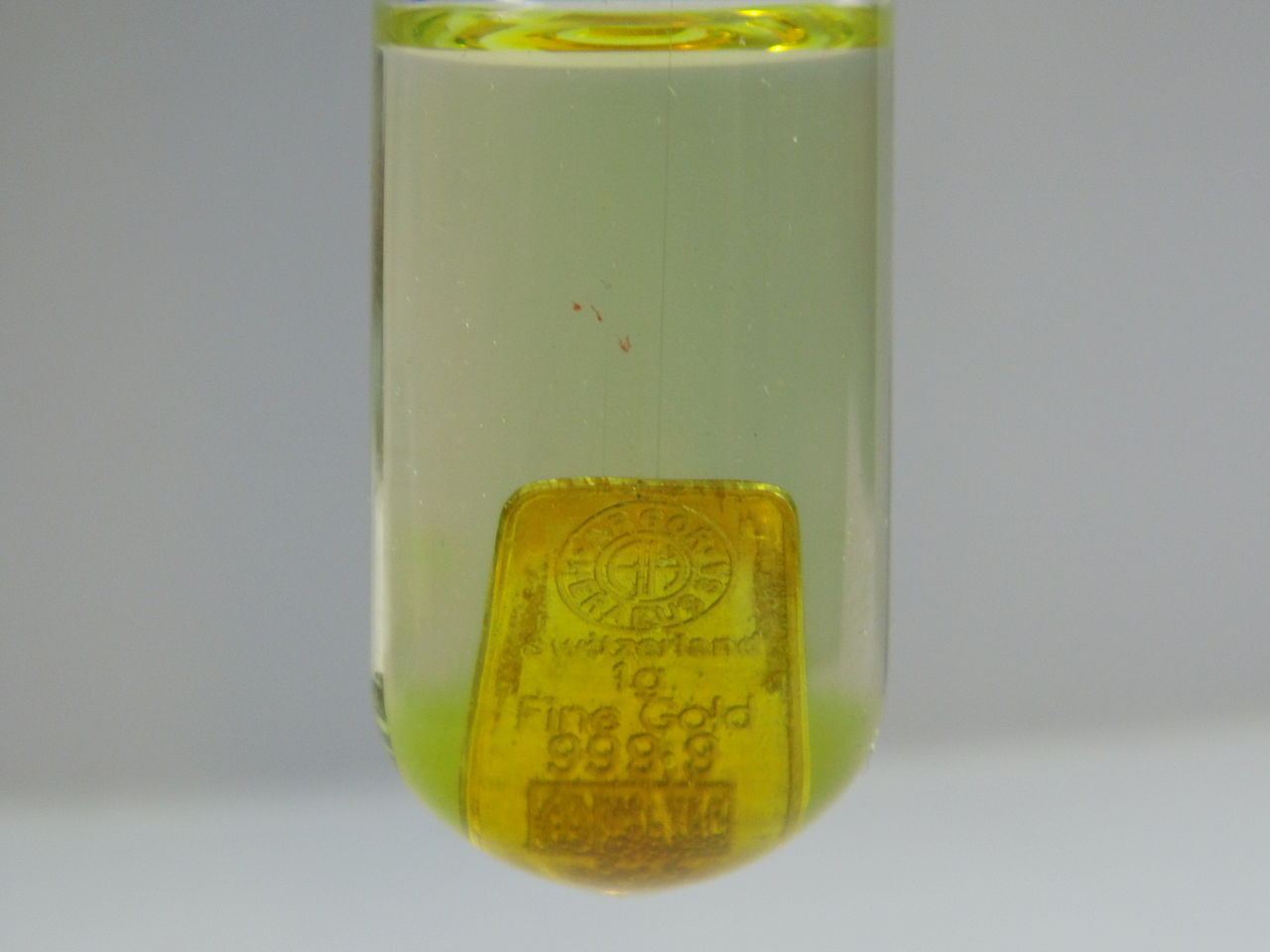
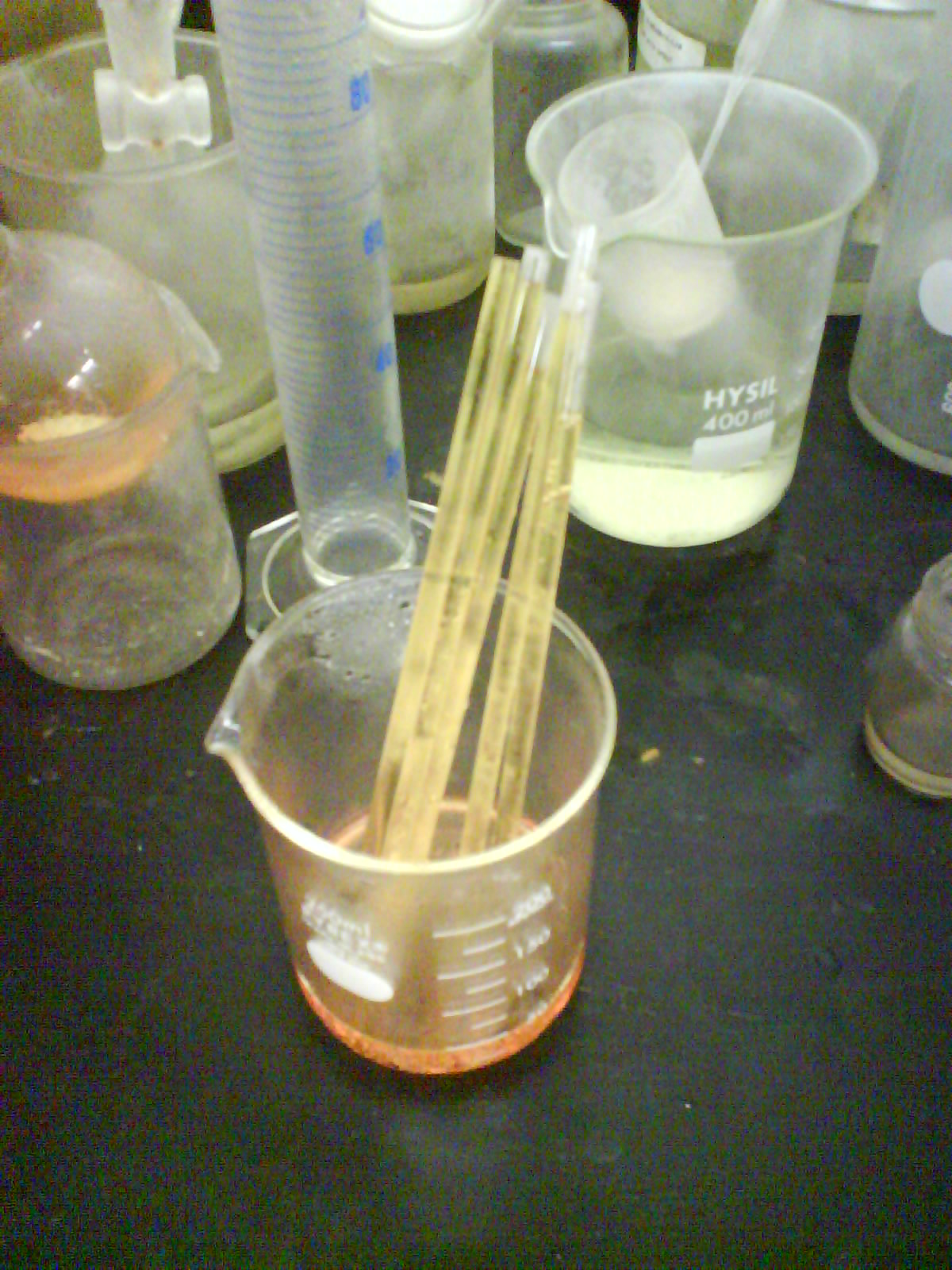
Aqua regia (Latin for "royal water") is a highly corrosive, strongly oxidizing mixture prized for its ability to dissolve the noble metals. The mixture was named by early alchemists because it attacks metals that resist ordinary acids, notably gold and platinum. Today it is used in analytical chemistry, metallurgy and materials research where dissolution or recovery of these metals is required.
Image gallery
10 Images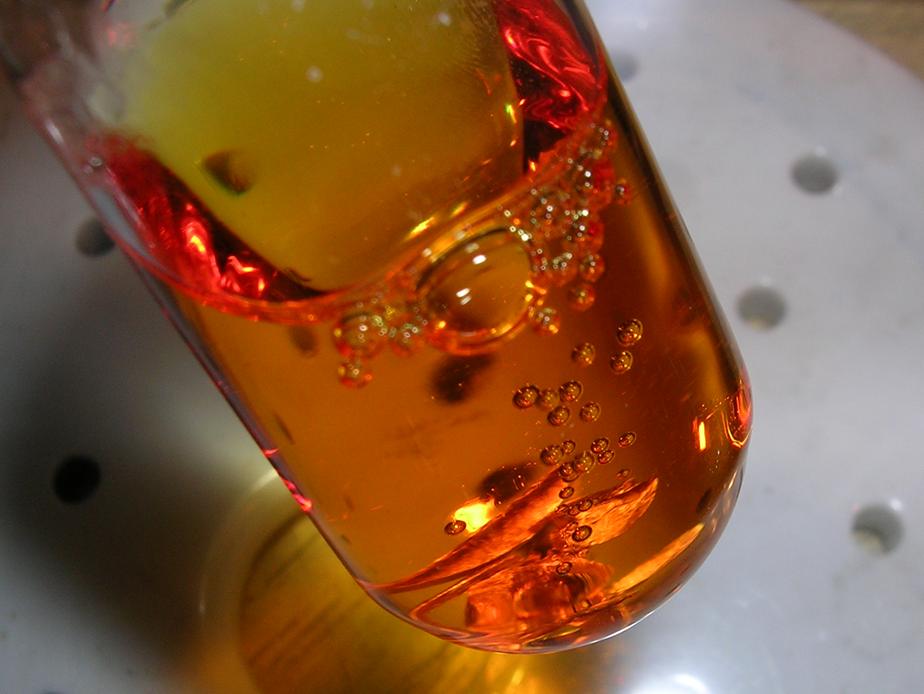


Composition and chemical action
Aqua regia is typically prepared by mixing concentrated nitric acid and concentrated hydrochloric acid in a volumetric ratio of approximately one part nitric acid to three parts hydrochloric acid. The nitric acid provides oxidizing power while hydrochloric acid supplies chloride ions. The combined chemistry produces reactive species such as free chlorine and nitrosyl chloride as well as nitrosyl and other nitrogen oxides; these oxidize metal atoms and allow formation of soluble chlorometallate complexes (for example, oxidized gold forms chloroauric acid and the tetrachloroaurate anion).
Typical reactions and products
The practical effect is the conversion of a metal to a stable, soluble chloro-complex rather than free metal ions. Gas evolution (chlorine and nitrogen oxides) is common during reaction. Because of the mixture's reactivity and evolving gases, aqua regia is generally prepared only in the amounts required and used immediately.
History and etymology
Early chemists and alchemists gave the reagent its regal name for its ability to dissolve "royal" metals. The reagent played a role in the development of analytical methods and metallurgical techniques for assaying and refining precious metals; see general background information on origin and naming conventions here.
Uses
- Laboratory dissolution of gold and platinum for quantitative analysis and purification.
- Refining and reclamation of precious metals from electronic components and jewelry.
- Etching and surface cleaning of glassware and certain materials prior to analytical measurements.
- Preparation of metal chlorides used as precursors in catalysis and materials synthesis.
Limitations and resistant elements
Not all metals are dissolved by aqua regia under ordinary conditions: some refractory or highly inert metals remain resistant. For example, elements such as tantalum and iridium are notably difficult to dissolve and typically require alternative reagents or more severe conditions. The term "noble metal" is sometimes used more broadly; see notes on noble-metal behavior here.
Safety, handling and disposal
Aqua regia is dangerous: it is highly corrosive, emits toxic and oxidizing fumes, and reacts violently with many organics and metals. Preparation and use must be done in a certified fume hood with appropriate personal protective equipment (acid-resistant gloves, face shield, lab coat). It should be prepared fresh in small quantities and never stored in closed containers. Waste solutions must be treated according to institutional and legal hazardous-waste procedures; consult material-specific guidance from chemical suppliers or safety offices for protocols. For reagent specifications and supplier recommendations see technical references on hydrochloric acid and on nitric acid.
Further reading
For practical laboratory methods, quantitative dissolution protocols and detailed safety procedures consult standard analytical chemistry texts and institutional safety data sheets. Additional summaries and historical context are available through educational and chemical reference resources about platinum and about gold.
Related articles
Author
AlegsaOnline.com Aqua regia: composition, chemistry, history and applications Leandro Alegsa
URL: https://en.alegsaonline.com/art/5077
Sources
- nobelprize.org : "The Nobel Prize Medals and the Medal for the Prize in Economics"
- wikidata.org : wikidata.org/wiki/Q174670
- d-nb.info : 4365575-0