
Oasis: desert settlements around water and vegetation
An oasis is a localized area in a desert where water allows plants, wildlife and human settlement. This article explains how oases form, their history, uses, ecological role and present-day threats.
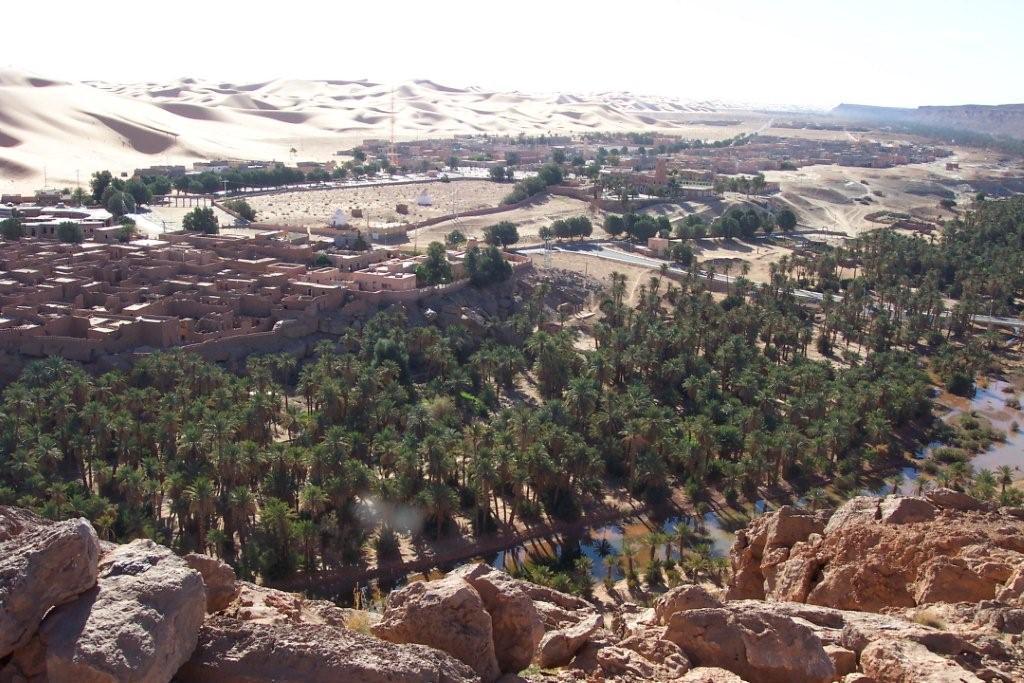
An oasis is a distinct, often isolated, landscape feature in arid regions where water supports persistent plant life and human activity. In physical geography terms, an oasis appears within a desert as a green patch that contrasts with surrounding barren terrain. Such areas owe their existence to an accessible water source and, as a result, sustain visible vegetation even under otherwise harsh climatic conditions.
Image gallery
10 Images




Characteristics and types
Oases vary in size and origin. Some arise where a natural spring brings groundwater to the surface; others sit above shallow aquifers or where geological features concentrate subsurface water. Human activity can create or enlarge oases through wells, irrigation channels or underground galleries (qanats). Common elements include a stable water supply, fruit trees such as date palms, agricultural plots and settlements clustered near the water. Oases function as a habitat for specialized flora and animals adapted to the interface of wet and dry environments.
History and etymology
Oases have long shaped movement, commerce and culture across arid regions. Knowledge of or access to oases guided long-distance trade, caravan routes and seasonal migration. Caravans often planned journeys to pass from one water point to the next, which made control of an oasis strategically important for both economic and political reasons; historic trade networks and caravan towns grew up around these stops (caravans). Famous Saharan centers such as those located in what is now Libya helped link routes across the Sahara. The English word "oasis" entered the language through Greek, which in turn borrowed from ancient Egyptian; some accounts mention Coptic forms, but Greek attestations predate written Coptic.
Uses and cultural importance
Throughout history oases have enabled agriculture, storage and rest points for travellers. Date palms and irrigated plots yield food and fodder; settlements at oases can become trade hubs or administrative centers. For nomadic peoples, seasonal use of oasis resources has been integral to survival. In modern times, many oases also support tourism and provide cultural heritage sites reflecting centuries of desert life.
Ecology, management and threats
Ecologically, oases create microclimates that increase local biodiversity and offer refuge for species otherwise excluded from the surrounding desert. However, they are sensitive to overuse: excessive pumping, poorly planned irrigation and expanding settlement can lower groundwater levels, reduce spring flow and lead to salinization. Climate variability adds pressure. Sustainable management emphasizes regulated water use, protection of recharge areas and traditional knowledge that balances cultivation with limited withdrawal.
Distinctions and notable facts
Oases differ from seasonal streambeds (wadis) or ephemeral wetlands by providing a relatively permanent water supply and continuous vegetation. The term "oasis" is also used metaphorically in many languages to describe any pleasant or life-sustaining refuge. Because they concentrate water, people and goods, oases have played outsized roles in regional history despite their often small physical footprint.
- Common water sources: springs, shallow aquifers, wells and qanats.
- Typical crops: date palms, vegetables, fodder and some fruit trees.
- Contemporary issues: groundwater depletion, land subsidence and tourism pressure.
Readers seeking more detail about specific oases, historic caravan routes or water-management techniques can consult specialized references and local studies. For further introductory resources see entries on related topics in physical geography and arid-land agriculture.
geography | desert | vegetation | water source | habitat | animals | trade | caravans | Libya | Sahara | Greek | Egyptian | Coptic
Related articles
Author
AlegsaOnline.com Oasis: desert settlements around water and vegetation Leandro Alegsa
URL: https://en.alegsaonline.com/art/71647
Sources
- books.google.com : The Tormont Webster's Illustrated Encyclopedic Dictionary