
Norns: Fate-weavers of Norse Mythology
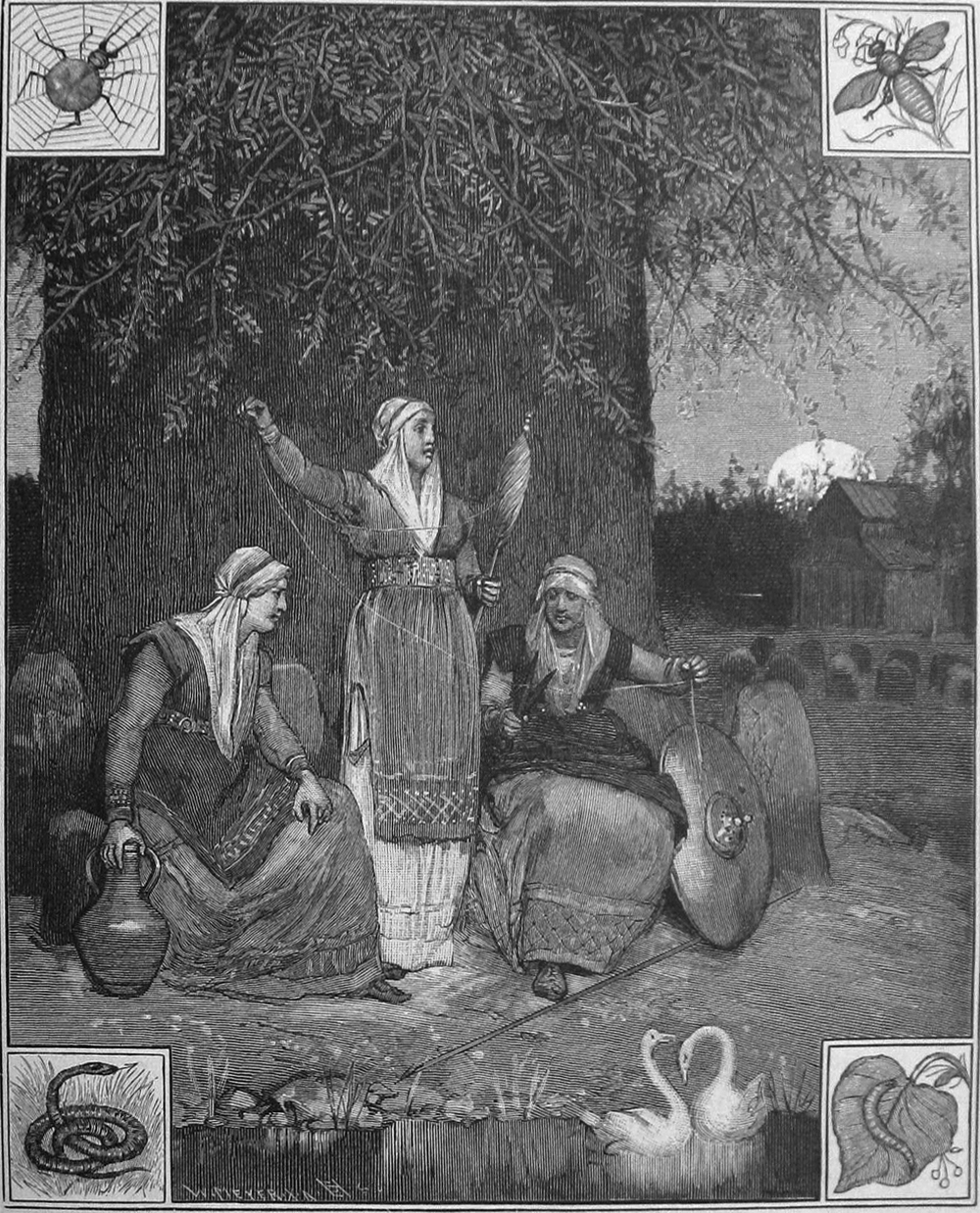
Norse mythic figures who shape destiny; traditionally three women named Urd, Verdandi and Skuld who spin, measure and weave the threads of fate and appear across medieval sources and later art.
Overview
The Norns are supernatural female figures who govern human and divine destiny in Norse mythology. Often portrayed as deities or fate-makers, they determine the course of individual lives and larger events. Their activity is closely associated with the concept of fate, which in Old Norse thought underpins both human action and the limits of the gods.
Image gallery
10 Images



Names and roles
Classically three principal Norns are named in the surviving sources. They are commonly given as:
- Urd (often glossed as "what has been"),
- Verdandi ("what is"),
- Skuld ("what is to come").
The figures are commonly imagined as spinning, measuring and weaving the course of lives: the length of a thread indicates a life span, and a torn or shortened thread marks death or misfortune. In some traditions Skuld also appears as a named Valkyrie, showing how identities and functions can overlap in the mythic corpus.
Setting and images
Iconic images place the Norns at the ash tree Yggdrasil, tending the roots and a sacred well, though alternative accounts place them near the rainbow bridge Bifröst. They are described as working with yarn, thread and a loom, a visual language that compares fate to a woven fabric or a tapestry. Some storytellers emphasize the loom or loom-like workshop where lives are measured, while others stress prophetic utterance or ritual binding.
Determinism and belief
Descriptions of the Norns often imply a strong sense of necessity: there is little room for chance. Medieval narratives sometimes stress that there is no luck or mere randomness, but rather events unfold according to a pattern. At the same time, many sagas and poems explore tensions between predestination and human responsibility, so the Norns function as a poetic device for thinking about inevitability, causation and moral choice.
Sources and later treatment
Our picture of the Norns comes mainly from the poetic and prose collections preserved in medieval Iceland, where skaldic verse and the Eddas record older oral traditions. These texts present variations: sometimes dozens of unnamed Norns are mentioned, and their origins and exact powers differ across accounts. The threefold grouping invites comparison with classical traditions: the Greeks spoke of the Moirae and the Romans of the Parcae, who likewise measure and allot life.
Influence and notable appearances
The Norns have continued to inspire poets, dramatists and composers. A famous operatic opening places three fate-women on stage: Richard Wagner introduces them at the start of his opera Götterdämmerung, where a broken thread foretells doom. In modern literature, film and scholarship the Norns are variously reinterpreted as mythic archetypes, metaphorical poets' voices, or embodiments of cultural anxieties about destiny and freedom.
Distinctive points
Key facts to remember: the Norns are primarily associated with the shaping of fate rather than everyday household magic; their number and status vary across texts; and they link cosmic structures (like Yggdrasil) to individual lives. Scholarly study treats them both as elements of a religious worldview and as powerful literary symbols that helped Norse speakers think about time, memory and the limits of power.
Related articles
Author
AlegsaOnline.com Norns: Fate-weavers of Norse Mythology Leandro Alegsa
URL: https://en.alegsaonline.com/art/70773