
Random (concept)
Random refers to lack of predictable order or pattern. Covers mathematical definitions, physical and algorithmic sources of randomness, common uses in sampling and cryptography, and everyday meanings and misconceptions.
Overview
In everyday language, the word "random" describes events or selections that appear unpredictable or without deliberate order. In formal contexts—especially in mathematics and statistics—randomness is treated more precisely as unpredictability governed by probability rules. A random outcome is one that cannot be determined in advance with certainty and is thought to arise from chance rather than intention. For an introduction to the formal study of such phenomena, see mathematics.
Image gallery
5 Images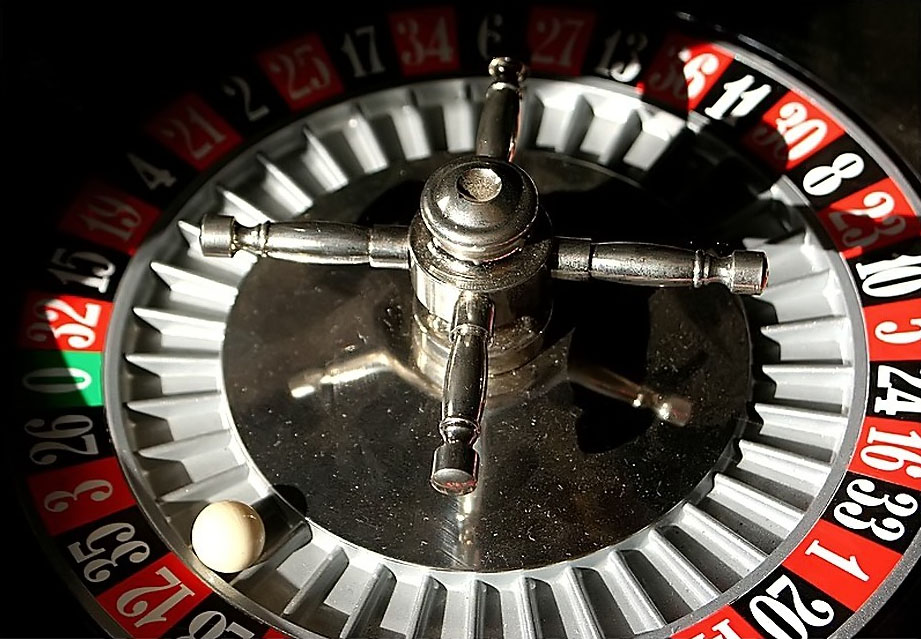




Characteristics and types
Not all unpredictability is the same. Practically, people and systems distinguish several sources and notions of randomness:
- Physical randomness: Variability produced by natural processes, such as radioactive decay or atmospheric noise, which are often used as inputs to so-called true random number generators.
- Algorithmic or pseudorandomness: Deterministic procedures that produce sequences of numbers which appear random for many purposes; computers commonly use these algorithms to generate apparently random numbers.
- Statistical randomness: The property that outcomes follow a specified probability distribution, used in sampling and hypothesis testing.
- Algorithmic information perspective: A sequence may be considered random if it has no shorter description than itself—this idea links randomness to complexity and compressibility.
Origins and history
Human interest in randomness dates back to early games of chance and divination. The formalization began with probability theory, which provided a mathematical framework to quantify uncertain events and to reason about long-run frequencies. The rise of computing highlighted the practical need for reproducible random-like sequences, giving rise to pseudorandom number generators, while developments in physics and quantum mechanics introduced new sources of nondeterministic behavior used for true randomness.
Uses and examples
Randomness has many practical applications. Lotteries and gambling rely on unpredictable outcomes to be fair and impartial; for example a winning ticket is expected to be determined by chance in a lottery. In science and engineering, random sampling underpins statistical inference and survey design. Simulations and Monte Carlo methods depend on large streams of random or pseudorandom numbers to model complex systems. In computer science and cryptography, unpredictability is essential for key generation and secure protocols; here algorithmic generators and hardware sources play complementary roles. Computers themselves implement routines to produce sequences that mimic randomness (computer methods) and supply such values for simulations, randomized algorithms, and tests.
Common usage and misconceptions
The popular use of "random" can be looser than technical meanings. People often describe surprising, odd, or loosely connected statements as random; in modern slang the term may be applied to offbeat humor or unexpected behavior. For example, websites that present a shuffled selection of content or jokes might label that feature "random" to indicate variety rather than strict mathematical unpredictability, as seen in collections of random jokes. Human attempts to act at random often fail because cognition tends to follow patterns, so observers or programs can sometimes predict choices; this limitation connects to how the brain organizes information.
Practical distinctions and notable facts
When choosing a source of randomness it is important to match the source to the task. Cryptographic uses demand high unpredictability and protection against attackers; statistical sampling emphasizes representativeness; simulations often accept high-quality pseudorandom sequences for efficiency. Tools such as randomness tests help assess whether a sequence behaves in ways expected of random data, but passing tests does not prove absolute randomness. Online platforms may offer a "Random page" feature so a visitor can explore content unpredictably—for instance some encyclopedias provide a true random article selection via a website widget and others advertise a "Random page" link like English Wikipedia. For everyday reference some people consult a conventional dictionary to distinguish formal and colloquial meanings, and discussions of usage sometimes note the generational shift in how "random" is used (slang observations).
Ultimately, randomness occupies a range from precisely defined probabilistic models to casual speech about surprises. Recognizing the context—mathematical, physical, computational, or conversational—helps clarify what is meant when someone calls an event or selection "random."
Questions and answers
Q: What is the definition of random?
A: Random is a term used in mathematics (and less formally) to mean that there is no way to reliably predict an outcome (to know what will happen before it happens) or sense a pattern.
Q: What does it mean when something is chosen at random?
A: When something is chosen at random it is not chosen for any conscious reason, and therefore thought to be purely by chance.
Q: Can a computer make lists of apparently random numbers?
A: Yes, a computer can make lists of apparently random numbers.
Q: Why are humans unable to make lists of apparently random numbers?
A: Humans are unable to do this, because the brain works in patterns.
Q: What is an example of a random event?
A: An example of a random event is winning a lottery.
Q: What happens when someone is asked to keep saying "heads" or "tails" at random?
A: If someone is asked to keep saying "heads" or "tails" at random, a smart human observer or properly programmed computer might eventually be able to tell which one the person is likely to say next because the computer notices the patterns.
Q: What is the current use of the word "random" among young people?
A: In recent years young people have started to use the word "random" even more loosely to describe anything which is rather strange or has no logic.
Related articles
Author
AlegsaOnline.com Random (concept) Leandro Alegsa
URL: https://en.alegsaonline.com/art/81122