
Nut — Egyptian sky goddess
Nut is the ancient Egyptian personification of the sky, often shown arching above the earth and linked to the sun's nightly passage, funerary art, and the cycle of birth and renewal.
Overview
In Egyptian religion, Nut was the prime personification of the heavens and the celestial vault. Ancient ritual and myth describe her as a protective cosmic mother whose body forms a canopy over the Earth. She is commonly called a goddess of the sky who governs the nightly firmament, the stars, and patterns of rebirth tied to the sun.
Image gallery
4 Images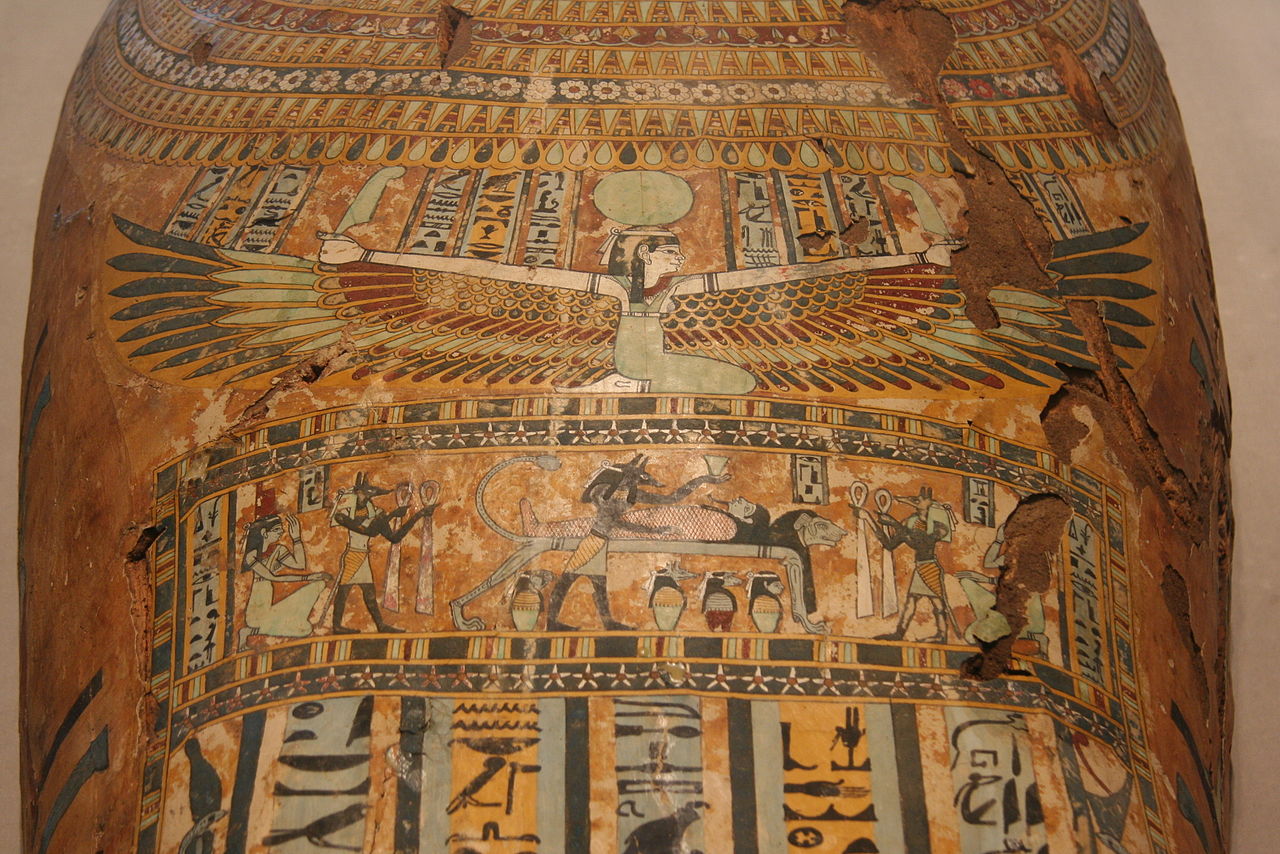


Family and key myths
Narratives place Nut among the principal divine family: she is the sister and consort of the earth god Geb and a mother to several major deities. Classical tales recount that because of a prohibition she could not give birth on any day of the year; the moon‑god's light was gambled away to create five extra days, during which she bore her children.
- Osiris — associated with kingship and the afterlife
- Nephthys — a protective funerary goddess
- Seth — god of chaos and deserts
- Isis — goddess of magic and motherhood
- Horus (in some accounts) — linked as a grandson or descendant
Myth often emphasizes Nut's role in the daily renewal of the sun: the ancient Egyptians imagined that she swallowed the sun each evening and gave birth to it again at dawn, a dramatic image of death and rebirth connected with Ra and other solar deities.
Iconography and symbolism
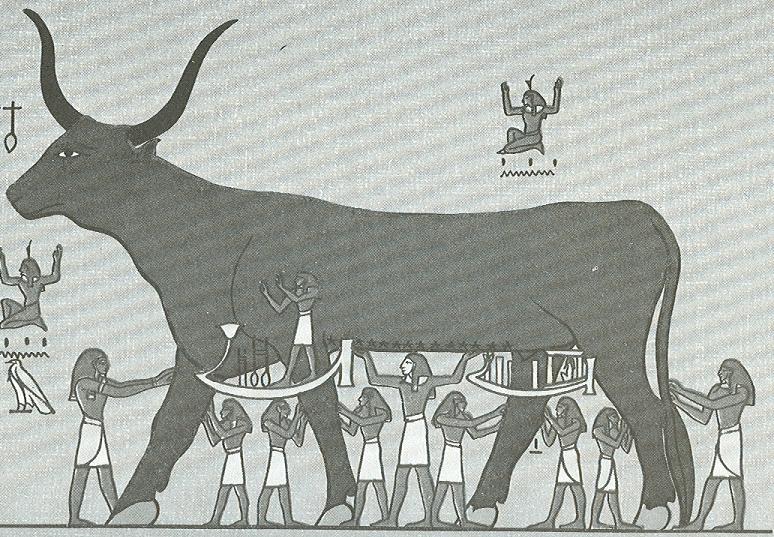
Artists depicted Nut in a few standard ways: as a woman arched over the earth, her body studded with stars; as a cow sheltering creation; or sometimes reclining across the sky. On tomb ceilings and coffins she appears to guarantee the deceased safe passage through night and into the afterlife. Her starry form symbolizes the night, the cycle of time, and cosmic order.
Role, worship and legacy
Nut had a practical function in Egyptian religion: she was invoked in funerary texts and rituals to protect the dead and ensure resurrection. References to her appear in astronomical and calendrical writings such as the so‑called "Books of Nut," and her image adorned sarcophagi and temple scenes. Her themes — sky as shelter, cyclical renewal, and maternal protection — influenced visual art and later interpretations of Egyptian cosmology.
Notable distinctions
Unlike some deities whose cults dominated a single city, Nut's presence is widespread across art and ritual rather than concentrated in a single temple complex. She is less often the center of a separate popular priesthood and more commonly a cosmic figure invoked in texts, ceilings, and funerary iconography that emphasize the continuity between day, night, life and afterlife.
For general introductions and visual references see museum descriptions and surveys of Egyptian religion: goddess profiles, sky myth summaries (sky), and myth collections that discuss Geb (Geb), Osiris (Osiris), Nephthys (Nephthys), and Seth (Seth) as part of Nut's narrative web. The role of Nut in how the ancient Egyptians visualized the nightly sun and its relation to Ra remains central to understanding Egyptian cosmology.
Questions and answers
Q: Who is Nut in Egyptian mythology?
A: Nut is the goddess of the sky in Egyptian mythology.
Q: What did Nut's body do to the Earth?
A: Nut's body made a protective layer over the Earth.
Q: Who was Nut's sister and wife?
A: Nut's sister and wife was Geb.
Q: Who are the children of Nut and Ra?
A: The children of Nut and Ra are Osiris, Nephthys, Isis and Seth.
Q: Who is Horus in relation to Nut?
A: Horus is the grandchild of Nut.
Q: What did the ancient Egyptians believe about Nut and Ra?
A: The ancient Egyptians believed that Nut swallowed the sun-god, Ra, every night and gave birth to him every morning.
Q: Who was also a grandchild of Ra?
A: Horus was also a grandchild of Ra.
Related articles
Author
AlegsaOnline.com Nut — Egyptian sky goddess Leandro Alegsa
URL: https://en.alegsaonline.com/art/71498