
Bifröst — the rainbow bridge of Norse mythology
Bifröst is the legendary rainbow bridge that links Midgard and Asgard in Norse myth, guarded by Heimdall and foretold to break at Ragnarök. It appears in the Poetic and Prose Edda and later cultural works.
Overview
Norse mythology describes Bifröst as the luminous connection between the world of humans and the world of the gods. It spans from the realm of mortals—sometimes called the land of mortals and more specifically Midgard—to the divine stronghold of Asgard. In poetic sources the bridge is depicted as a living, shimmering pathway often compared to a rainbow, and it figures in the daily movements of the gods and in the cosmological layout around the world-tree Yggdrasil.
Image gallery
5 Images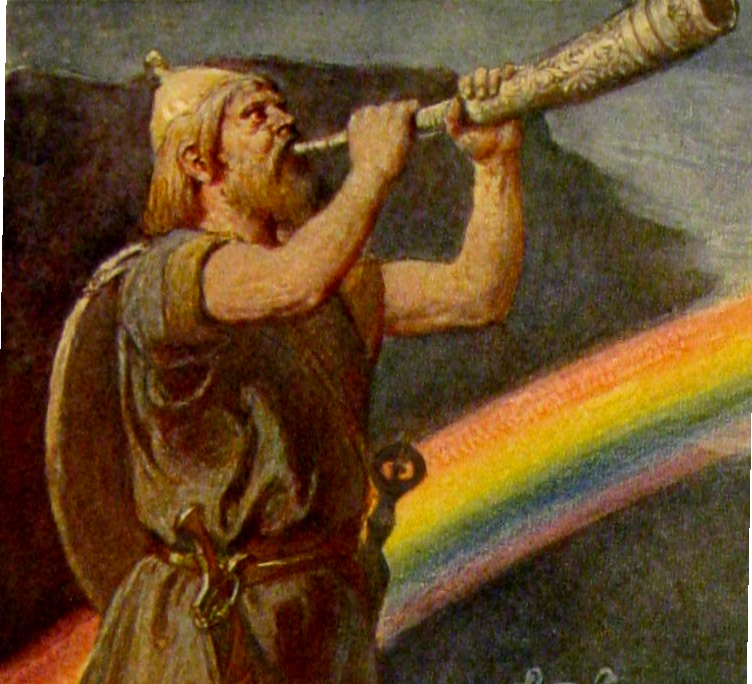



Characteristics and symbolism
Accounts in the Poetic Edda and the Prose Edda present the bridge as both functional and symbolic: a way for deities to cross between realms and a liminal boundary that separates order from chaos. It is described as strong yet vulnerable, beautiful yet dangerous. The following points summarize recurring traits:
- Guarded passage: the watchman Heimdall stands sentinel to prevent unwanted entry.
- Association with light: described by some skaldic images as a spectral or colored road, akin to a rainbow.
- Selective use: powerful beings like the thunder-god Thor are said in some narratives to avoid crossing it on horseback because his strength could damage the span—reflecting concerns about balance between realms and natural forces such as thunder.
- Etymology: the Old Norse name Bifröst has been read as a compound implying trembling, gleaming, or a shifting road; scholars discuss this cautiously because exact senses evolve over time.
Mythic role and fate
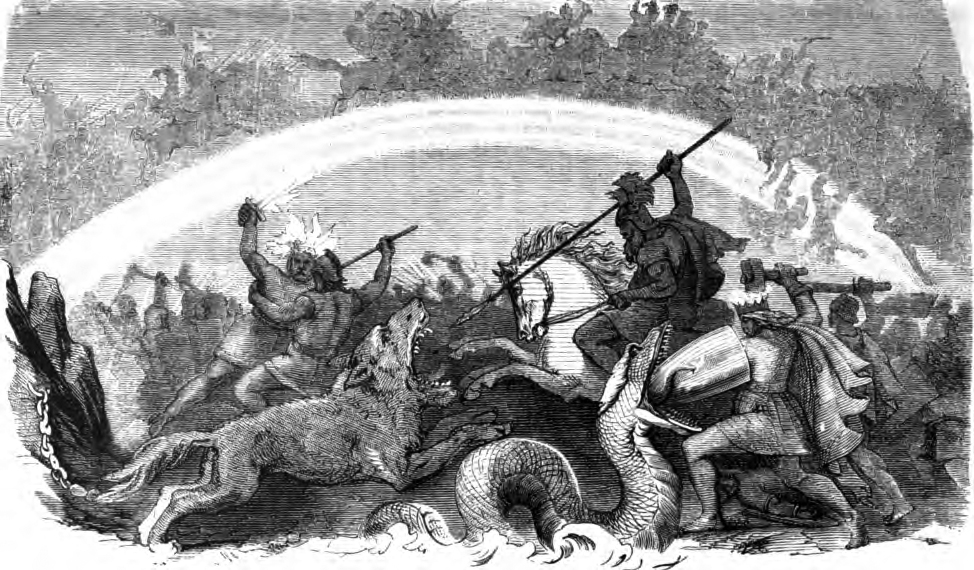
In myth the gods are said to traverse the bridge as they assemble at the well of Urd beneath Yggdrasil to hold council and adjudicate disputes. The bridge is not merely a route but a border whose integrity underpins the separation of divine and mortal spheres. Prophetic material in the corpus predicts that at Ragnarök the bridge will fail: the assault of giants, monsters and the dead pours toward Asgard and the rainbow-path is broken or burned, signaling the collapse of the present order.
Names, attestations and variations
Older sources give the structure several names and variants—Bifröst, Bilröst and Ásbrú among them—and the myths are preserved chiefly in medieval Icelandic compilations such as the Poetic Edda and the Prose Edda. There the bridge is attributed to the Æsir and integrated into a wider cosmology that explains why gods, humans and other beings remain distinct yet connected.
Legacy and notable facts
Bifröst has appeared repeatedly in later culture, inspiring art, literature, and popular media. Its image as a glowing, arching connector endures because it combines natural phenomenon and metaphysical meaning: a beautiful threshold that protects, permits, and finally fails in the great end-time narrative. Modern retellings sometimes adapt the bridge's form and function but retain core elements—guarded crossing, role in divine travel, and prophetic destruction—which keep Bifröst a central motif in discussions of Norse cosmology.
For further study see primary poetic sources and modern introductions to Norse myth; translations and commentaries explore the bridge’s linguistic nuances and the differing emphases of the poetic and prose traditions.
Norse mythology | Bridge motifs | Midgard | Midgard | Æsir | Asgard | Rainbow | Heimdall | Thunder | Thor | Ragnarök
Related articles
Author
AlegsaOnline.com Bifröst — the rainbow bridge of Norse mythology Leandro Alegsa
URL: https://en.alegsaonline.com/art/11307