
Parcae (Roman Fates)
The Parcae are the three Roman goddesses who personify destiny. They spin, measure, and cut the thread of life, appearing in Roman religion, art, and literature with parallels to the Greek Moirai.
The Parcae are the trio of female deities in Roman religion who personify destiny and the lifecycle of mortals and gods. Often translated into English as the Fates, they perform a single, shared function: to determine the span and course of every life. Their authority over the "thread of life" made them among the most solemn figures in Roman belief, and Roman writers treated them with a mixture of reverence and narrative interest. For general context see Roman mythology.
Image gallery
4 Images

Role and characteristics
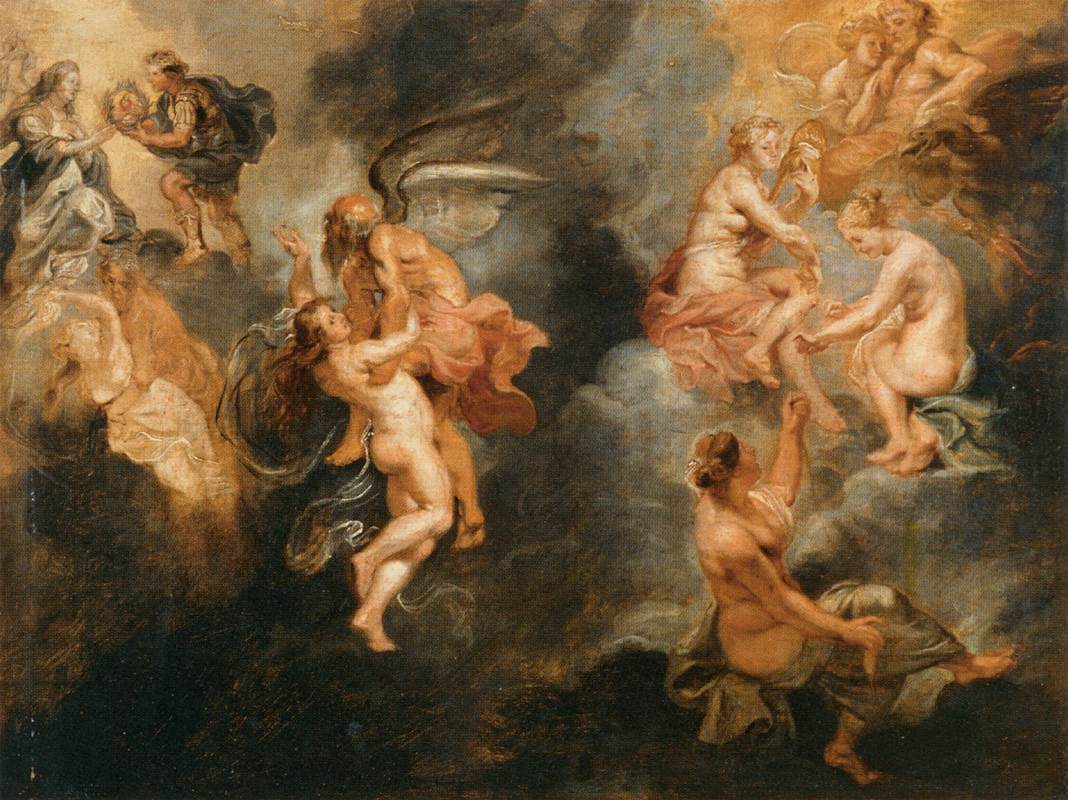
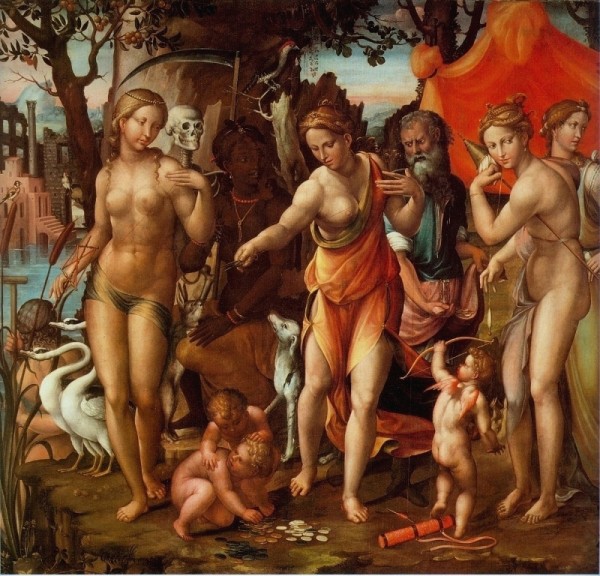
In art and literature the Parcae are portrayed as craftsmen of fate: one spins the thread, another measures it, and the third severs it. This threefold division symbolizes birth, life, and death as stages governed by an impersonal, inevitable order. As personifications rather than anthropomorphic rulers, they are similar to other cultures' representations of destiny; for comparison see the Greek Moirai. More generally they function as female personifications in Roman thought (personifications), capturing abstract forces in divine form.
Names and functions
- Nona (often equated with the Greek Clotho) — traditionally described as the spinner who begins life’s thread and is associated with birth and the initial allotment of fate.
- Decima (parallel to Lachesis) — the measurer, who determines the length and quality of the thread and thus the course of a life.
- Morta (parallel to Atropos) — the cutter, who brings an end to the thread and decides the manner of death.
These names appear in Roman sources and inscriptions; the image of the spindle and scissors or shears emphasizes their functional roles, and the phrase "thread of life" recurs as a concise metaphor for human destiny (thread of life).
Archaeology and literary sources
Archaeological evidence and classical authors both preserve knowledge of the Parcae. One notable early find was a set of small inscribed stelae discovered near Lavinium after World War II; their inscriptions record forms of the Parcae names and link them to the idea of "fata." The inscriptions are often cited in studies of early Roman religion and cult practice (Lavinium find).
Literature is the main medium through which later readers encounter the Parcae. The Roman poet Ovid treats them in several passages of his Metamorphoses, where their actions and significance are woven into mythic narratives. For an English-language encounter with their literary presence, see references to Ovid's work (Metamorphoses).
Significance, distinctions, and cultural influence
The Parcae illustrate how Romans reconciled human freedom, ritual practice, and divine order. Unlike heroic gods concerned with city or war, they embody an impersonal principle: fate as a binding dimension of existence. Even deities could be portrayed as subject to fate’s determinations, a theme that appears in both Roman and Greek storytelling (gods and fate).
Over centuries the Parcae influenced later European literature, art, and symbolism associated with destiny and mortality. Their threefold pattern — spinner, measurer, cutter — is a persistent motif in cultural treatments of life’s arc. Scholars and students often consult comparative resources to explore parallels and differences between the Parcae and other traditions (the Fates, spindle imagery, Roman religion, personification).
For further study, modern introductions to Roman religion and collections of classical texts provide fuller translations and commentary on the Parcae and their appearances in Roman art and ritual. Academic treatments typically combine literary analysis with the archaeological record to reconstruct how the Romans experienced and represented destiny (Greek parallels, mythic metaphors).
Questions and answers
Q: Who were the Parcae in Roman mythology?
A: The Parcae were the female personifications of destiny in Roman mythology.
Q: What were the Parcae often called in English?
A: The Parcae were often called the Fates in English.
Q: What did the Parcae control in Roman mythology?
A: The Parcae controlled the "thread of life" of every mortal and immortal in Roman mythology.
Q: Were the gods afraid of the Parcae in Roman mythology?
A: Yes, even the gods were afraid of the Parcae in Roman mythology.
Q: What were the names of the three Parcae in Roman mythology?
A: The names of the three Parcae in Roman mythology were Nona, Decima, and Morta.
Q: What were the roles of each of the Parcae in Roman mythology?
A: Nona spun the thread of life on her spindle, Decima measured the thread of life, and Morta cut the thread of life and chose the way a person would die in Roman mythology.
Q: What is one source for information about the Parcae in Roman mythology?
A: One source for information about the Parcae in Roman mythology is Metamorphoses by Ovid, with references in Book II, Book V, Book VIII, and Book XV.
Related articles
Author
AlegsaOnline.com Parcae (Roman Fates) Leandro Alegsa
URL: https://en.alegsaonline.com/art/74604
Sources
- commons.wikimedia.org : Moirae