
Yggdrasil — the World Tree of Norse Mythology
Yggdrasil is the vast cosmic ash tree at the centre of Norse cosmology. It connects the Nine Worlds, shelters many beings, and plays a central role in myths about fate, sacrifice, and Ragnarök.
Overview
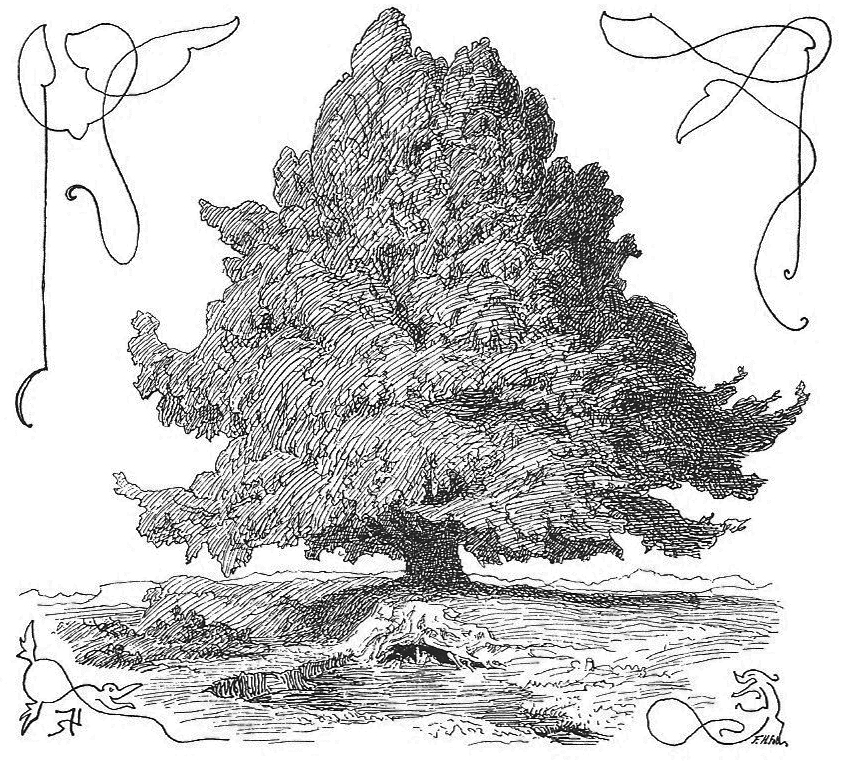
In Norse myth, Yggdrasil is the immense world tree that forms the axis and framework of the cosmos. Often called the World Tree or World Ash, it occupies a central place in accounts of the Nine Worlds and in narratives about gods, giants, and the ultimate destruction and renewal of the world. The name appears in Old Norse sources; see the Old Norse form and etymological discussions for more detail.
Image gallery
7 Images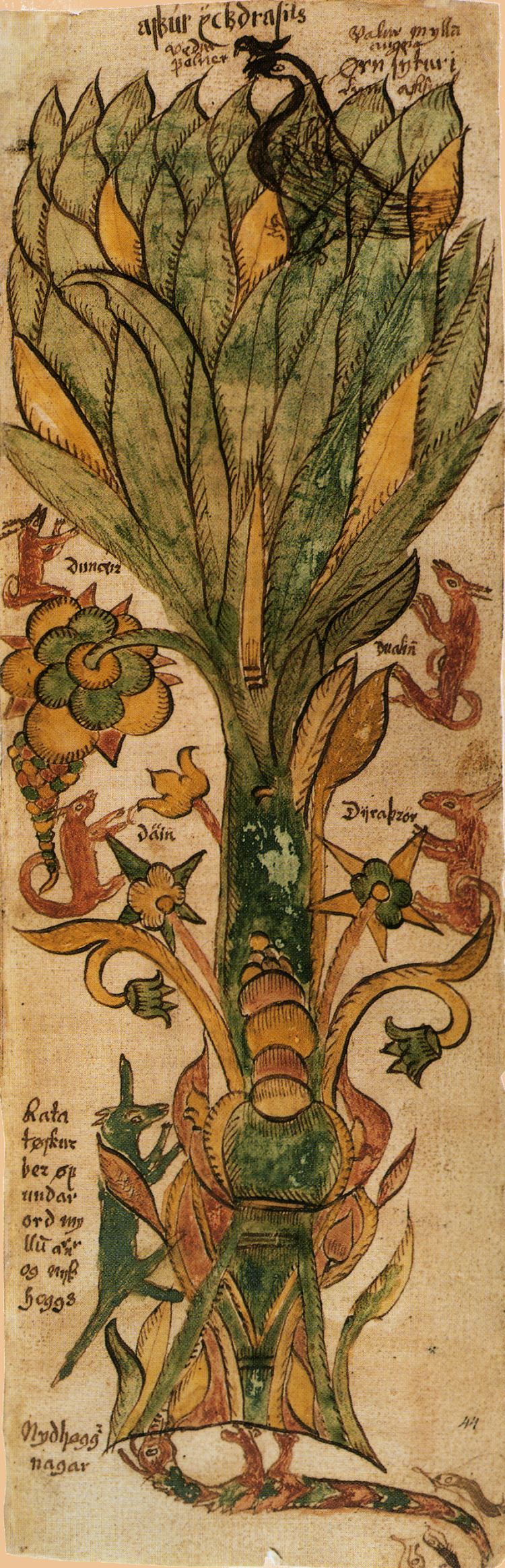



Structure and features
Yggdrasil is described as having a single trunk with branches that spread over the world and three great roots that reach into distant places. Near one root is the well of Urðr (Urðarbrunnr), where the gods hold council and weave fate; another root reaches toward Mímir's well, associated with wisdom; the third sinks into the springs of Niflheim, where the serpent or dragon Níðhöggr gnaws at the root. These locations are named and discussed in traditional sources and modern summaries — consult cosmology sources for primary texts and commentary.
Inhabitants and symbols
Yggdrasil is home to a number of mythic creatures and symbols. An unnamed eagle sits at the top with a hawk, often called Veðrfölnir, between its eyes. Four stags—said to browse the foliage—are named in the poems, and the squirrel Ratatoskr runs messages and insults up and down the trunk. At the base a serpent or dragon gnaws at the roots. These figures embody themes of communication, conflict, and the fragile balance that sustains the world.
Mythic role and fate
The tree functions as a cosmological centre and an image of continuity: it binds disparate realms together and anchors the cycles of life and destiny. Several myths connect Yggdrasil to acts of sacrifice and wisdom, most famously Odin's self-sacrifice, and to the events of Ragnarök, when the tree trembles and is said to suffer during the cataclysm. After the destruction a renewed world grows, preserving echoes of the old order; see accounts of Ragnarök for more on that sequence.
History, interpretation, and influence
The image of a cosmic tree appears across many cultures, and Yggdrasil has been interpreted as a Scandinavian expression of the axis mundi motif. Primary attestations appear in medieval Icelandic collections known as the Poetic Edda and Prose Edda, and scholars have debated its meanings and origins. In modern times Yggdrasil has been adopted widely in literature, art, and popular media as a symbol of connection, endurance, and world-order; for comparative studies consult general introductions and online resources such as reliable summaries.
Notable distinctions
- Yggdrasil differs from a mere tree: it is a mythic structure that organizes space, time, and fate.
- Sources emphasize both physical and metaphysical aspects—locations like wells are concrete features, while the tree also represents cosmic relationships.
- Interpretations vary: linguistic, ritual, archaeological, and literary approaches each highlight different facets.
For further reading and primary text translations, consult scholarly editions and annotated translations linked through the reference placeholders above.
Related articles
Author
AlegsaOnline.com Yggdrasil — the World Tree of Norse Mythology Leandro Alegsa
URL: https://en.alegsaonline.com/art/109837