
Nyx — Greek primordial goddess of the night
Nyx, the personification of night in Greek mythology: origins from Chaos, major offspring such as Hypnos and Thanatos, iconography, literary role, and Roman counterpart Nox.
Overview
Nyx is the ancient Greek personification of night and one of the primordial beings in early Greek cosmogony. Descriptions of her appear in archaic poetry and later classical literature, where she functions as a powerful, elemental force rather than a domestic deity. For discussions of her appearances in surviving texts, see ancient sources.
Image gallery
6 Images



Origins and family
In the tradition preserved by Hesiod and other early poets, Nyx emerges from Chaos as a primary cosmic figure. She is often credited with producing many abstract and potent offspring, sometimes on her own: among the best known are Hypnos (Sleep) and Thanatos (Death). Other children variously attributed to her include forces such as Strife and Doom.
Characteristics and iconography
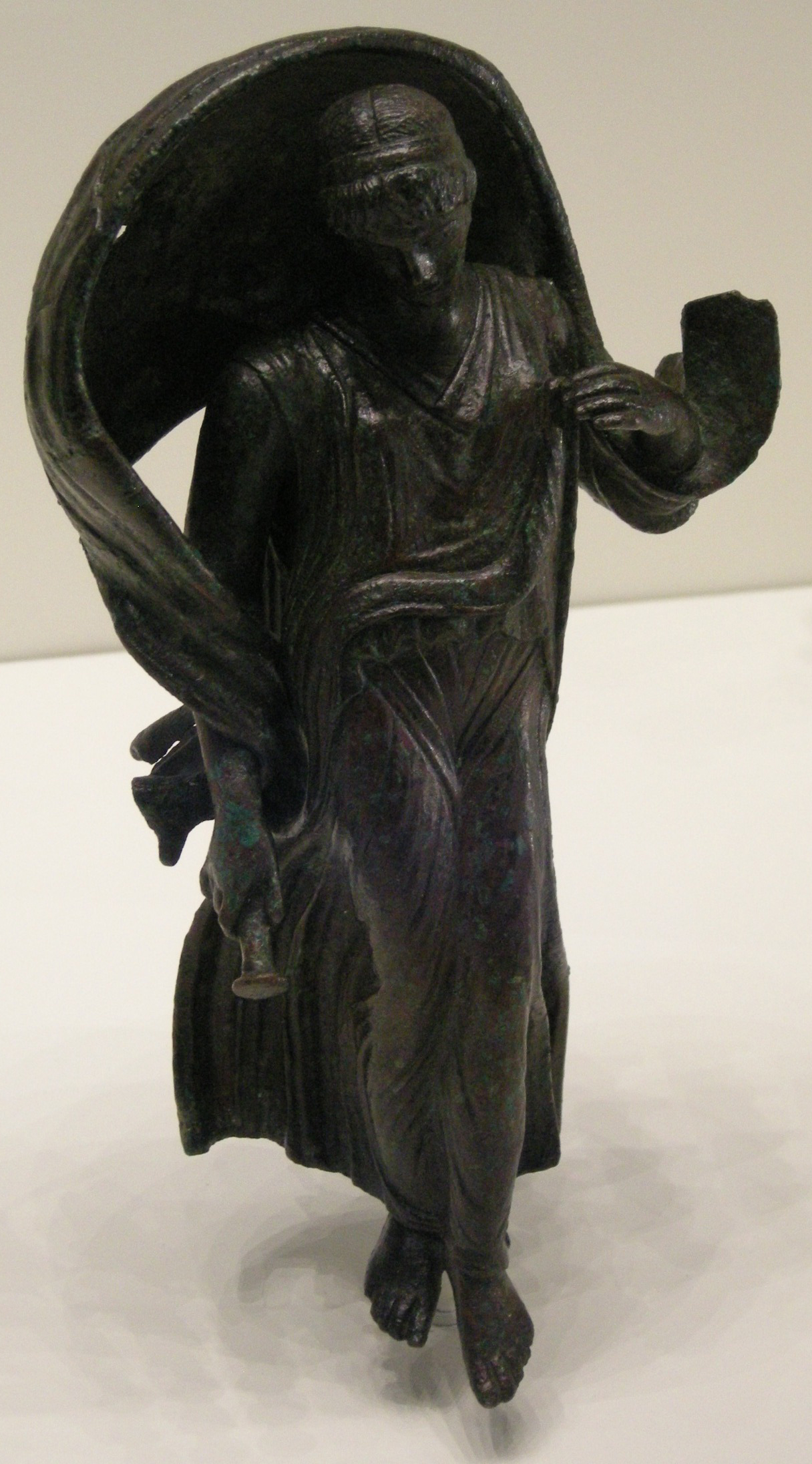
Nyx is depicted in literature and art as a shadowy, veiled figure associated with darkness and the stars. Images range from a winged woman or a cloak of night to a chariot carrying dusk across the sky. In myth she wields a dignity and authority that even higher gods respect or fear.
Worship and cultural role
Unlike many Olympian deities, Nyx had limited formal cult activity; her importance is mainly literary and symbolic. Poets and philosophers invoked her to frame themes of mystery, fate, sleep and death. The Romans identified her with Nox, who plays a similar cosmological and poetic role in Latin literature.
Legacy
Nyx’s image persists in later art, philosophy and modern culture as an emblem of night, the unconscious and liminal states between life and death. Her offspring and attributes continue to appear in references to sleep, dreams and the darker aspects of human experience.
Related articles
Author
AlegsaOnline.com Nyx — Greek primordial goddess of the night Leandro Alegsa
URL: https://en.alegsaonline.com/art/71575