
New Horizons — NASA's Pluto and Kuiper Belt Spacecraft
New Horizons is a NASA robotic probe launched in 2006 that performed the first close study of Pluto in 2015, flew past Kuiper Belt object Arrokoth in 2019, and continues outbound as a deep-space observatory.
Overview
New Horizons is a NASA interplanetary spacecraft launched on 19 January 2006 to perform the first close reconnaissance of the Pluto–Charon system and then to continue into the Kuiper Belt. The spacecraft completed a nine-year cruise to Pluto, making a close approach on 14 July 2015, and later flew past the Kuiper Belt object 486958 Arrokoth (2014 MU69) on 1 January 2019. The mission returned high-resolution images and a diverse set of scientific measurements that transformed understanding of the outer Solar System. For mission details and public resources see the mission overview: mission summary and program pages at NASA.
Image gallery
10 Images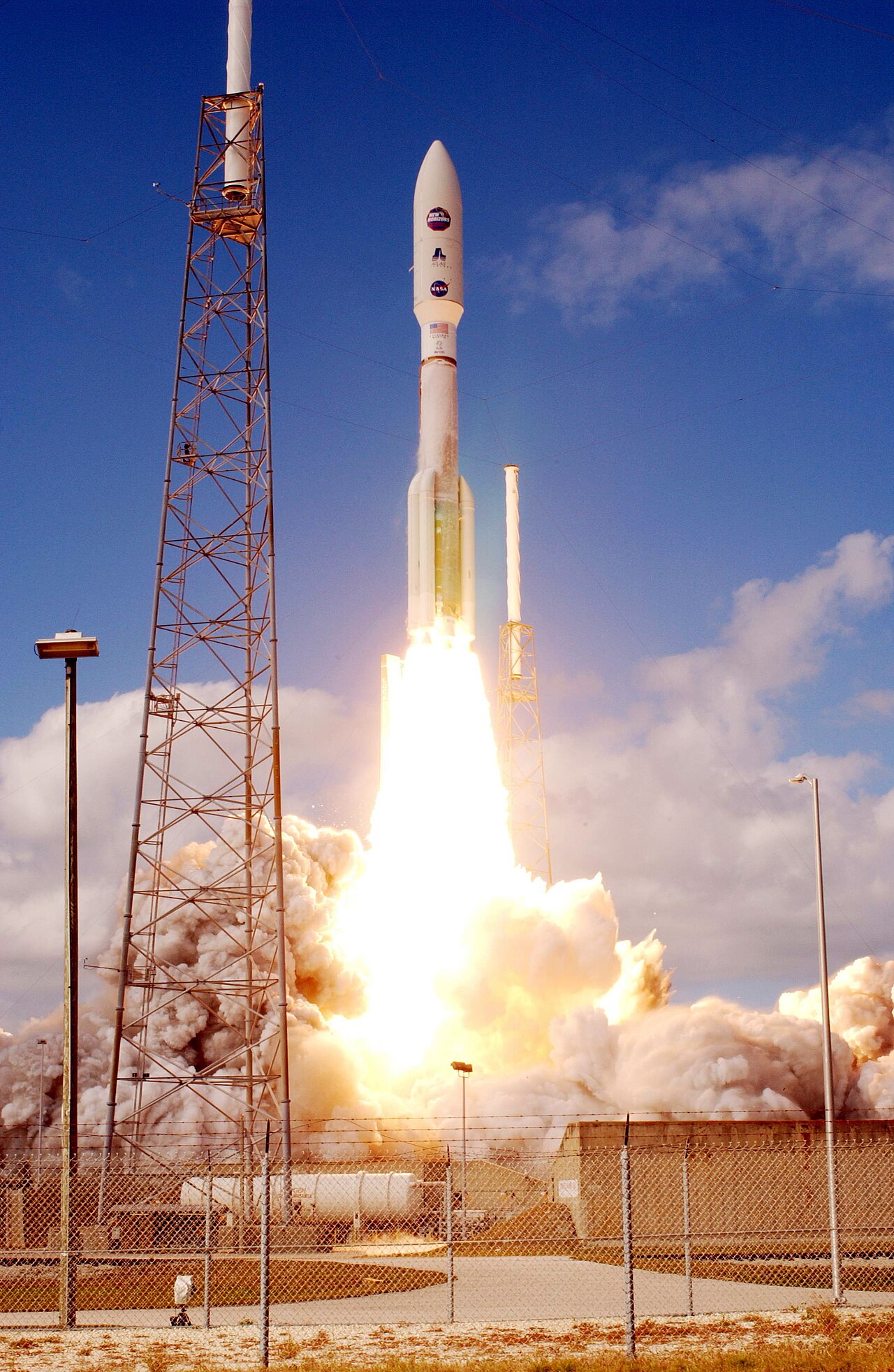




Background and objectives
New Horizons was designed to accomplish a set of primary scientific goals at Pluto: map the surface geology and composition, characterize the neutral atmosphere and escape rate, and study Pluto’s moons. The extended mission sought to fly by one or more Kuiper Belt objects to investigate primitive remnants of the early Solar System. The spacecraft and its science team published results in peer-reviewed journals and mission reports: scientific goals.
Development, launch and trajectory
Built for a long, rapid transit, New Horizons set a record for Earth-relative launch speed. It benefited from a gravity assist at Jupiter in early 2007 to raise its heliocentric velocity and refine its trajectory toward Pluto. Detailed launch and cruise accounts are available at the project pages: launch and trajectory and mission timeline. The Jupiter encounter also provided opportunities to test instruments and collect calibration science.
Spacecraft design and systems
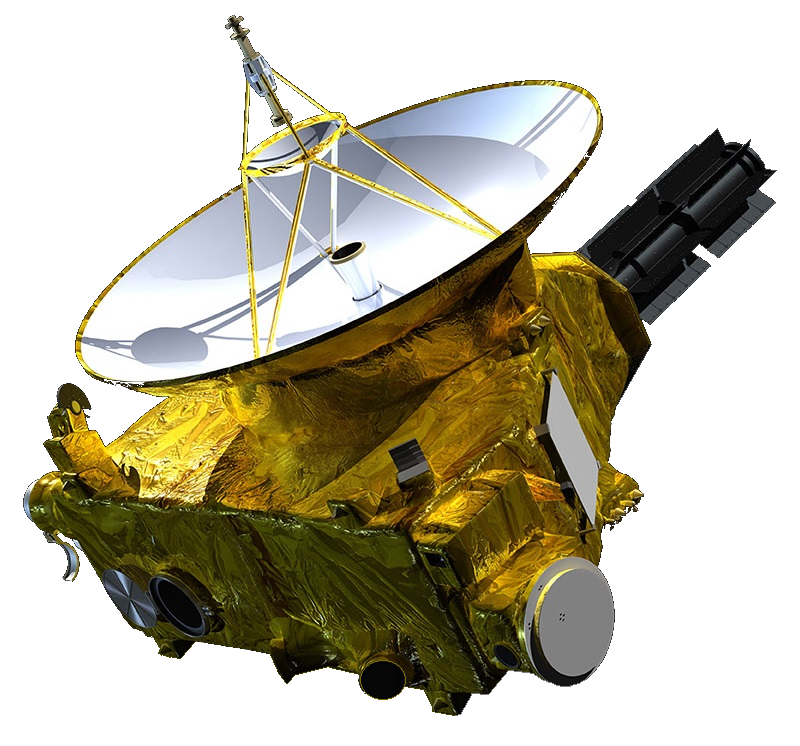
New Horizons is a compact, spin-stabilized spacecraft built around a central equipment module. It carries a radioisotope thermoelectric generator (RTG) for long-lived electrical power, a hydrazine monopropellant system for attitude control and occasional course corrections, and redundant avionics to increase reliability far from Earth. Thermal design, communications, and power management are discussed in technical summaries: spacecraft systems.
Scientific instruments
The payload was chosen to provide a broad set of remote-sensing and in situ measurements:
- LORRI (Long Range Reconnaissance Imager) — a high-resolution visible imager used for detailed mapping, optical navigation, and search operations: LORRI instrument.
- Ralph — a combined visible/infrared telescope for color imaging and spectral mapping of surface composition: Ralph details.
- Alice — an ultraviolet imaging spectrometer to probe tenuous atmospheres and measure composition and escape: Alice overview.
- Particle and plasma suite — instruments to measure the solar wind, charged particles, and the space environment: particles and plasma.
- Student Dust Counter (SDC) — a student-built experiment that measured dust density along the trajectory: SDC project.
- REX (Radio Science Experiment) — used for radio occultation, temperature sounding, and precise radiometry: REX information.
Pluto–Charon encounter and discoveries
During the close approach, New Horizons acquired the first high-resolution views of Pluto’s diverse terrains and of its largest moon, Charon. The observations revealed unexpected geological activity: vast nitrogen ice plains, mountain ranges of water ice, complex layering in the atmosphere, and active surface processes. The mission established that Pluto has a more complex and dynamic surface and atmosphere than many models had predicted. Detailed analyses and image galleries are available at mission science portals: Pluto science.
Arrokoth (2014 MU69) flyby
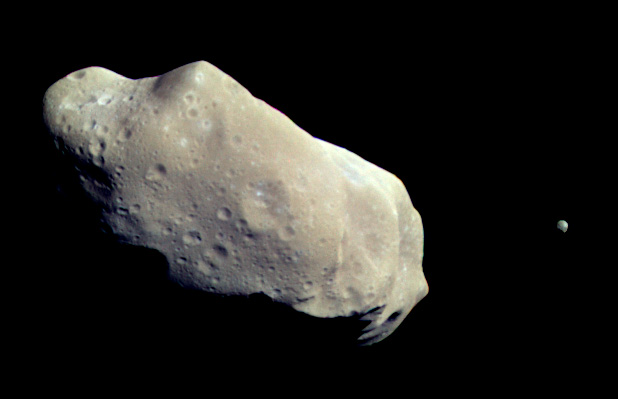
Selected as a Kuiper Belt follow-up target, 486958 Arrokoth (nicknamed Ultima Thule during early planning) was the object of a successful flyby on 1 January 2019. New Horizons returned images showing a contact binary, interpreted as two primordial bodies that gently merged. The morphology and surface properties of Arrokoth provided constraints on how small planetesimals accreted in the early Solar System. Background and mission reports on the flyby can be found at: Arrokoth mission page.
Data return and operations
Data transmission from New Horizons after the Pluto encounter occurred at a modest telemetry rate (on the order of one kilobit per second), requiring many months to send the complete dataset. Ground teams continue to monitor instrument health, manage limited propellant, and plan observations. Operational status and archived data products are maintained by mission operations and science archives: data archive and operations updates.
Trajectory, distance and long-term outlook
New Horizons is on an escape trajectory from the Sun and will become one of the most distant human-made objects. It set a launch speed record relative to Earth and benefited from a Jupiter gravity assist. The spacecraft will continue to coast outward, making occasional measurements of the heliospheric environment and interplanetary dust. Predictions about when it might cross the heliopause or otherwise enter interstellar space depend on variable solar and interstellar conditions; general heliosphere context is reviewed at: heliospheric science.
Scientific legacy and public engagement
New Horizons produced some of the most widely recognized images of the outer Solar System and stimulated research on planetary geology, atmospheres, small body formation, and heliospheric physics. Its combination of engineering design, student involvement, and public outreach has left a lasting legacy in planetary exploration. For educational resources, galleries, and public materials see the mission public pages: public gallery and educational resources.
Related articles
Author
AlegsaOnline.com New Horizons — NASA's Pluto and Kuiper Belt Spacecraft Leandro Alegsa
URL: https://en.alegsaonline.com/art/69532