
Gravity assist (gravitational slingshot)
Gravity assist is a spacecraft maneuver that uses a moving body's gravity and motion to change a spacecraft's speed and trajectory, conserving fuel and enabling complex interplanetary missions.
Overview
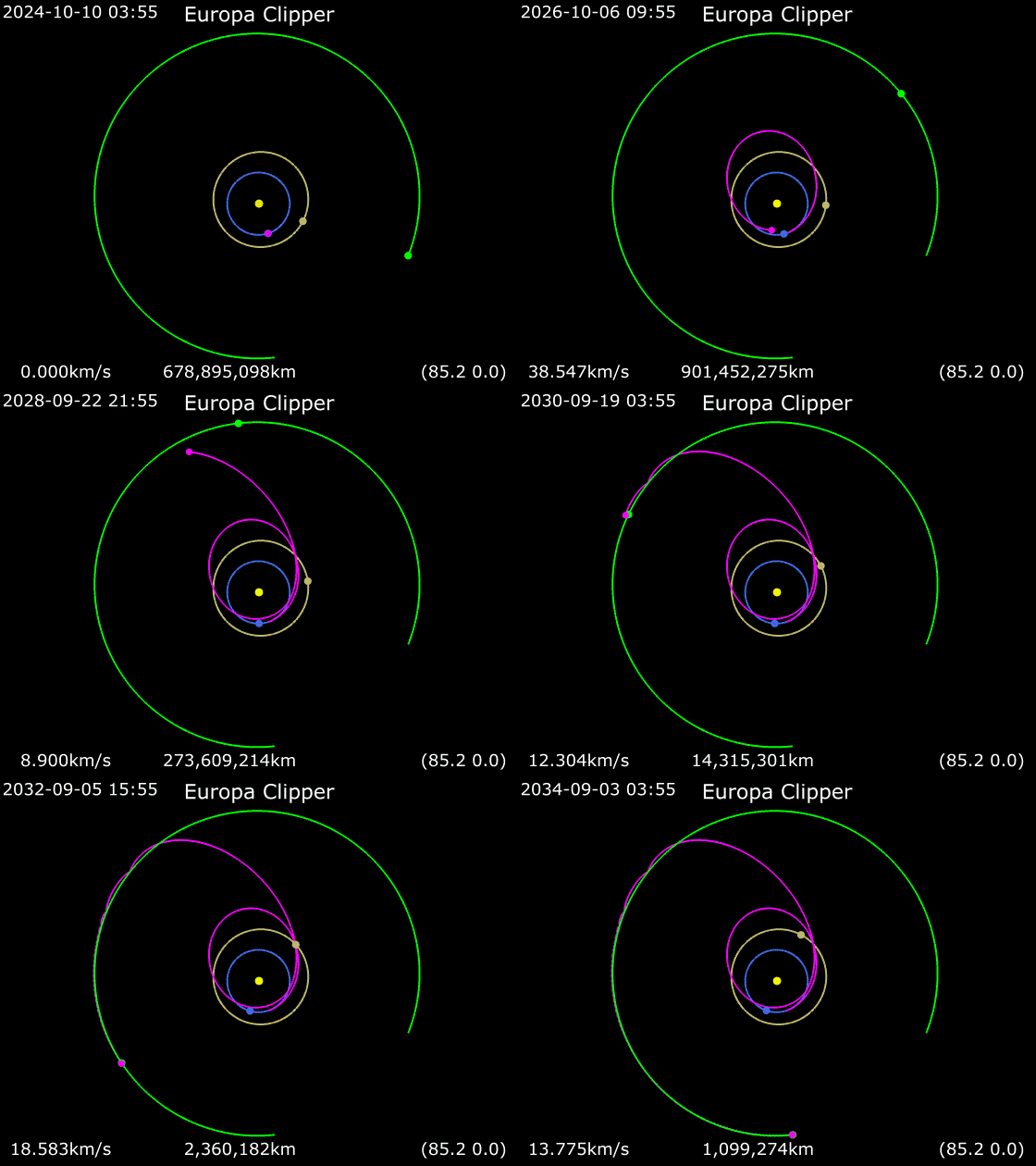
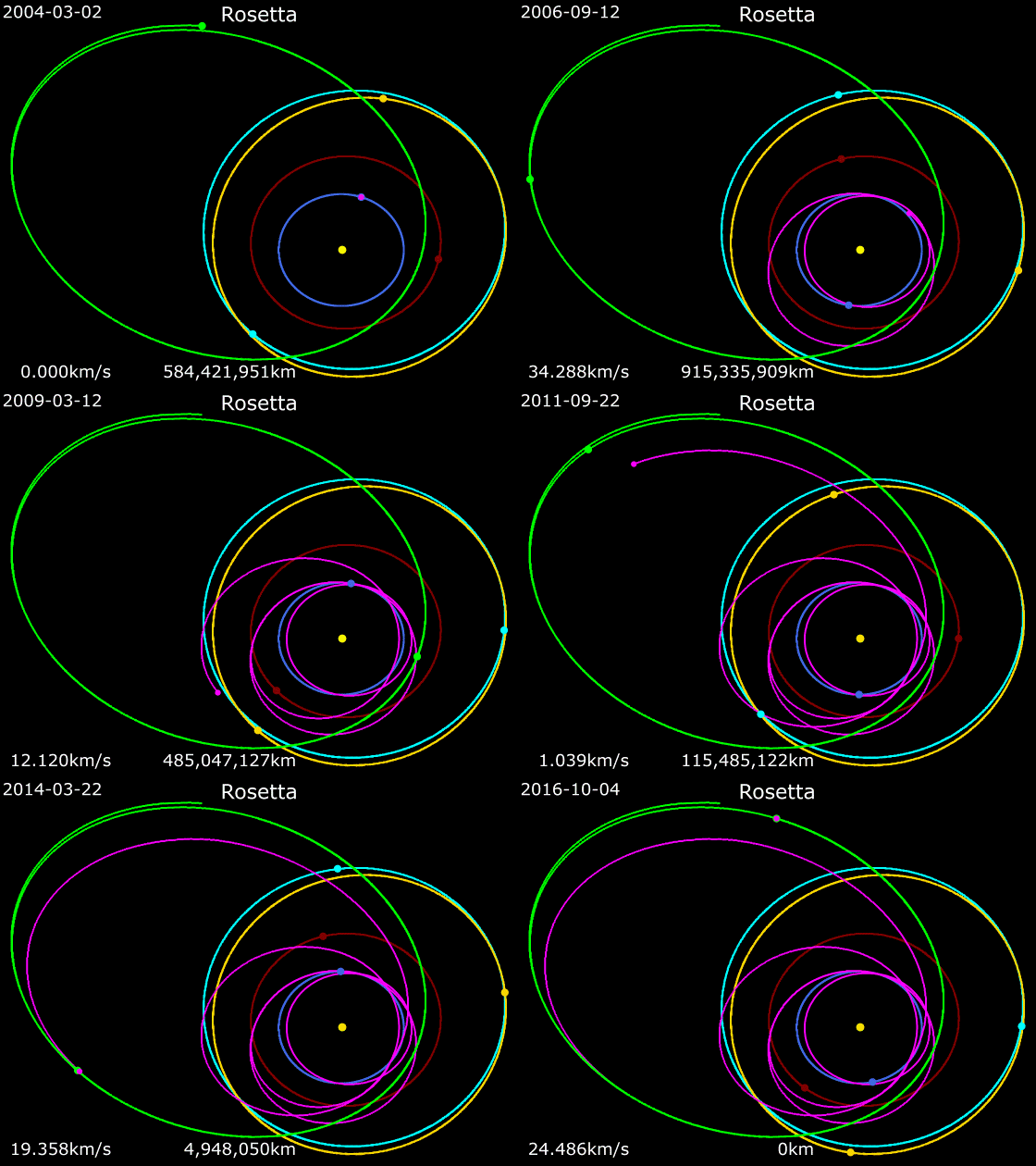
Gravity assist, often called a gravitational slingshot or swing-by, is a technique that uses the gravitational pull and orbital motion of a planet or moon to alter a spacecraft's path and velocity. Instead of carrying all the propellant needed for large speed changes, mission designers arrange close flybys so the spacecraft gains or loses energy relative to the Sun by extracting a tiny amount of momentum from the planet. This efficient use of natural motion reduces fuel, cost, or travel time for interplanetary journeys. For background on the basic force involved see gravity.
Image gallery
9 Images




How it works
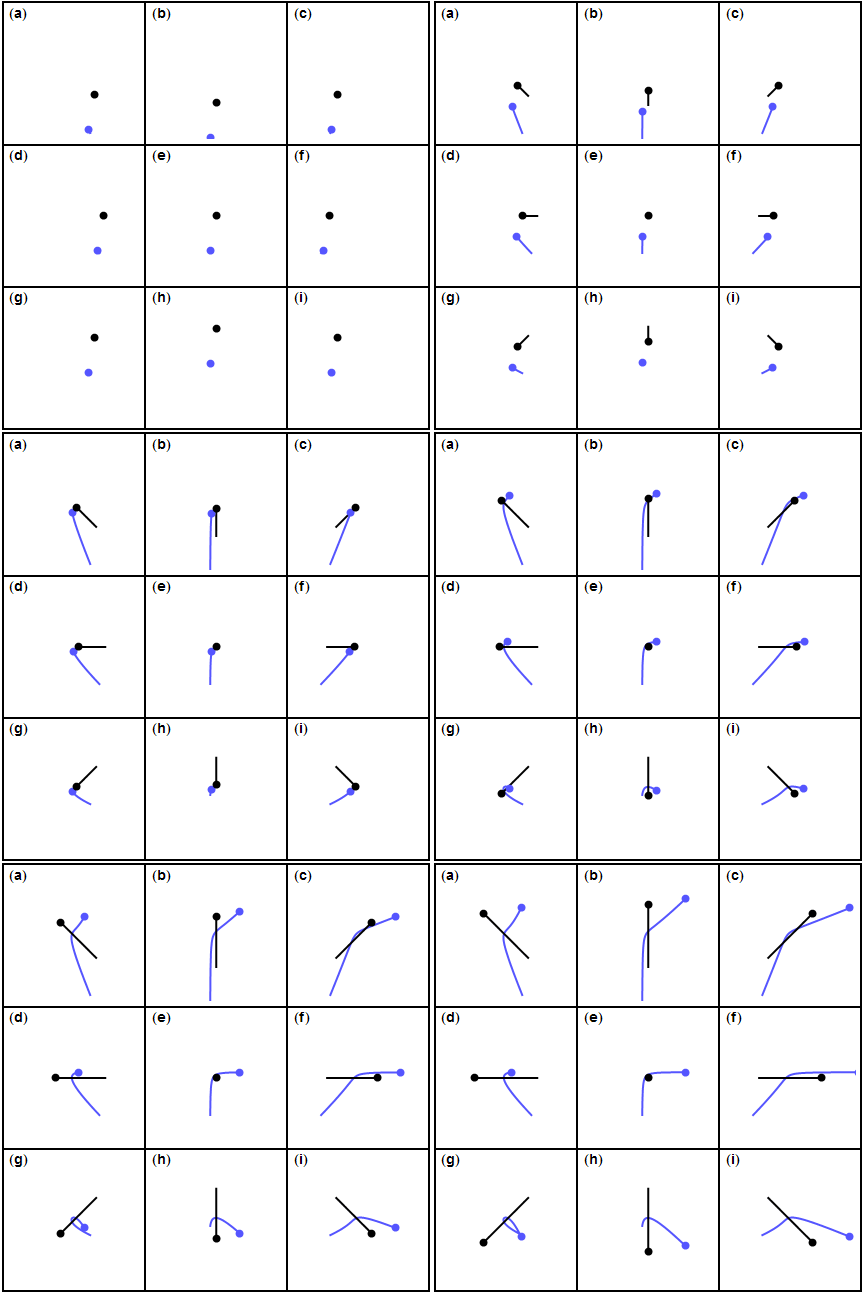
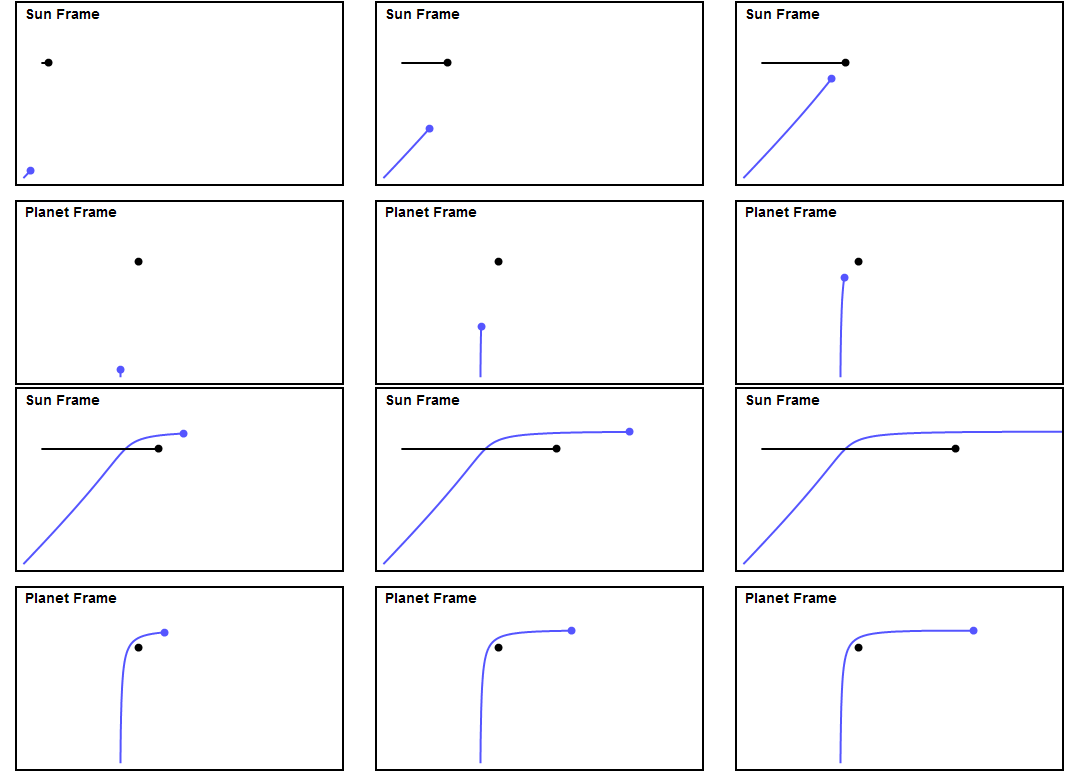
The maneuver relies on the relative motion of three bodies: the central star, the planet, and the spacecraft. In the planet's frame the spacecraft follows a hyperbolic trajectory and leaves with the same speed it arrived but with a changed direction. Measured in a heliocentric (star-centered) frame, that change in direction can translate into a sizable change in orbital energy. The exchange of momentum is extremely small for the planet and imperceptible in its motion, but significant for the much lighter spacecraft. The technique can increase or decrease speed and redirect the craft onto trajectories that would otherwise demand large propellant reserves.
History and development
Early uses of gravitational assists include probes that exploited lunar gravity and later planetary flybys to reach distant or hard-to-access targets. The Soviet Luna 3 mission used a lunar flyby to reach the Moon's far side, and later programs demonstrated how planned sequences of swing-bys could enable missions that would be impractical with conventional rockets alone. The concept was refined through missions such as the Pioneer program and subsequent exploratory spacecraft.
Applications and examples
Gravity assists are central to many famous missions. Examples include:
- Deep-space probes that used one or more planetary flybys to reach outer planets.
- Missions that used inner solar system bodies to raise or lower orbital energy en route to their targets.
- Spacecraft that combined multiple assists to accomplish complex trajectories with modest propellant.
Notable missions that applied these techniques include early lunar and planetary probes as well as later explorers such as Voyager, Cassini, Galileo and New Horizons, which relied on carefully timed encounters to reach distant destinations.
Limitations and notable facts
Gravity assists require precise navigation and timing because the useful change depends on the encounter geometry and the planet's orbital motion. They are constrained by the arrangement of planets and by the need to survive close approach conditions such as radiation belts or atmospheres. A successful swing-by can transform mission design, enabling objectives that would otherwise need much greater launch energy. For technical resources and mission details see materials aimed at spacecraft trajectory design and mission planning, and publications about planetary flybys for spacecraft (planetary flyby, spacecraft trajectories).
Questions and answers
Q: What is a gravitational slingshot?
A: A gravitational slingshot is a technique used by spacecraft to alter their path and speed.
Q: How does gravity assist work?
A: Gravity assist works by using the movement and gravity of a planet to pull on the spacecraft, altering its path and speed.
Q: What are the benefits of using gravity assist?
A: The benefits of using gravity assist include saving fuel, time, and expense for the spacecraft.
Q: Can gravity assist be used to speed up a spacecraft?
A: Yes, gravity assist can be used to speed up a spacecraft.
Q: Can gravity assist be used to slow down a spacecraft?
A: Yes, gravity assist can be used to slow down a spacecraft.
Q: Who first used gravity assist?
A: The Soviet Union used gravity assist first for the Luna 3 probe to photograph the far side of the Moon.
Q: Was the Pioneer program successful in using gravity assist?
A: Yes, the Pioneer program was successful in using gravity assist in several of its missions.
Related articles
Author
AlegsaOnline.com Gravity assist (gravitational slingshot) Leandro Alegsa
URL: https://en.alegsaonline.com/art/40406
Sources
- www2.jpl.nasa.gov : www2.jpl.nasa.gov