
Voyager 2: NASA's Deep‑Space Probe to the Ice Giants and Beyond
Voyager 2 is NASA's long‑lived robotic probe that performed the only close flybys of Uranus and Neptune, crossed into interstellar space in 2018, and carries the Voyager Golden Record as a message from Earth.
Overview
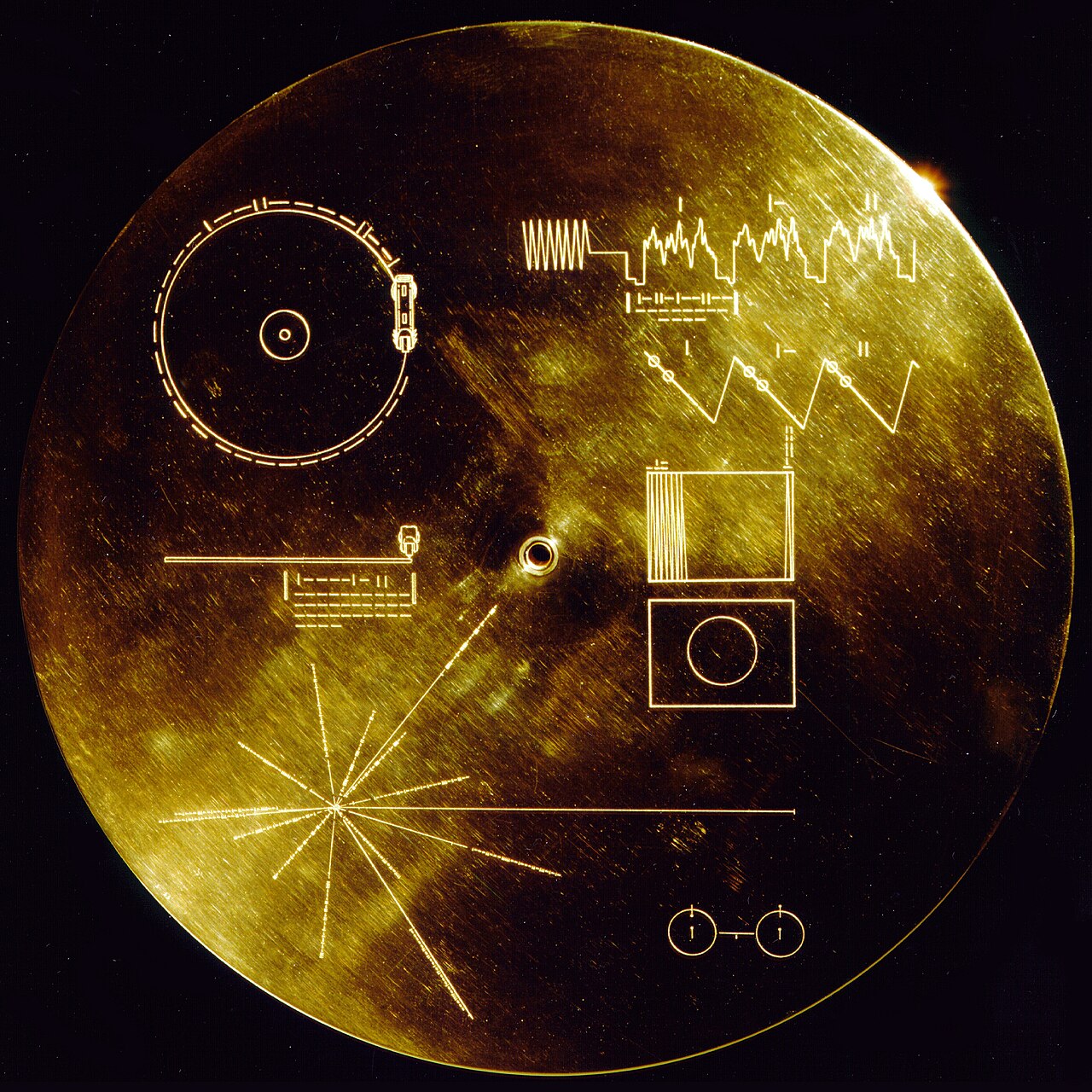
Voyager 2 is a robotic space probe launched on 20 August 1977 as part of the Voyager program and operated by NASA. Built as a twin of Voyager 1, Voyager 2 followed a trajectory that allowed a rare "Grand Tour" of the outer planets using gravity assists. It remains one of the most distant human-made objects and continues to transmit scientific data as it travels outward from the Sun and into the local interstellar medium. The spacecraft carries the Voyager Golden Record, a cultural time capsule intended to represent life and culture on Earth.
Image gallery
10 Images



Design and instruments
The basic spacecraft design includes a hexagonal equipment module, a 3.7‑metre high‑gain antenna, instrument booms and radioisotope thermoelectric generators for power. Instruments were selected to study planetary atmospheres, magnetic fields, rings, satellites and the space environment over large distances. Major payload elements include:
- Imaging systems (wide‑ and narrow‑angle cameras) for visible light observations
- Ultraviolet and infrared spectrometers to measure composition and temperature
- Magnetometer sensors mounted on a boom to study magnetic fields
- Plasma and particle detectors (plasma science, low‑energy charged particle instruments, cosmic ray subsystem)
- Radio and plasma wave experiments for remote sensing and heliospheric studies
These instruments enabled both remote sensing of distant worlds and in situ sampling of the environment during flybys and while traversing the outer heliosphere.
Launch, trajectory and planetary encounters
Launched slightly before its sister craft, Voyager 2 used gravity assists from Jupiter and Saturn to reach Uranus in 1986 and Neptune in 1989. The probe performed the only close flybys of Uranus and Neptune to date, returning the first detailed images and measurements of their atmospheres, rings and moons. Voyager 2 revealed previously unknown rings and numerous small satellites, mapped magnetic fields that in the case of Uranus are strongly tilted and offset from the rotation axis, and observed active surface processes such as the geyser‑like plumes on Neptune's moon Triton. After the Neptune encounter the spacecraft was put on a hyperbolic trajectory out of the planetary region (hyperbolic trajectory), exceeding local planetary escape speed (escape velocity), and continuing to travel outward indefinitely.
Scientific contributions and discoveries
Voyager 2's observations transformed knowledge of the outer Solar System. Highlights include detailed atmospheric profiles of the ice giants, discovery and characterization of ring systems and new moons, mapping complex and asymmetric magnetospheres, and providing data on energetic particles and plasma in regions never previously sampled. The mission provided baseline measurements that remain central to models of planetary formation, magnetospheric dynamics and comparative planetology.
Golden Record and cultural significance
Both Voyagers carry identical phonograph records containing images, natural sounds, music and spoken greetings curated to portray the diversity of life on Earth. The Golden Record project was coordinated by a team led by Carl Sagan and colleagues and was conceived as a symbolic message in case the spacecraft were ever found by an intelligent extraterrestrial recipient; it is often cited as a gesture toward possible communication with extraterrestrial life.
Heliopause crossing and interstellar mission
In 2018 mission teams announced that Voyager 2 had crossed the heliopause, the boundary where the solar wind yields to the interstellar medium (heliopause), based on changes in particle populations and magnetic field measurements. That crossing made Voyager 2 the second spacecraft, after its twin, to sample this region directly. The data collected during and after the crossing have provided valuable comparisons between the two Voyager trajectories and insights into the shape and dynamics of the heliosphere.
Current status, distance and legacy
Decades after launch, Voyager 2 continues to operate with a reduced set of instruments as its radioisotope power sources decline. Ground teams manage power budgets and heater settings to extend useful instrument operations and communications longevity. As it drifts outward it has joined the small group of probes ranked among the most distant from the Sun and is expected to change relative position among them over time as trajectories and speeds differ; historical probes such as Pioneer 10 are often used for comparison. Detailed telemetry, scientific results and historical materials are preserved in mission archives and institutional repositories at the agencies involved and on designated mission pages (mission resources).
Voyager 2 remains scientifically and culturally significant: it provided unique, close‑range study of the ice giants, expanded knowledge of the heliosphere, and carries a human message intended to last far beyond the lifetime of the spacecraft itself. For technical summaries, instrument descriptions and data releases, consult official mission documentation and science publications linked from program pages and archives (Voyager program, NASA).
Related articles
Author
AlegsaOnline.com Voyager 2: NASA's Deep‑Space Probe to the Ice Giants and Beyond Leandro Alegsa
URL: https://en.alegsaonline.com/art/105967
Sources
- starbrite.jpl.nasa.gov : "VOYAGER:Mission Information"
- webarchive.loc.gov : "Voyager 2"
- nssdc.gsfc.nasa.gov : nssdc.gsfc.nasa.gov/nmc/masterCatalog.do?sc=1977-076A
- n2yo.com : "VOYAGER 2"