
Jupiter — the largest planet in the Solar System
Overview of Jupiter: physical characteristics, atmosphere, moons (including the Galilean satellites), magnetosphere, rings, exploration history, and its significance.
Overview
Jupiter is the largest planet in the Solar System and ranks as the fifth planet outward from the Sun. It belongs to the class of planets known as gas giants, a category that describes bodies primarily composed of gaseous and volatile materials rather than solid rock. With its great size and brightness, Jupiter has been observed by humans for millennia; it is visible to the unaided eye and among the brightest objects in the night sky.
Image gallery
10 Images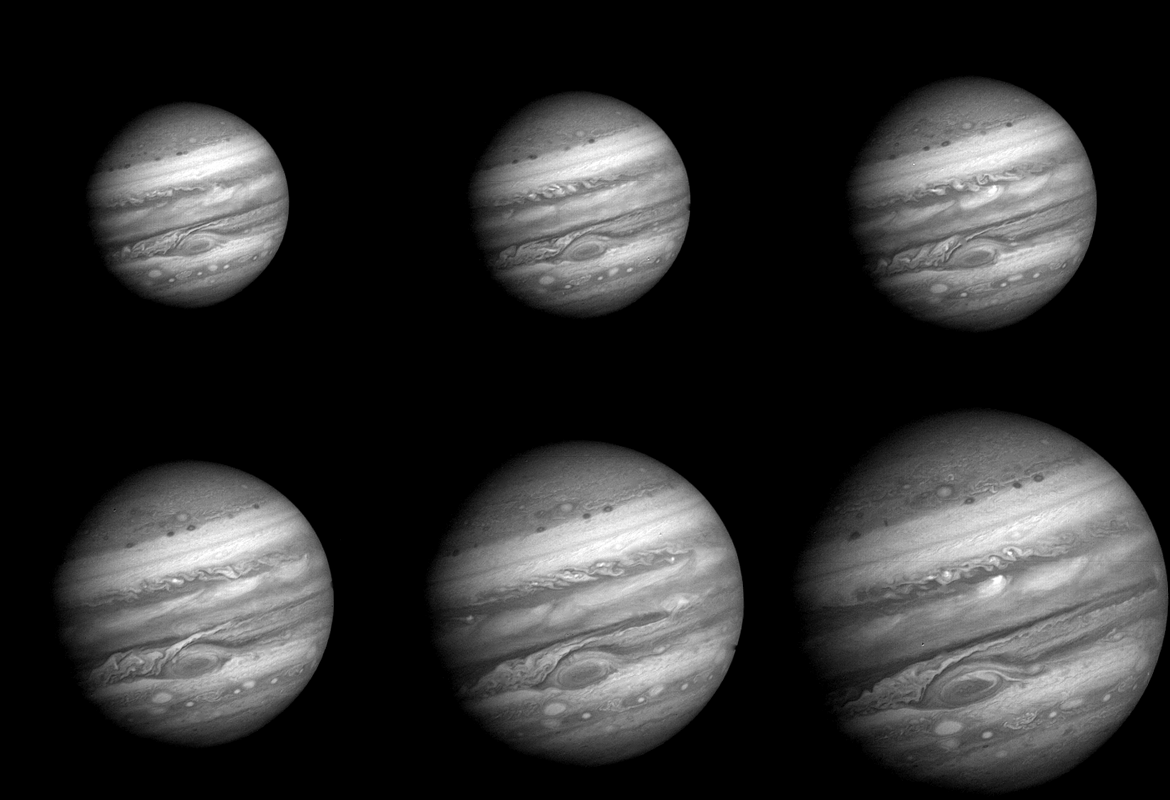




Physical characteristics
Jupiter's mass is enormous compared with the terrestrial planets: approximately 1.8986×1027 kg, or about 318 times the mass of Earth. Its composition is dominated by hydrogen and helium, and it lacks a well-defined solid surface. Because of rapid rotation, Jupiter is noticeably oblate — flattened at the poles and bulging at the equator — which affects wind patterns and atmospheric circulation.
Atmosphere and weather
Jupiter's visible appearance is dominated by bands of clouds and the long-lived Great Red Spot, a high-pressure storm larger than Earth. The planet's atmosphere displays alternating belts and zones driven by strong east–west jet streams, with wind speeds that can reach hundreds of meters per second. Deeper layers likely include metallic hydrogen, a phase that contributes to the planet's magnetic properties.
Rings and magnetosphere
Although less prominent than Saturn's, Jupiter has a faint system of rings composed mainly of dust particles. Surrounding the planet is an immense magnetosphere — the region dominated by Jupiter's magnetic field — far larger than the planet itself and capable of trapping energetic particles. This magnetosphere interacts strongly with the solar wind and the surfaces of nearby moons, shaping auroral activity.
Moons and satellites
Jupiter has a large retinue of natural satellites; modern surveys have identified dozens of bodies orbiting it. Traditional counts list many moons, while classical records mention that ancient observers knew it as a bright wandering star and the Romans named it after their chief deity (Latin: Iuppiter). Many of Jupiter's smaller satellites are under a few kilometers across; some surveys describe populations of bodies less than five kilometres in size.
- Galilean moons: The four largest — discovered by Galileo Galilei — are Io, Europa, Ganymede, and Callisto. These are visible with small telescopes and are central to studies of planetary formation and potential habitability.
- Ganymede: The largest moon in the Solar System, larger than the planet Mercury, and distinguished by its magnetic field and varied surface geology.
History, exploration, and scientific importance
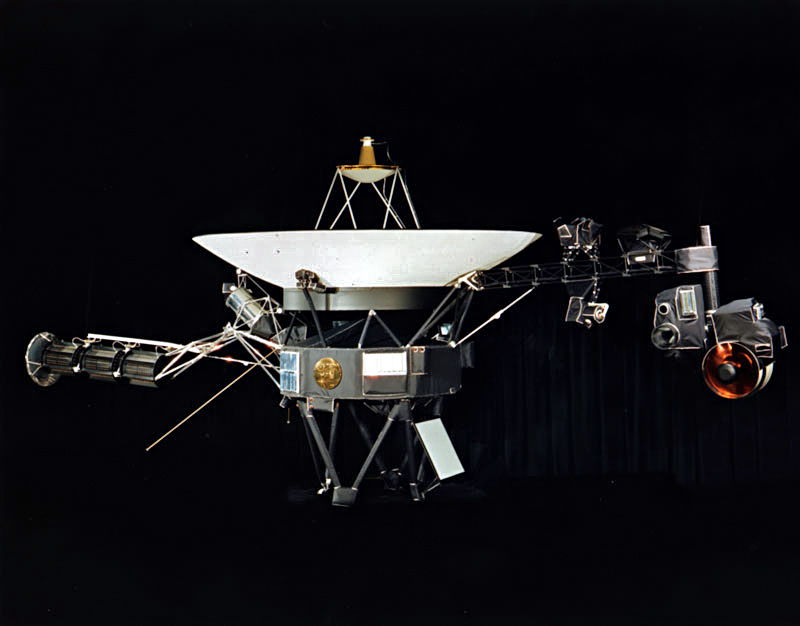
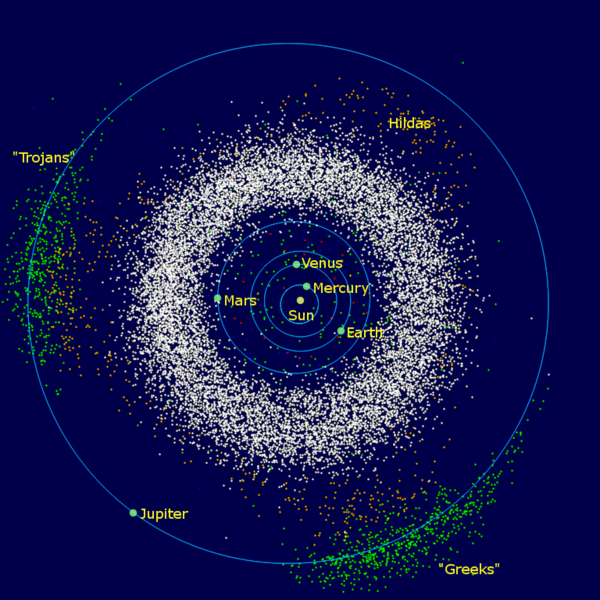
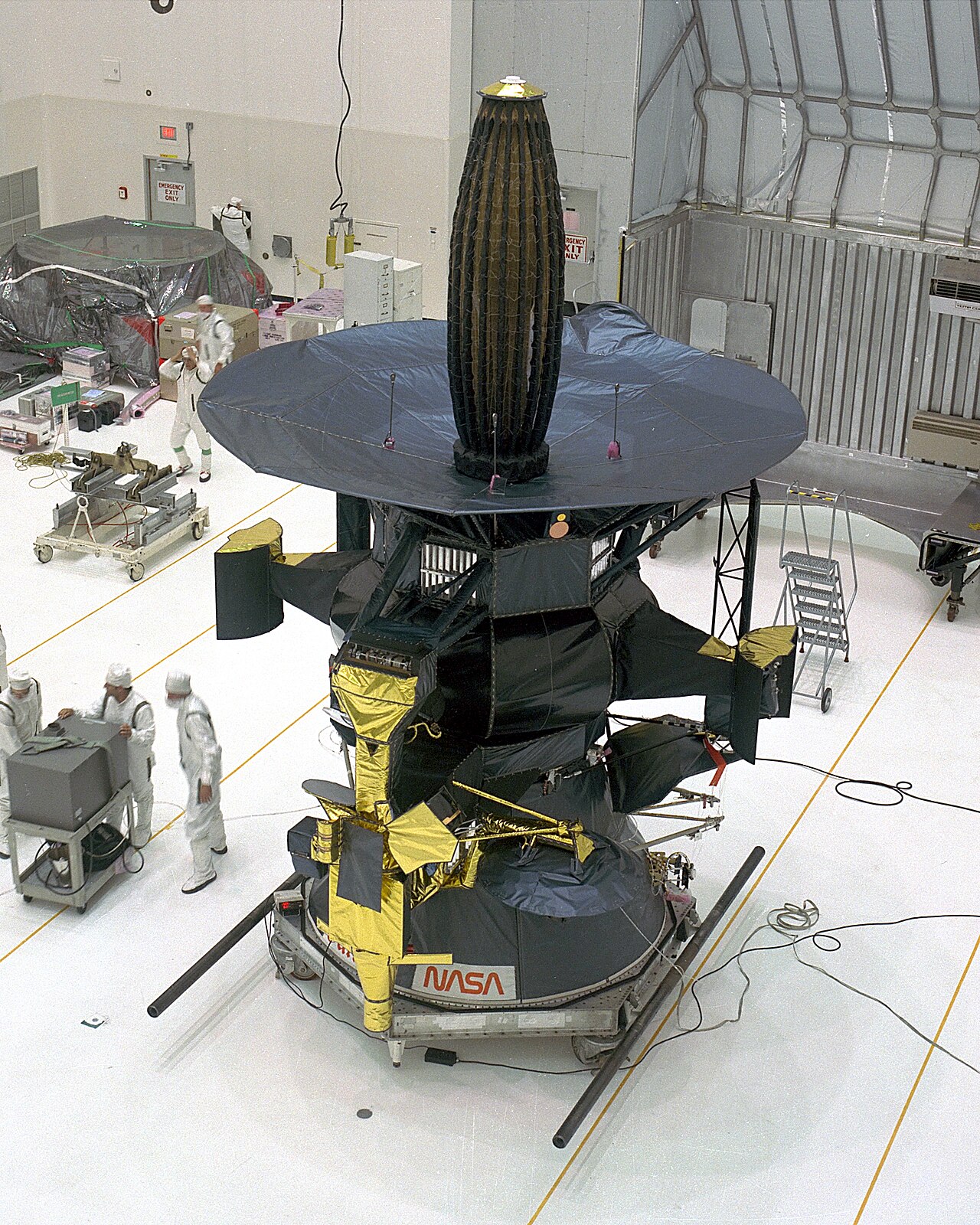
Systematic study of Jupiter advanced with telescope observations in the 17th century and with flyby and orbiting spacecraft beginning in the mid-20th century. Robotic missions have included flybys by Pioneer and Voyager, the Galileo orbiter, and more recent probes that refined knowledge of the planet's interior, atmosphere, ring system, and moons. Jupiter acts as a major gravitational influence in the Solar System: its mass contributes to the orbital evolution of smaller bodies and it has played a role in shaping the architecture of the planetary system.
Notable distinctions and ongoing research
Researchers focus on Jupiter to learn about giant-planet formation, the behavior of hydrogen at extreme pressures, and the potential for habitable environments on icy moons such as Europa. Observations continue from ground-based telescopes and space missions, while future exploration aims to probe the interior, study atmospheric dynamics in more detail, and return data on the habitability of its satellites.
For introductions and mission details, see resources linked here: overview, context, orbit, classification, composition, mass data, numeric mass, Earth comparison, visibility, cultural name, Latin name, small moons, Io info, Europa info, Galilean group, Galileo, size comparison.
Questions and answers
Q: What is the largest planet in the Solar System?
A: Jupiter is the largest planet in the Solar System.
Q: How many times more massive is Jupiter than Earth?
A: Jupiter has a mass that is about 318 times greater than Earth's mass.
Q: Who named Jupiter after their King of Gods?
A: The ancient Romans named Jupiter after their King of Gods, Iuppiter.
Q: What are the four largest moons of Jupiter called?
A: The four largest moons of Jupiter are Io, Europa, Ganymede, and Callisto and they are known as the Galilean moons.
Q: What is special about Ganymede?
A: Ganymede is the largest moon in the Solar System and its diameter is larger than Mercury's.
Q: Can you see Jupiter without using a telescope?
A: Yes, you can see Jupiter even without using a telescope as it is one of the brightest objects in night sky.
Q: How many moons does Jupiter have?
A: Jupiter has 79 moons, with around 50 being very small—less than five kilometres wide.
Related articles
Author
AlegsaOnline.com Jupiter — the largest planet in the Solar System Leandro Alegsa
URL: https://en.alegsaonline.com/art/51702
Sources
- cseligman.com : "Rotation Period and Day Length"
- solarsystem.nasa.gov : "Solar System Exploration: Jupiter: Facts & Figures"
- ssd.jpl.nasa.gov : "Astrodynamic Constants"
- hnsky.org : "Report of the IAU/IAG Working Group on Cartographic Coordinates and Rotational Elements of the Planets and Satellites: 2000"
- ui.adsabs.harvard.edu : 2002CeMDA..82...83S
- ui.adsabs.harvard.edu : 2007CeMDA..98..155S
- doi.org : 10.1007/s10569-007-9072-y
- books.google.com : Planetary Sciences
- www2.jpl.nasa.gov : "Probe Nephelometer"
- tp.umu.se : "On The Atmospheres Of Different Planets" · web.archive.org
- nasa.gov : "What Is Jupiter?"
- solarviews.com : "The Solar System" · web.archive.org