
National Theatre (Prague) — Národní divadlo
Historic Czech theatre in Prague, founded in the 19th-century national revival. A landmark performing house hosting opera, ballet and drama; rebuilt after an 1881 fire and restored for modern use.
Overview
The National Theatre in Prague (Národní divadlo) is one of the Czech Republic's principal cultural institutions. Born from the 19th-century national revival, it functions both as an active performing company and as a potent symbol of Czech language, arts and civic identity. Situated on the banks of the Vltava, the theatre and its ensembles play a central role in Prague's cultural life.
Image gallery
6 Images


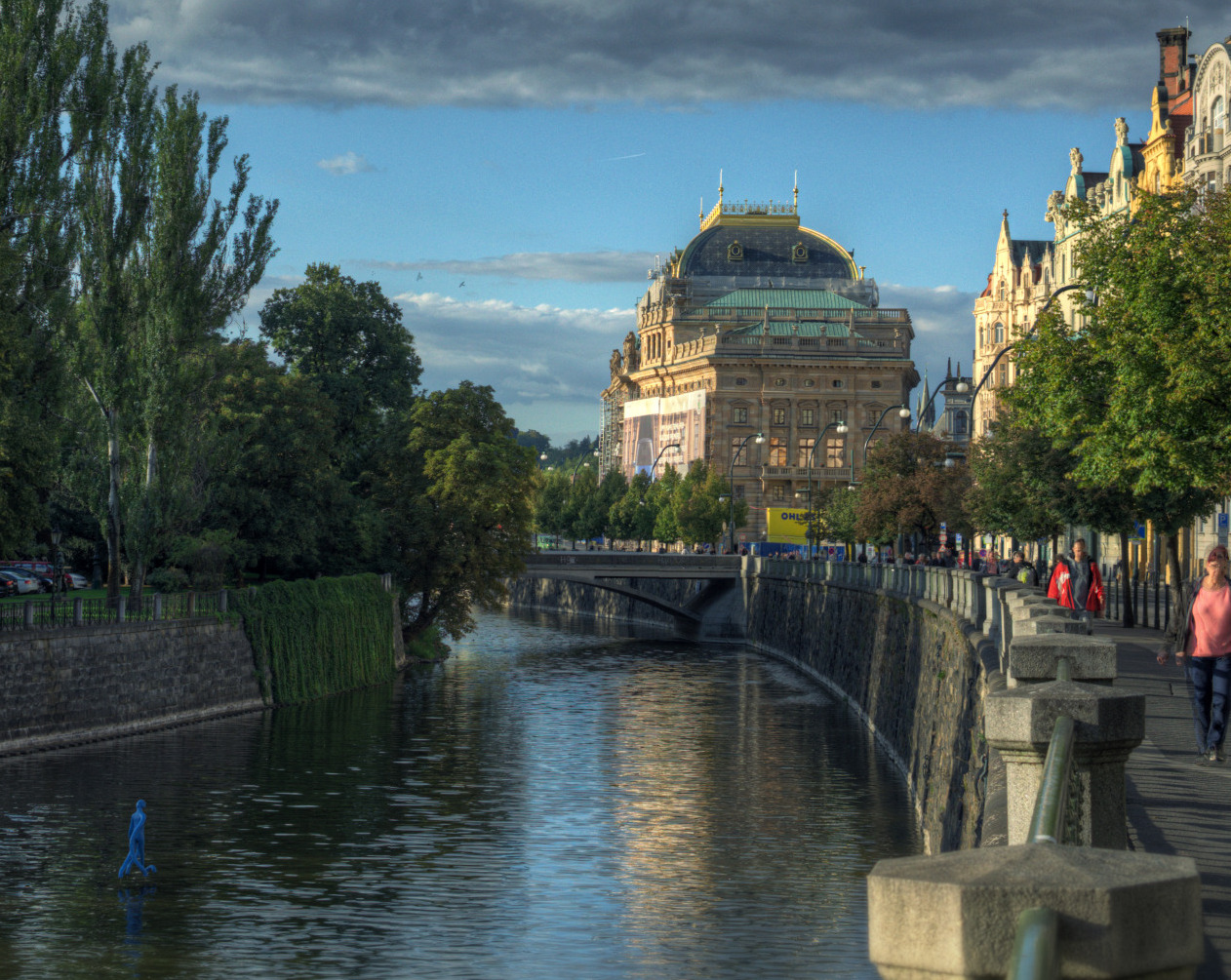
Architecture and layout
The building is a richly ornamented example of late 19th-century public architecture designed to accommodate large-scale operas, ballets and dramatic works. Facilities include a principal auditorium with a proscenium stage, secondary stages and rehearsal spaces, as well as formal foyers and public galleries that reflect its ceremonial purpose. The institution also programs performances at additional venues across the city to broaden access.
History and origins
The theatre emerged from political and cultural change in Central Europe. As 19th-century movements reshaped the region (reform and nationalist movements), Prague remained part of the Austrian Empire (Austrian rule), where German was the official language (German). The historic lands of Bohemia (Bohemia) and Moravia (Moravia)—now within the modern Czech Republic—saw a growing desire to promote performances in Czech (Czech-language theatre).
Patrons laid the foundation stone on May 16, 1868 (1868), and after years of fundraising the building opened for the first time on June 11, 1881 (1881). While finishing touches were still in progress, a serious fire on August 12, 1881 destroyed much of the new structure. Rapid reconstruction, supported by public donations, allowed the theatre to reopen on November 18, 1883 with Bedřich Smetana's ceremonial opera Libuše, a work closely associated with the theatre's foundation (1883 reopening).
20th-century renovation and continued role
The National Theatre has been maintained and restored repeatedly to conserve its historic fabric and to meet evolving technical needs. A major reconstruction began in 1977, closing the building for several years; it reopened for the centenary celebration on November 18, 1983. Today the institution operates as a multi-ensemble company presenting opera, ballet and drama to domestic and international audiences.
Ensembles, repertoire and activity
Resident companies include the opera, ballet and dramatic ensembles. These companies perform not only in the Národní divadlo building but also at other Prague stages such as the historic Estates Theatre and at smaller venues tied to the organization. Their seasons combine Czech classics—especially nineteenth- and twentieth-century music and drama—with international repertoire and contemporary productions, supporting premieres, revivals and touring projects.
- Symbolic foundation: The National Theatre was conceived as a visible expression of Czech cultural independence and pride.
- Linked works: Smetana's Libuše remains closely associated with the theatre's ceremonial openings.
- Networked presence: Performances take place across multiple historic and modern stages in Prague.
- Survival and renewal: Despite the 1881 fire and later renovations, the institution has sustained continuous Czech artistic production for well over a century.
For visitors, scholars and performing-arts audiences the National Theatre offers insight into Czech cultural history as well as an active program of opera, ballet and drama. Season schedules, archives and educational initiatives are published by the institution and by national cultural agencies, and the theatre continues to serve as a focal point for both local traditions and international exchange.
Questions and answers
Q: When did the National Theatre in Prague open?
A: The National Theatre in Prague opened on June 11 1881.
Q: What event was it opened to honour?
A: The National Theatre was opened to honour the visit of Crown Prince Rudolf of Austria.
Q: What caused the theatre to be closed down and re-built?
A: A fire broke out on August 12 1881 which destroyed most of the building, so it had to be closed down and re-built.
Q: Who composed an opera for the occasion when it reopened?
A: Smetana composed an opera called Libuše for the occasion when it reopened.
Q: What is the story behind this opera based on?
A: The story behind this opera is based on a mythological story about how Prague began.
Q: How many ensembles perform at the National Theatre today?
A: Today, there are three ensembles that perform at the National Theatre - opera, ballet and drama.
Q: What other theatres do these ensembles also perform in?
A: These ensembles also perform in the Estates Theatre and the Theatre Kolowrat.
Related articles
Author
AlegsaOnline.com National Theatre (Prague) — Národní divadlo Leandro Alegsa
URL: https://en.alegsaonline.com/art/68712