
Noh (Nō): Japan's Classical Musical Drama
Noh (Nō) is a classical Japanese musical drama combining slow, stylized dance, chant, and instrumental music. It originated in the medieval period and remains a living performance tradition.
Noh (Japanese Nō) is a centuries-old form of Japanese musical drama noted for its spare stagecraft, stylized movement, and poetic language. Performances blend slow, formalized dance with a sung narrative and a small ensemble of instruments. Noh plays are typically short, symbolic, and focused on mood and spiritual or historical themes rather than realistic plot development.
Image gallery
10 Images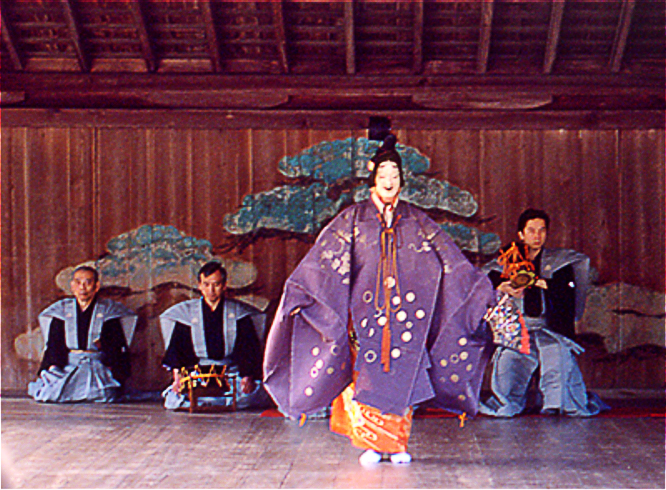




Core elements
The art of Noh rests on three interlocking components that shape every performance:
- Mai — the measured, circular dances and gestures that express a character's emotion and status.
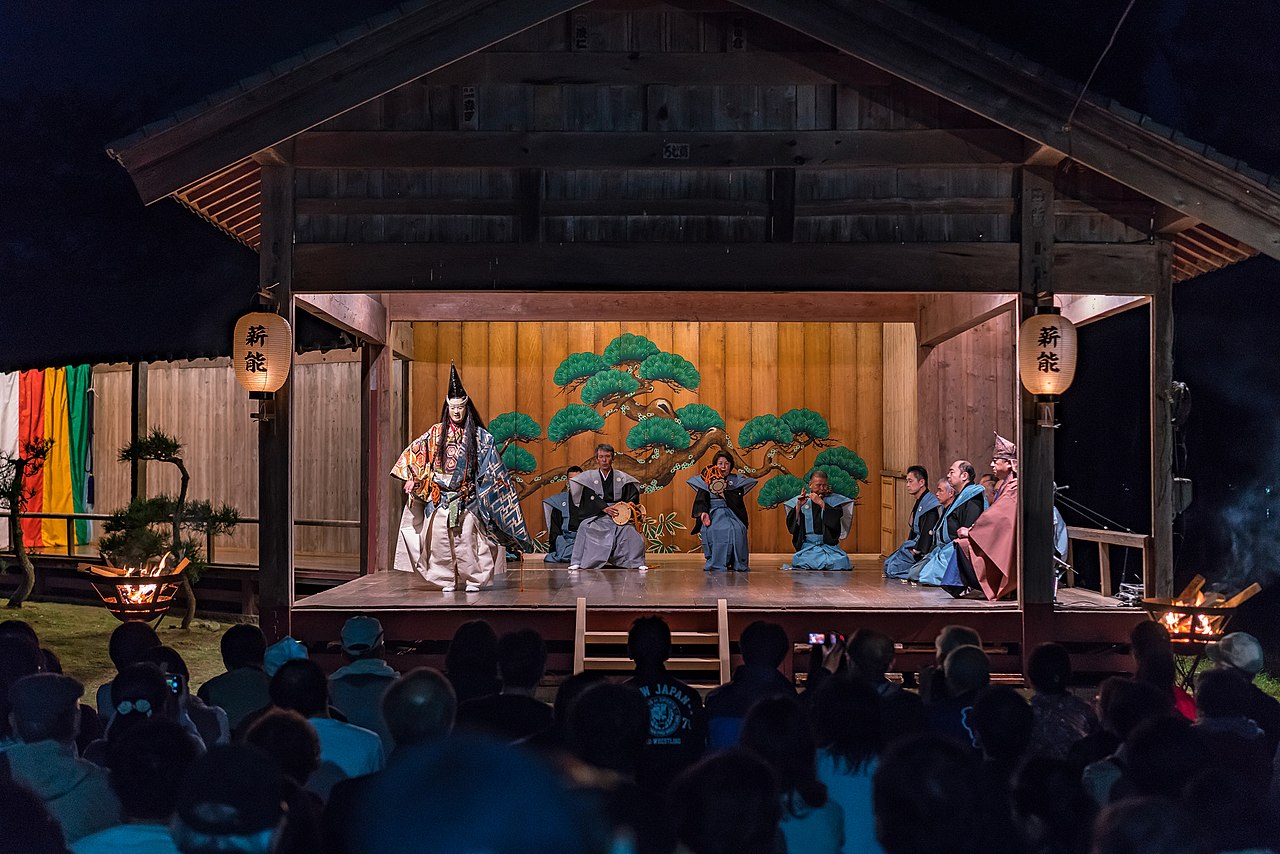
- Hayashi — the instrumental ensemble, usually flute and three drums, which provides rhythm, color, and cues for movement.
- Utai — vocal delivery, a mixture of sung poetry and chant that carries the narrative and lyric content.
Performers often wear elaborate, symbolic costumes and the famous carved masks that convey age, gender, and supernatural identity. Masks are handled and illuminated carefully to reveal subtle changes in expression through tilt and motion; further reading on masks appears via masks.
History and development
Noh crystallized in the 14th century and matured during the Muromachi period, when theatrical forms were shaped into a highly codified art. Two pivotal figures, Kan'ami and his son Zeami, refined performance techniques, aesthetics, and treatises that guided generations of practitioners. For background on that era see Muromachi period.
The Noh stage is simple and symbolic: a polished square of hinoki wood, a painted pine backdrop, and the hashigakari — a narrow bridge used by actors to enter. Accompanying chorus members and a small instrumental group remain visible and integral to the action. Unlike more pictorial theatre styles, Noh emphasizes compression and suggestion: a single gesture or line of poetry can signify an entire backstory.
Repertoires include tales of gods, warriors, vengeful spirits, and lonely women, often drawn from classical literature and folklore. Noh survives today through family schools and troupes that maintain lineage-based training, and it continues to influence modern theatre, dance, and scholarship. Contemporary productions range from traditional stagings to collaborations that reinterpret Noh techniques for new audiences, preserving its status as a living classical form.
Questions and answers
Q: What is Noh?
A: Noh, also known as No, is a prominent type of traditional Japanese musical drama that started in the 14th century.
Q: What are the elements that make up Noh?
A: Noh consists of three elements: the dances called mai, music known as hayashi, and words predominantly in the form of songs, known as utai.
Q: How do performers express themselves in Noh?
A: Noh performers express themselves by wearing masks and moving slowly while dancing.
Q: Who played a significant role in developing Noh during the Muromachi period?
A: Zeami and his father Kan'ami are credited with bringing Noh to its current form during the Muromachi period.
Q: Is Noh still performed today?
A: Yes, Noh is still performed today.
Q: What is the purpose of wearing masks in Noh?
A: Wearing masks is an essential part of Noh, and the purpose is to allow the audience to understand the character's emotion and expression better.
Q: How has Noh evolved over the years?
A: Throughout the centuries, Noh has evolved to include new stories and themes, along with modern interpretations and adaptations while still retaining its traditional elements.
Related articles
Author
AlegsaOnline.com Noh (Nō): Japan's Classical Musical Drama Leandro Alegsa
URL: https://en.alegsaonline.com/art/70560
Sources
- japan-guide.com : "Noh Theater"