
Nanjing Massacre: 1937–1938 atrocity during the Second Sino-Japanese War
The Nanjing Massacre was a mass atrocity committed by the Imperial Japanese Army in Nanjing, China, in late 1937 and early 1938. It remains a subject of historical study and diplomatic dispute.
Overview
The Nanjing Massacre refers to a concentrated period of mass killings, sexual violence and other war crimes that took place in and around Nanjing, then the capital of China, after the city fell to the Imperial Japanese forces during the Second Sino-Japanese War. The episode began in mid-December 1937, when Japanese troops entered the city on or around 13 December 1937, and continued into the following weeks and months. It occurred within the broader context of World War II-era conflict in East Asia and is often discussed under terms such as "massacre," "atrocity," and in some scholarship "genocide".
Image gallery
10 Images




Course of events
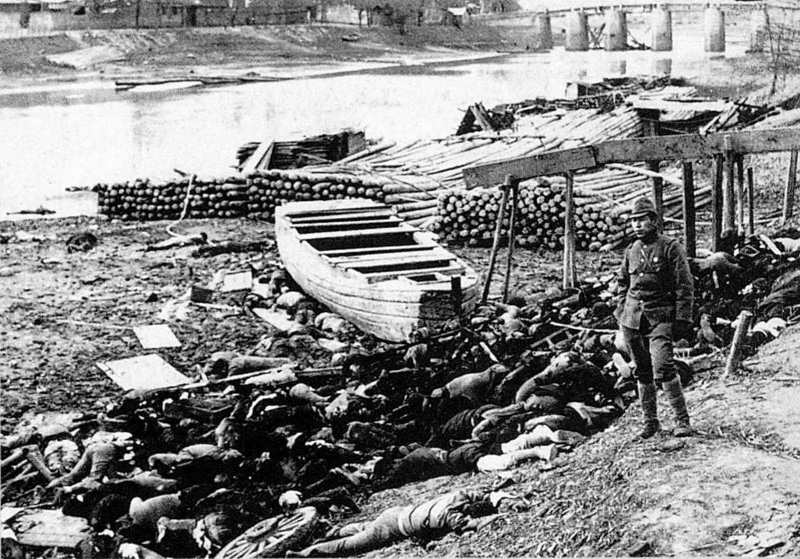
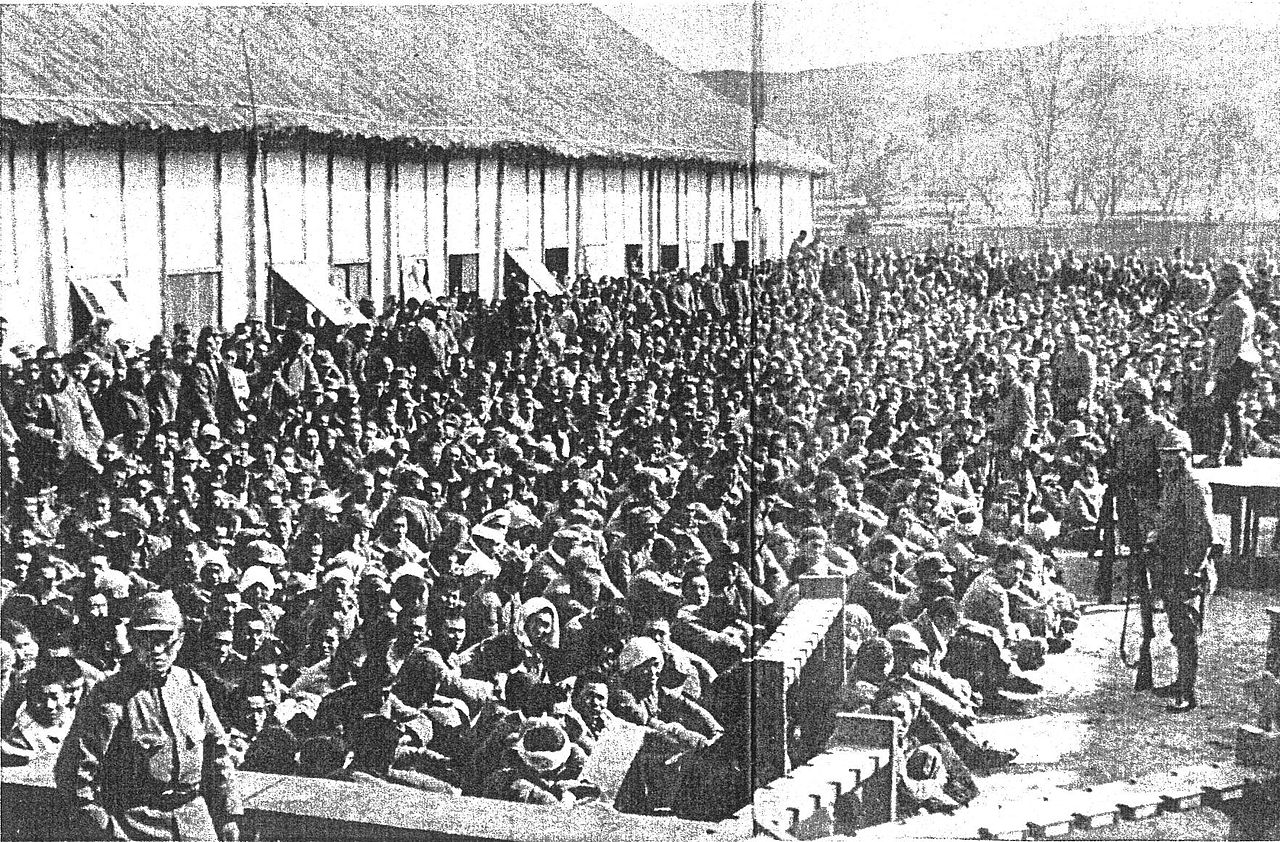
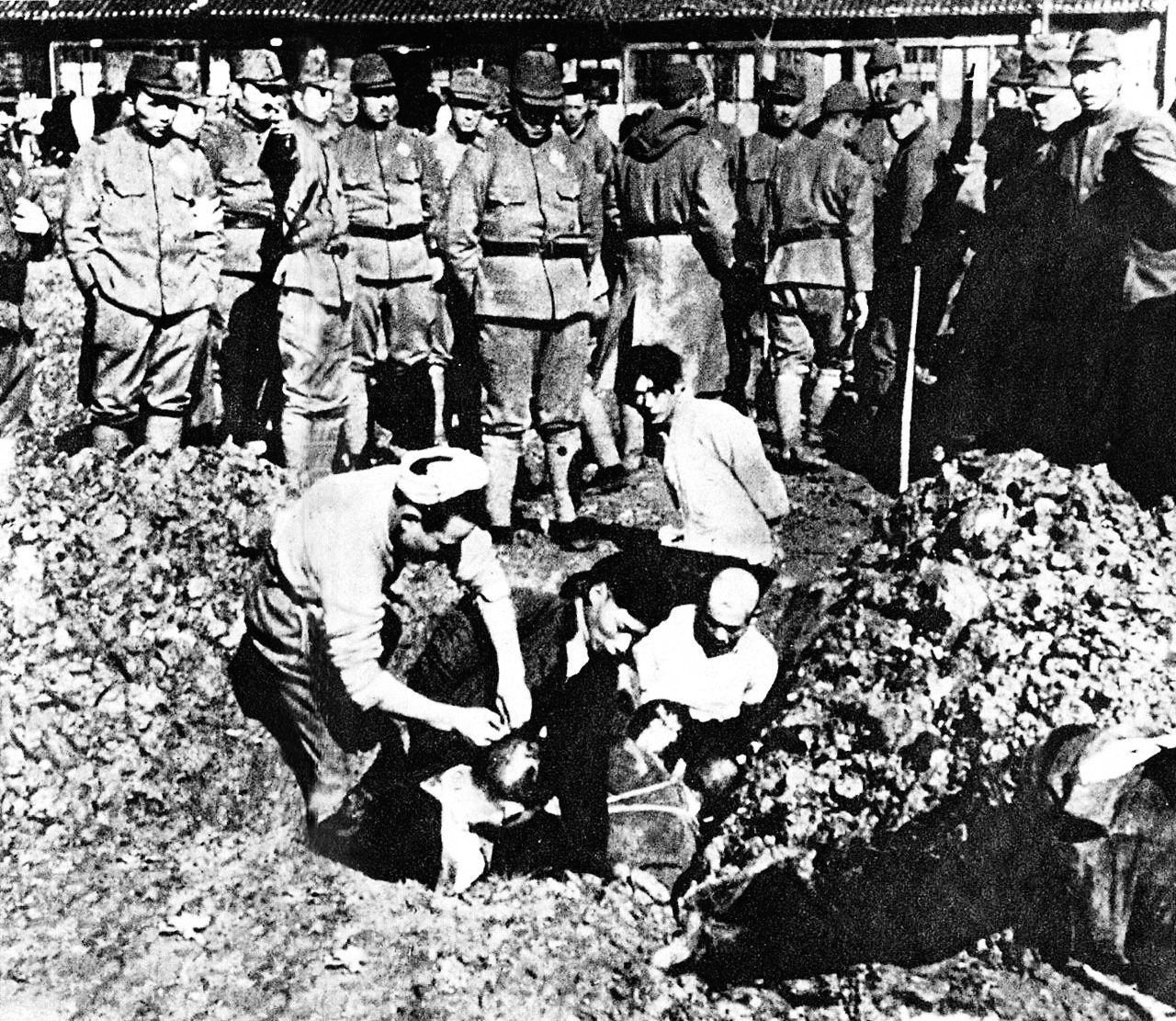
After the capture of Nanjing, reports by diplomats, missionaries, journalists and survivors described widespread summary executions, sexual assaults and looting. Many contemporaneous observers recorded scenes of killings of surrendered soldiers and civilians. Military units of the Japanese Army operated in the city, and later investigations cited orders, or the lack of effective restraint, that contributed to systematic abuses. Important chronological markers include the assault in December 1937 and continuing abuses into January 1938 and beyond.
Victims, methods and evidence
Victims included armed combatants who had surrendered, unarmed civilians, women and children, foreign residents and internees. Methods of violence documented in primary sources and postwar trials ranged from mass shootings and bayonetings to sexual violence and forced labor. Observers and later researchers have relied on survivor testimony, contemporary foreign accounts, military records, photographs and trial documents to reconstruct events. Estimates of the number of dead vary; many historians cite totals in the hundreds of thousands, and the commonly referenced figure of about 300,000 appears in major memorials and some scholarly works, while other figures and interpretations are contested.
Aftermath, justice and historical research
After the war, several incidents surrounding Nanjing were considered in tribunals and historical inquiries. Some Japanese military personnel were prosecuted by Allied and Chinese courts for war crimes; these proceedings, including the war crimes trials, contributed documentation used by later historians. Scholarly study has expanded over decades, drawing on archives in China, Japan and other countries and involving international historians, journalists and legal experts. Primary documentary sources include military communications and orders, eyewitness diaries, and diplomatic dispatches.
Memory, diplomacy and controversy
The Nanjing Massacre remains a deeply sensitive subject in East Asian memory and diplomacy. Commemoration in China includes memorial museums and annual remembrance; debate in Japan and elsewhere has included disputes over the scale of the killings, the language used to describe them, and how they are taught in schoolbooks. Issues such as denial, revisionism and the honoring of wartime figures at sites like the Yasukuni Shrine have periodically strained relations between China and Japan, and they continue to shape public and official dialogue.
Key topics and resources
- Definition and terminology — how scholars classify mass atrocity terms.
- Contemporary reports — accounts by foreign residents and journalists present at the time.
- Timeline — major dates in December 1937 and January 1938.
- 1937 and 1938 — years in which the events unfolded.
- Post-incident inquiries — legal and historical investigations.
- Sexual violence — documented patterns and survivor testimony.
- Soldiers and surrender — treatment of combatants who had ceased fighting.
- Civilians — non-combatant victims and displacement.
- Torture, mutilation and other abuses documented in multiple sources.
- Sexual assault — legal and human dimensions.
- Forced labor — reports of coerced service and exploitation.
- Orders and command responsibility — role of military leadership in allowing or encouraging crimes.
- Genocide debates — scholarly discussion of classification.
- Tokyo — political context in Japan.
- Sino-Japanese relations — long-term diplomatic consequences.
For a careful understanding, readers should consult multiple sources, including primary documents and peer-reviewed historical studies, and be attentive to the differences between eyewitness testimony, official records and later reinterpretations.
Questions and answers
Q: What is the Nanjing Massacre?
A: The Nanjing Massacre was a massacre (an unjust killing of many people) that happened in Nanjing, China, in December of 1937 and January of 1938. It was part of the Second Sino-Japanese War, which was the part of World War II between China and Japan. At the time, Japan was trying to take over China and Nanjing was the Chinese capital. The Japanese Army reached Nanjing on 13 December 1937 and began killing thousands upon thousands of men and boys and raping thousands upon thousands of women and girls.
Q: What are some examples of war crimes that occurred during this massacre?
A: Some examples of war crimes that occurred during this massacre include soldiers without weapons being killed; people who were not soldiers being killed; many being tortured (hurt very badly), mutilated (hurt ways that can never be fixed), or killed in very cruel ways; many being raped (forced to have sex) or forced to work and treated like things. We have orders from the soldier's leaders telling them to do these kinds of things and not to follow rules against them.
Q: Is it true that fighting in other places during other wars were just as bad as what happened at the Nanjing Massacre?
A: No, it is not true that fighting in other places during other wars were just as bad as what happened at the Nanjing Massacre. There is a lot evidence from Chinese sources, outsiders who were there, outsiders who have studied it, and even from Japanese sources showing that things were much worse than elsewhere at this time.
Q: How has memory surrounding this event affected relations between China and Japan today?
A: The memory surrounding this event—and anger at attempts to deny its occurrence or honor those responsible for it through visits to Tokyo’s Yasukuni Shrine—still causes difficulty between the Chinese government with its Japanese counterpart as well as between Chinese citizens with their Japanese counterparts today.
Q: Was there an attempt by anyone involved with this event to wipe out an entire group of people?
A: Yes, some believe there may have been an attempt by those involved with this event to wipe out an entire group people - known as genocide - due how severe it was.
Q: Who led the attack on Nanjing?
A: The attack on Nanjing was led by members of Japan's army who had reached it on 13th December 1937 before beginning their campaign against civilians living there including mass killings amongst men & boys alongside rapes amongst women & girls.
Related articles
Author
AlegsaOnline.com Nanjing Massacre: 1937–1938 atrocity during the Second Sino-Japanese War Leandro Alegsa
URL: https://en.alegsaonline.com/art/68249
Sources
- wellesley.edu : The Nanking Atrocities: Fact and Fable.
- nankingatrocities.net : "Nanking Atrocities – In the Early 1990s: I. The Death Toll – Early Estimates" · web.archive.org
- jds.cass.cn : "论南京大屠杀遇难人数 认定的历史演变"
- hprc.org.cn : "近十年" 侵华日军南京大屠杀"研究述评"
- modernchina.org.cn : "新发现南京大屠杀埋尸资料的重要价值"
- ibiblio.org : Judgment (English Translation): Chapter VIII, Conventional War Crimes (Atrocities).
- salon.com : "New film has Japan vets confessing to Nanjing rape"
- news.bbc.co.uk : "Scarred by history: The Rape of Nanjing"
- bootheprize.stanford.edu : "The Memorial Hall for the Victims of the Nanjing Massacre: Rhetoric in the Face of Tragedy"
- csmonitor.com : "Why the Past Still Separates China and Japan"
- academia.edu : "The Chinese Islamic "Goodwill Mission to the Middle East" During the Anti-Japanese War"
- taipeitimes.com : "Japanese veterans recall Nanjing in documentary"