
Muntjac: small Asian deer with ancient origins and distinctive traits
Muntjacs are small forest deer of the genus Muntiacus, native to South and Southeast Asia. They are known for barking calls, short antlers, canine tusks and an ancient fossil lineage; conservation status varies by species.
Overview
The term muntjac refers to any member of the genus Muntiacus, a group of small deer native to parts of Southeast Asia and neighboring regions. Fossils attributed to muntjac-like deer appear in Miocene deposits in western Europe, including finds reported from France and Germany, indicating the lineage is one of the older branches of the deer family.
Image gallery
9 Images




Physical characteristics
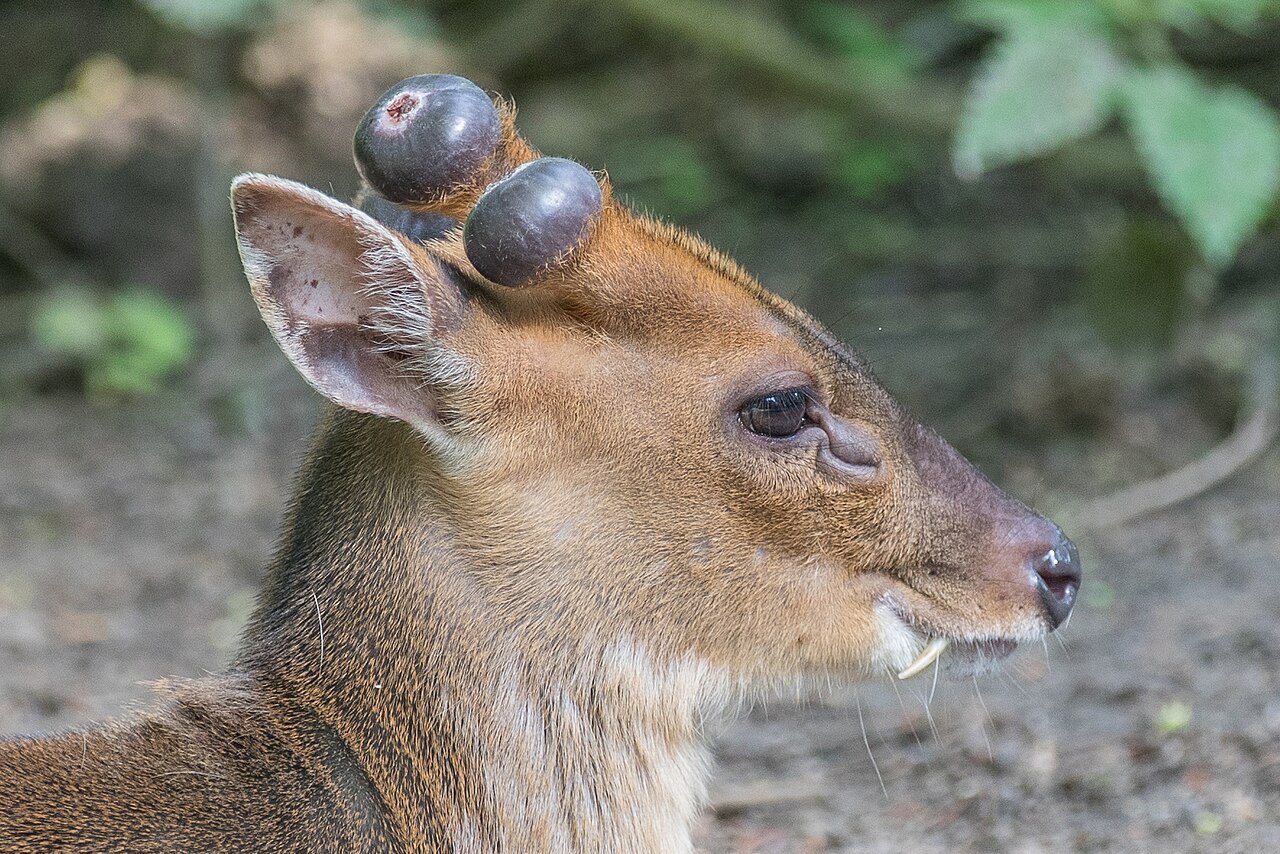
Muntjacs are compact, often short-legged deer with a rounded body and short neck. Males typically have short, simple antlers and prominent upper canine teeth (tusks), a primitive feature retained from ancestral cervids. Coat colour varies by species and season but generally ranges from reddish to brown, often with lighter underparts. Adult size and weight differ among species, but most are much smaller than many temperate deer.
Distribution and habitat
Wild muntjacs occur from parts of India and Sri Lanka to southern China, including islands such as Taiwan and populations recorded in Japan, with additional species on several Indonesian islands. They occupy a range of wooded habitats, from tropical lowland forest to temperate woodlands, commonly favouring dense understory for cover.
Behavior and ecology
Muntjacs are primarily browsers that feed on leaves, shoots, fruit and other plant matter; some species also take fungi or fallen fruit. Many are crepuscular or nocturnal and are often solitary or encountered in small family groups. Males defend territories with scent marking, vocalizations and occasional physical displays. Females usually conceal young in vegetation until they are ready to follow the mother.
Evolution, taxonomy and species
Historically two taxa were widely recognised — the so-called barking deer (Muntiacus vaginalis) and Reeves's muntjac (Muntiacus reevesi) — but subsequent research has recognised additional distinct species. Today the genus is treated as containing roughly a dozen regional species, though exact counts and relationships continue to be refined by field studies and genetic analysis across Asia.
Human interactions and conservation
Status varies by species: some muntjacs are common and adapt to disturbed landscapes, while others face pressures from habitat loss, hunting and fragmentation. Reeves's muntjac has been introduced beyond its native range and established populations elsewhere, where it can have notable ecological effects. Researchers study muntjacs for insights into cervid evolution because of their blend of primitive and derived traits. For general overviews and species accounts consult regional guides and faunal surveys, for example general references.
Related articles
Author
AlegsaOnline.com Muntjac: small Asian deer with ancient origins and distinctive traits Leandro Alegsa
URL: https://en.alegsaonline.com/art/67582