
Musk ox (Ovibos moschatus): Arctic ruminant, adaptations and history
An overview of the musk ox, an Arctic bovine-like ruminant: appearance, behaviour, range, diet, fossil history, conservation, and human uses such as qiviut wool.
The musk ox (Ovibos moschatus) is a large, cold-adapted mammal of the family Bovidae found across Arctic regions of North America and Greenland, with introduced populations elsewhere. Recognizable for its massive head, heavy horns and long shaggy coat, the species is not a true ox but belongs to the same broad group of even-toed ungulates. Adult animals are well insulated against extreme cold by coarse guard hairs and a dense inner underwool called qiviut, prized for its softness and thermal properties.
Image gallery
10 Images
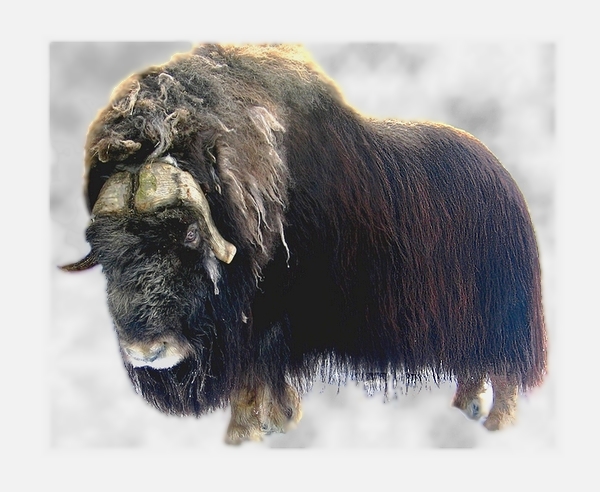


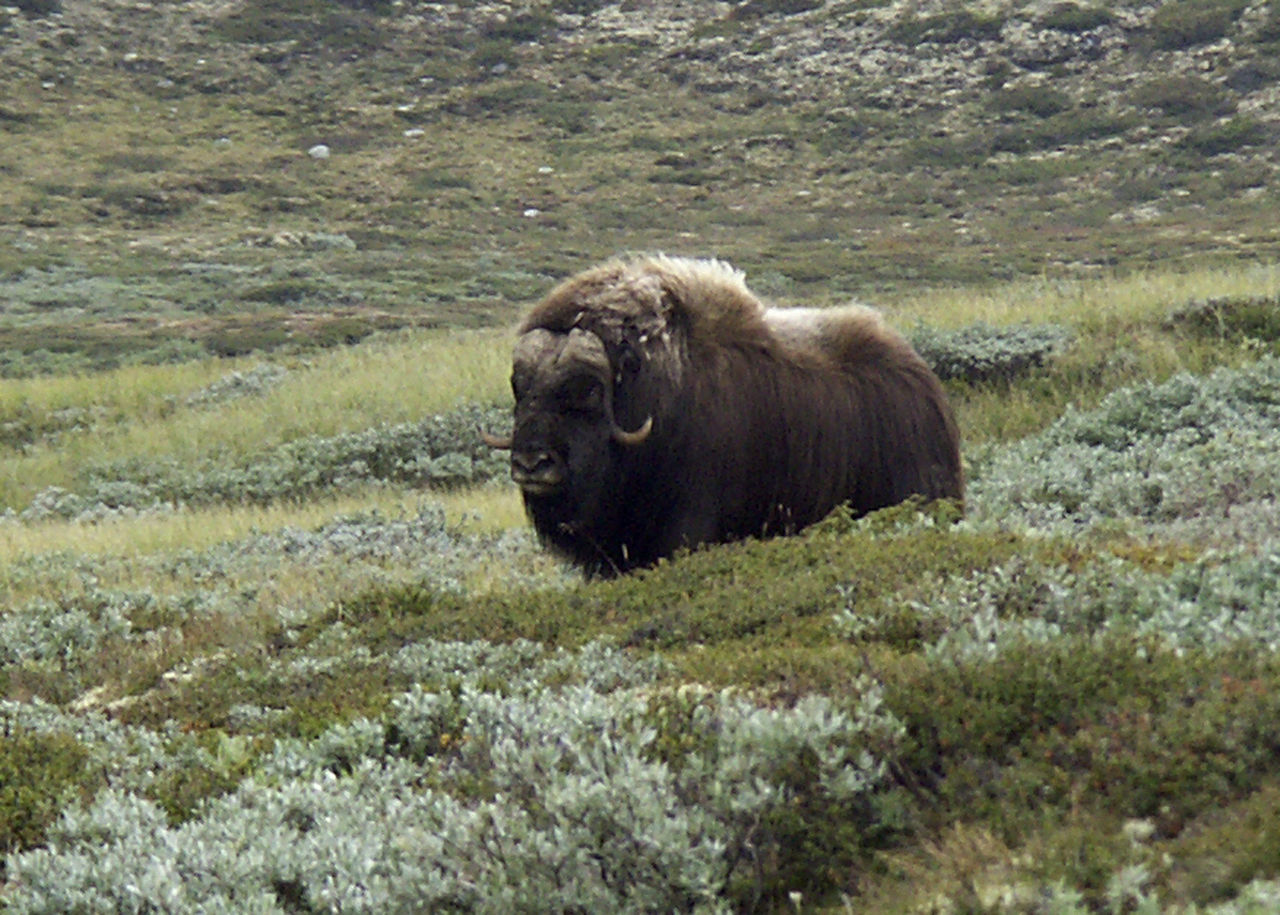
Description and adaptations
Musk oxen have a compact body, short legs and a hump-like shoulder profile that help conserve heat. Both sexes grow broad, curved horns that meet across the forehead; males generally have thicker horns and larger bodies. The seasonal rut involves males emitting a strong, musky scent that gives the species its common name and helps attract females. Physiological and behavioural adaptations include a thick multi-layered coat, reduced extremity size, and social tactics to reduce heat loss and predation risk.
Distribution, habitat and range changes
Historically more widespread during the Pleistocene, musk oxen occupied large parts of the Arctic and subarctic. Today they occur naturally in tundra and cold steppe habitats of northern Canada, Alaska and Greenland. During the 20th century, people reintroduced or introduced small populations to areas such as parts of Scandinavia and Siberia to restore local populations or re-establish a subspecies; these reintroductions have helped conserve genetic and geographic diversity in some regions.
Diet, digestion and foraging
Musk oxen are herbivores and ruminants: they graze on grasses, sedges, mosses, willows and other tundra plants. As with other ruminants, they swallow vegetation and later regurgitate and chew a cud, aided by a four-chambered stomach that enables extraction of nutrients from fibrous, low-quality forage common in Arctic ecosystems. Foraging strategies change seasonally as animals seek snow-free patches and dig through snow to reach vegetation in winter.
Social behaviour, reproduction and defence
Musk oxen form herds composed of females, young and a few dominant males, with bachelor groups and solitary bulls also present. During the breeding season bulls compete through displays and head-butting contests. To deter predators such as wolves and bears, herds commonly adopt a defensive formation: adults circle with horns outward, positioning calves in the centre. Calving typically occurs in spring when conditions improve and forage availability rises.
Fossil record, survival and conservation
Fossil and genetic evidence indicate musk oxen were more widespread and genetically varied during the Pleistocene. They were among a small number of large North American mammals to persist through the end-Pleistocene extinctions. Human hunting, climate change and habitat shifts reduced some populations, but conservation measures, regulated harvests and reintroductions have allowed recovery in many areas. Conservation status varies regionally and depends on local population trends and management.
Human uses and cultural significance
Indigenous Arctic peoples have long hunted musk oxen for meat, hides and horn. The inner underwool, qiviut, is collected and used to make warm, lightweight textiles; it is often removed from hides after subsistence harvests or gathered from wild animals during shedding. Musk oxen also feature in cultural stories and continue to be important in northern economies and subsistence practices.
Further reading and resources
- Arctic ecosystems and musk ox habitat
- Overview of Bovidae family traits
- Taxonomic context for musk ox
- Pleistocene faunal changes and climate
- Ice age environments and megafauna
- Herd structure and social behaviour studies
- North American musk ox populations
- Greenland populations and management
- Introductions to Sweden and northern Europe
- Reintroductions in Siberia
- Norwegian reintroduction efforts
- Herbivore ecology and tundra food webs
- Typical plant foods: grasses and sedges
- Browse species: willow and shrub diets
- Arctic flowering plants as forage
- Ruminant digestion and physiology
- Feeding behaviour and rumination
- Mammalian stomach anatomy
- Fossil DNA and paleogenomics
- Genetic diversity through time
- Pleistocene ranges: Ural to Greenland
- Comparisons with other megafauna survivors
- Pronghorn and bison as surviving species
- Megafauna extinction context
- Pleistocene–Holocene transition impacts
Questions and answers
Q: What is the scientific name of the musk ox?
A: The scientific name of the musk ox is Ovibos moschatus.
Q: How do male musk oxen attract females during mating season?
A: Male musk oxen give off a strong odour, which is used to attract females during mating season.
Q: How do musk oxen protect themselves from predators?
A: Musk oxen protect themselves from predators by forming a circle and facing outwards with their long, curved horns lowered to show off their horns.
Q: Where do musk oxen live?
A: Musk oxen live in Arctic North America and Greenland, with small introduced populations in Sweden, Siberia and Norway.
Q: What type of food do musk oxen eat?
A: Musk oxen are herbivores which graze on grasses, leaves, and some Arctic flowers.
Q: How did the Pleistocene extinction event affect the population of muskox?
A: The Pleistocene extinction event caused most species of Pleistocene megafauna in North America to become extinct; however, the population of muskox survived this event and still lives today.
Q: What type of digestive system does a muskox have?
A:Muskox have a ruminant digestive system; they swallow their food without chewing it then later regurgitate it (called cud) and chew it again. They also have four sections in their stomachs.
Related articles
Author
AlegsaOnline.com Musk ox (Ovibos moschatus): Arctic ruminant, adaptations and history Leandro Alegsa
URL: https://en.alegsaonline.com/art/67780
Sources
- iucnredlist.org : "Ovibos moschatus"
- greenland-guide.gl : Animal Life in Greenland - an introduction by the tourist board
- sciencedaily.com : "Muskox suffered loss of genetic diversity at Pleistocene/Holocene transition"
- mnh.si.edu : Pronghorn Antilocapra americana
- scienceblogs.com : "Prehistoric DNA reveals the story of a Pleistocene survivor, the Muskox."
- scienceblogs.com : Science Blogs