
Al‑Qa'im bi‑Amrillah — Fatimid caliph and Ismaʿili imam
Muhammad al‑Qaʾim (c.893–946) was the second Fatimid caliph and twelfth Ismaʿili imam, who ruled from Ifriqiya and defended the nascent Fatimid state against Abbasid rivals and a major Berber revolt.
Overview
Muhammad al‑Qaʾim bi‑Amrillāh is remembered as the second caliph of the Fatimid dynasty and, within Ismaʿili tradition, as its twelfth imam. Born around 893, he led the Fatimid realm in Ifriqiya (central North Africa) and governed from 934 until his death in 946. His Arabic name is often given in sources as محمد القائم بأمر الله. Al‑Qaʾim inherited an ambitious state that combined a messianic Ismaʿili mission with practical rule over a diverse population of Arabs, Berbers and urban communities.
Image gallery
2 Images
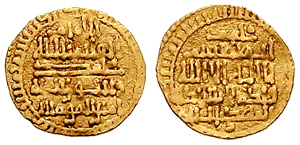
Early life and accession
Al‑Qaʾim was born in Salamiyah in Syria and was the son of the Fatimid founder, Ubayd Allah al‑Mahdi Billah. While still young he was designated heir and took part in military and administrative tasks as the Fatimid movement consolidated control over Ifriqiya. During his father’s reign and in the years before he became caliph he participated in expeditions aimed at extending Fatimid influence into Egypt, campaigns that met firm resistance from the established Sunni Abbasid political network and its local supporters.
Reign and Mediterranean activity
On his accession in 934 al‑Qaʾim inherited a polity with a strong naval tradition. The Fatimid fleet projected power across the central Mediterranean: it harassed coastal targets, supported allies and rivals on Sicily and on the Italian shore, and confronted Byzantine forces. Fatimid operations affected regions such as Sicily and other Byzantine-held territories, including raids and naval engagements around Calabria and parts of southern Italy. These ventures were part of a wider strategy to secure trade routes, demonstrate naval strength and challenge Abbasid prestige in the Mediterranean arena.
Internal challenges: Berber unrest and the Abu Yazid revolt
Despite outward activity, the Fatimid regime faced deep-seated internal tensions. Many Berber groups in the Maghreb resisted centralised rule or adhered to rival religious currents. A central challenge during al‑Qaʾim’s caliphate was the uprising led by Abu Yazid, a charismatic leader who united Kharijite Berber forces from parts of eastern Algeria and beyond. Abu Yazid’s campaign overran much of Ifriqiya and threatened the Fatimid capital. Al‑Qaʾim was forced to rely on the coastal fortress city of Mahdia and the Fatimid navy, which kept supply lines open during a prolonged crisis.
Siege, death and succession
Mahdia’s sea access allowed al‑Qaʾim to resist for more than a year, but he died on 17 May 946 (13 Shawwal 334 AH), before the rebellion was finally crushed. The struggle was resolved under his son and successor, Ismail al‑Mansur, who completed the military recovery and restored Fatimid authority. The dynasty survived the challenge and continued to become a major Mediterranean and Islamic power in the following decades.
Legacy and significance
Al‑Qaʾim’s reign is important for several reasons: it consolidated the institutional foundations of Fatimid rule in North Africa, tested the limits of Ismaʿili missionary expansion, and highlighted the strategic role of naval power and coastal strongholds. The Abu Yazid revolt exposed the fragility of central control over a diverse Maghrebi population and underscored the need for military and administrative adaptation by later Fatimid rulers. In Ismaʿili memory, al‑Qaʾim is also venerated as an imam who maintained the community during a period of existential danger.
- Dates: born c. 893, reigned 934–946, died 17 May 946.
- Base: Ifriqiya (capital: Mahdia).
- Family: son of al‑Mahdi, father of Ismail al‑Mansur (often titled al‑Mansur after accession).
- Foreign relations: rivalry with the Abbasids and naval conflict with Byzantine forces.
- Internal issues: concentrated Berber resistance and the revolt of Abu Yazid from eastern Algeria and neighbouring regions.
For an introduction to the broader Fatimid movement and its geographical setting, see materials on the Fatimid dynasty and the province of Ifriqiya. Contemporary and later accounts emphasise both the religious claims of the Ismaʿili imam‑caliphs and the practical military and diplomatic challenges they faced in the Mediterranean world.
The period of al‑Qaʾim’s leadership thus illustrates the combination of religious authority, naval reach and regional contestation that shaped early Fatimid history and set patterns followed by his successors.
Questions and answers
Q: Who was Muhammad al-Qaim Bi-Amrillah?
A: Muhammad al-Qaim Bi-Amrillah (893 - 17 May, 946) (Arabic: محمد القائم بأمر الله) was the second Caliph of the Fatimids in Ifriqiya and ruled from 934 to 946. He is also known as the 12th Imam according to Isma'ili Faatemi faith.
Q: What was his birth name?
A: His birth name was Abd ar-Rahman.
Q: When did he become heir to the throne?
A: After his father Ubayd Allah al-Mahdi Billah (910-934) seized power in Ifriqiya, he was named heir to the throne in 912.
Q: What were some of his campaigns?
A: Al-Qaim's campaigns included attempts to conquer Egypt which failed due to resistance from Abbasids (914-915 and 919-921). He also re-conquered Sicily, plundered Byzantine province of Calabria, coast of Italy and France.
Q: Who revolted against him during his reign?
A: Abu Yazid revolted against Al-Qaim during his reign and united Kharijite Berber tribes of eastern Algeria and overrun Ifriqiya.
Q: How did Al Qaim respond to this revolt?
A: With help from the navy, Al Qaim held out in Mahdia for over a year before he died but could not put down the revolt before then.
Q: Who succeeded him after death ?
A: His son Ismail al Mansur succeeded him after death and ruled from 946 -953 .
Related articles
Author
AlegsaOnline.com Al‑Qa'im bi‑Amrillah — Fatimid caliph and Ismaʿili imam Leandro Alegsa
URL: https://en.alegsaonline.com/art/67371