
Sicily: Geography, History, Culture and Economy
Sicily, the largest Mediterranean island and an autonomous region of Italy, has a layered history from Phoenician and Greek colonization through Arab and Norman rule to modern autonomy, with rich culture and agriculture.
Sicily is the largest island in the Mediterranean Sea and, together with a number of smaller islands and archipelagos, forms an autonomous region of Sicily within the Italian Republic. Its administrative capital is Palermo, an urban center noted for its diverse cultural heritage; Palermo's long history is also referenced in local and international guides (Palermo). The island has long supported a population of over five million people, though figures vary by census and by year (population data).
Image gallery
1 Image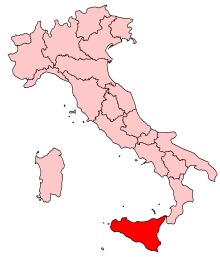
Geography and environment
Sicily lies off the southern tip of the Italian peninsula and is separated from the mainland by the narrow Strait of Messina. Its landscape includes coastal plains, sandy beaches, limestone cliffs, interior hills and fertile river valleys. Mount Etna, on the island's eastern flank, is one of the most active volcanoes in Europe and has shaped soils, land use and settlement patterns for millennia. The island's climate is typically Mediterranean along the coasts, with hotter, drier summers and mild, wetter winters; interior highlands have cooler temperatures and different rainfall patterns.
Ancient and classical history
During the 1st millennium BC Sicily became a crossroads of sea-borne civilizations. Traders and settlers from the Phoenician world established trading posts along the coasts, while Greeks from the mainland founded colonies and city-states—among them Syracuse—bringing Hellenic language, architecture and institutions (Greek colonization). Competition for resources and strategic ports produced repeated conflicts: Carthaginian presence in western Sicily was significant (Carthage), and the island later became Rome's first province after the Punic Wars (Ancient Rome).
Medieval period and cultural fusion
After the fall of the Western Roman Empire, the Byzantine Empire maintained influence on Sicily for centuries. In the 9th century, Arab forces established control over much of the island and introduced agricultural innovations, new crops and artistic forms; medieval sources often refer to these Muslim rulers as Saracens while scholarly work uses more precise terms. Byzantine Greeks continued to be an important presence in language and liturgy in some areas (Byzantine Greek heritage). The Norman conquest in the 11th and 12th centuries created a distinctive multicultural court where Latin, Greek and Islamic traditions mixed, producing unique architecture and legal practices (Norman Sicily).
Late medieval to modern history
Following internal revolts such as the Sicilian Vespers, the island passed into the influence of the crowns of Aragon and later the Spanish monarchy, which integrated Sicily into broader Mediterranean politics and trade networks. In the 19th century Sicily drew international attention during the Italian unification movement; Giuseppe Garibaldi landed on the island in 1860 and his campaign helped bring Sicily into the newly proclaimed Kingdom of Italy. During the 20th century the island underwent social and economic change and eventually obtained a special autonomous status within the Italian Republic, providing regional institutions and powers for local administration.
Economy and agriculture
- Agriculture has long been a mainstay: citrus fruits, olives, grapes for wine, almonds and durum wheat are traditional products exported from Sicily.
- Fishing, food processing, light industry and, increasingly, services and tourism form important parts of the modern economy.
- Mount Etna's eruptions have periodically affected agriculture and settlements, but volcanic soils also contribute to the fertility of many valleys.
Language, culture and the arts
Sicilian culture reflects layers of influence: Greek drama and classical forms, Roman law and infrastructure, Arab agricultural techniques and design, Norman and later Spanish artistic and administrative traditions. The island's popular traditions include distinctive music, religious festivals, culinary specialities and a local Romance language often called Sicilian, which preserves older vocabulary and regional expressions.
Demographics, cities and heritage
Major urban centers include Palermo, Catania, Messina, Syracuse and Trapani, each with important historical monuments, archaeological sites and religious and civic festivals. Archaeologists and historians study Sicily as a rich field for ancient Greek ruins, Roman remains, medieval architecture and examples of cross-cultural exchange visible in churches, palaces and rural landscapes. Conservation of this heritage is an ongoing concern for local and national authorities and for scholars.
Sicily's strategic position in the central Mediterranean, varied environments and layered human history continue to make it a subject of study in fields ranging from volcanology and agriculture to archaeology and cultural studies. For administrative details, demographic updates and specialized topics consult regional sources and scholarly literature linked to the historical and institutional anchors above.
Questions and answers
Q: What is Sicily?
A: Sicily is the largest island in the Mediterranean and an autonomous region of Italy.
Q: What is the capital city of Sicily?
A: The capital city of Sicily is Palermo.
Q: What was the population of Sicily in 2004?
A: The population of Sicily was about 5,087,000 (over 5 million) in 2004.
Q: Who colonized the island of Sicily in the 8th Century BC?
A: Phoenician and Greek people colonized the island of Sicily in the 8th Century BC.
Q: Who controlled most of the island of Sicily until Ancient Rome conquered it?
A: Carthage controlled most of the island of Sicily until Ancient Rome conquered it.
Q: Who conquered Sicily after the revolts of Sicilian Vespers?
A: The crown of Aragon and Spain took over Sicily after the revolts of Sicilian Vespers.
Q: Who brought Sicily into the Kingdom of Italy?
A: Garibaldi in the Risorgimento conquered Sicily and brought it into the Kingdom of Italy.
Related articles
Author
AlegsaOnline.com Sicily: Geography, History, Culture and Economy Leandro Alegsa
URL: https://en.alegsaonline.com/art/90194