
Mudpuppy (Necturus): the aquatic salamander of North America
Mudpuppies are fully aquatic salamanders in the family Proteidae (genus Necturus), noted for external gills, a doglike barking sound, and a range across parts of Canada and the Midwestern United States.
Overview
The mudpuppy is a fully aquatic amphibian commonly called a salamander. Members of the genus Necturus belong to the family Proteidae and are native to fresh waters of eastern and central North America. The common name "mudpuppy" refers to a low, doglike call emitted by these animals; similar vernacular names include "waterdog." They are primarily associated with lakes, rivers and slow-moving streams in parts of Canada and the Midwestern United States.
Image gallery
4 Images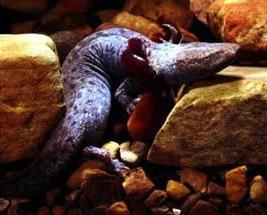


Physical characteristics
Mudpuppies retain external, feathery gills along the sides of the head throughout life, a condition called neoteny. Their body is elongated and flattened, with a laterally compressed tail adapted for swimming. Coloration ranges from brown and gray to mottled patterns that help them blend with mud and rock. They are moderate-sized compared with other salamanders and are entirely aquatic, seldom leaving the water.
Behavior and diet
Primarily nocturnal, mudpuppies shelter beneath stones, submerged logs and dense vegetation during daylight. They feed on aquatic invertebrates, small fish and other available prey, using a sit-and-wait or slow-search strategy. The species' name is often linked to a faint, dog-like barking or sound that observers historically associated with shorelines where these salamanders lived.
Reproduction and life cycle
Reproduction involves the deposition of spermatophores by males and uptake by females; eggs are laid and attached to submerged objects. Juveniles hatch with gills and develop in water, generally showing the same aquatic lifestyle as adults. Many aspects of life history—such as growth rate and longevity—vary among populations and are influenced by local conditions.
Habitat, conservation and notable facts
Mudpuppies occupy clean, well-oxygenated waters but can persist in a range of freshwater habitats if cover and food are available. Populations are sensitive to water pollution, habitat alteration and siltation. Conservation attention focuses on protecting water quality and structural habitat. Key points:
- Belong to the Proteidae family, which also includes other unusual, paedomorphic salamanders.
- Often confused with other aquatic salamanders in the pet trade or in casual observation.
- Studied for developmental biology because they retain larval features into adulthood.
Similar species and human interest
Mudpuppies are sometimes compared with other neotenic amphibians, but they are distinct in anatomy and taxonomy. They have attracted interest from naturalists and scientists for their unusual appearance and life history. Observing them requires patience and care to avoid disturbing sensitive aquatic habitats.
Related articles
Author
AlegsaOnline.com Mudpuppy (Necturus): the aquatic salamander of North America Leandro Alegsa
URL: https://en.alegsaonline.com/art/67343